
GCC Mandates ISO/IEC 15408:2026 EAL4+ for Digital Locks
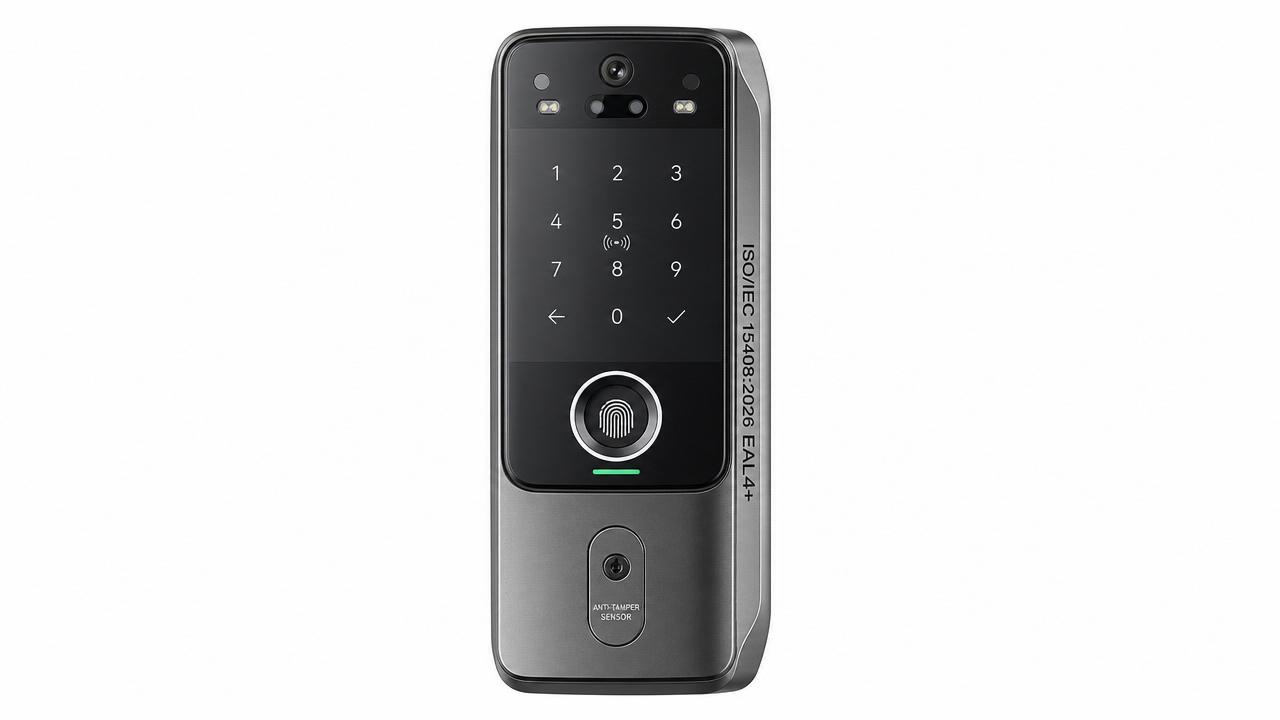
Breaking regulatory development in the Gulf smart security market: On May 15, 2026, the Gulf Cooperation Council (GCC) Certification Centre — under the Gulf Standardization Organization (GSO) — issued an urgent notice requiring all digital locks seeking GCC certification to undergo ISO/IEC 15408:2026 (Common Criteria) security evaluation at Evaluation Assurance Level (EAL) 4+. This change directly impacts manufacturers, exporters, and integrators supplying smart lock solutions across GCC member states, particularly the UAE and Saudi Arabia, where large-scale residential and commercial projects are now facing certification-driven delays.
Event Overview
The GCC Certification Centre announced on May 15, 2026, that effective immediately, all digital lock products submitted for GCC conformity assessment must pass ISO/IEC 15408:2026 EAL4+ evaluation. The assessment specifically targets three technical controls: local encryption of biometric data, protection against replay attacks, and secure over-the-air (OTA) firmware signature verification. As a result, average certification turnaround time for China-made digital locks has extended to 14 weeks, with testing costs rising approximately 40%. Multiple real estate developments in the UAE and Saudi Arabia have reported delayed project handovers due to pending certification approvals.
Industries Affected
Direct Trading Enterprises: Exporters and brand owners placing digital locks into GCC markets face immediate compliance pressure. Since GCC certification is mandatory for market access, failure to meet the new EAL4+ requirement halts customs clearance and sales authorization. Revenue recognition timelines are disrupted, and contractual penalties may apply where delivery milestones are tied to certification status.
Raw Material Procurement Enterprises: Suppliers of critical components — such as secure microcontrollers (e.g., ARM TrustZone-enabled SoCs), certified cryptographic modules, or tamper-resistant sensors — are seeing revised specification requests from OEMs. Demand is shifting toward components pre-validated for Common Criteria EAL4+ or with documented assurance evidence, increasing procurement lead times and limiting supplier choice.
Manufacturing Enterprises: Original Equipment Manufacturers (OEMs) and contract manufacturers must now integrate formal assurance activities into their development lifecycle — including threat modeling, security architecture documentation, vulnerability analysis, and third-party lab coordination. This adds engineering overhead and requires cross-functional alignment between firmware, hardware, and QA teams — a capability not uniformly embedded in current production workflows.
Supply Chain Service Providers: Certification consultants, test laboratories, and notified bodies accredited for Common Criteria evaluations are experiencing surging demand. However, only a limited number of labs globally hold GSO-recognized accreditation for ISO/IEC 15408:2026 EAL4+ assessments on embedded IoT devices. This bottleneck constrains capacity, extends scheduling windows, and intensifies pricing negotiation power for qualified labs.
Key Focus Areas and Recommended Actions
Verify Component-Level Assurance Evidence Early
OEMs should request and audit Common Criteria assurance packages (e.g., Security Target summaries, evaluation reports) from component vendors — especially for cryptographic libraries, secure boot firmware, and biometric processing units — before initiating full-system evaluation.
Prioritize OTA Signing Architecture Review
Given the explicit emphasis on OTA firmware signature integrity, manufacturers must ensure their update mechanism implements asymmetric key-based signing verified at boot time, with private keys stored exclusively in hardware-secured environments (e.g., Secure Element or TPM). Third-party auditors will examine key management policies and certificate chain validation logic.
Engage Accredited Labs Before Product Finalization
Due to the 14-week average cycle, early engagement with GSO-recognized labs — ideally during alpha firmware stage — enables scoping, test plan alignment, and identification of high-risk assurance gaps before formal submission.
Update Technical Documentation for Conformity Assessment
Manufacturers must augment existing GCC technical files with Common Criteria-specific artifacts: Security Target (ST), Security Functional Requirements (SFR) mapping, assurance activity records, and vulnerability assessment summaries — all aligned with ISO/IEC 15408:2026 structure and terminology.
Editorial Perspective / Industry Observation
Observably, this move signals a broader regional pivot from functional safety and interoperability compliance toward verifiable cybersecurity assurance in consumer-facing IoT devices. While EAL4+ remains achievable for mature embedded systems, its application to cost-sensitive mass-market smart locks represents a notable escalation in regulatory expectations. Analysis shows that GCC’s approach diverges from EU’s CE marking pathway (which relies on EN 301 489-17 and EN 300 328 for radio aspects, but no mandatory CC evaluation), suggesting deliberate alignment with global government-grade assurance frameworks rather than harmonized trade facilitation. From an industry perspective, this is better understood as a signal of institutional maturity in Gulf technical regulation — not merely a compliance hurdle.
Conclusion
This policy shift underscores a structural evolution in Gulf market access: cybersecurity is no longer a differentiator but a baseline requirement for connected physical security products. For global suppliers, adapting requires moving beyond ‘certification-as-a-service’ thinking toward embedded security-by-design practices — supported by traceable documentation, supplier assurance governance, and cross-border lab coordination. The long-term implication is not higher barriers alone, but a more predictable, technically grounded regulatory environment — provided stakeholders treat assurance as integral, not incidental.
Source Attribution
Official notice issued by the GCC Certification Centre (under GSO), dated May 15, 2026. Publicly accessible via www.gso.org.sa (Arabic/English portal; English version currently under translation update). Further guidance on accredited laboratories and ST templates is expected in Q3 2026. Continuous monitoring is advised for potential extensions to other IoT product categories (e.g., smart doorbells, access control panels) and possible harmonization with Saudi SABER platform requirements.
Industry Briefing
Get the top 5 industry headlines delivered to your inbox every morning.