
Hormuz Disruption Extends Lead Times for Smart Lock Chips
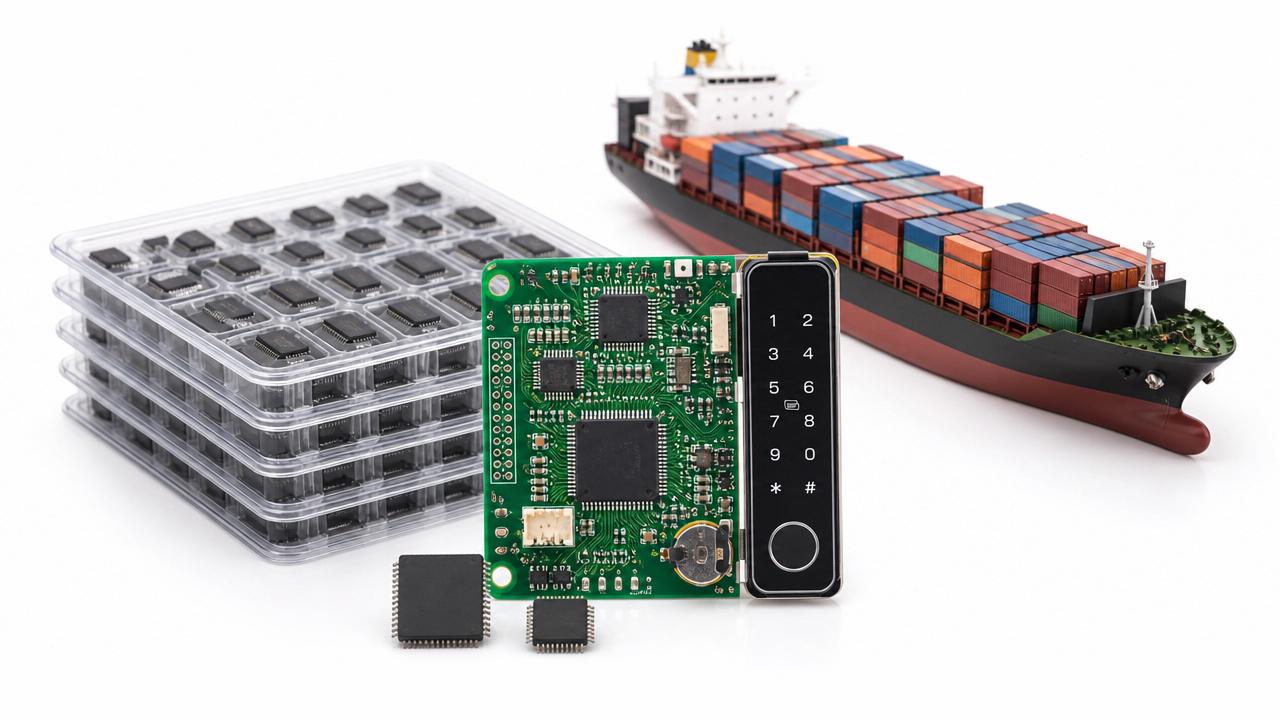
The timing of the event is not clearly specified in the provided information, but the latest update points to a sharper supply disruption tied to the continued shipping halt in the Strait of Hormuz. For companies involved in smart locks, powered window drive systems, and high-end sanitary control products, the key issue is that lead times for critical MCU and security chips have been pushed out significantly, turning a logistics shock into a component availability risk that now merits close operational attention.
What Has Been Confirmed So Far
According to the provided information, shipping disruption in the Strait of Hormuz has continued, while wafer fabs in Saudi Arabia, the UAE, and related locations remain affected by ongoing production stoppages. Against that backdrop, the supply gap has widened for MCU and security chips used in digital locks, electric window actuators, and high-end bathroom controllers, including models such as STMicro STM32WB55 and NXP KW38.
Mainstream distributors announced on June 13 that lead times for these components were extended from 14 weeks to 26 weeks. The same update also indicated that orders for some part numbers have been suspended.
Where the Pressure May Appear Across the Chain
Component sourcing is becoming the first bottleneck
From an industry perspective, distributors, purchasing teams, and sourcing managers are likely to feel the earliest pressure because the confirmed change is directly tied to longer delivery cycles and suspended ordering for some models. The immediate business impact may show up in quotation validity, allocation planning, and the ability to secure confirmed supply for designated chipsets.
Product manufacturers may face schedule and configuration strain
For manufacturers of smart locks, electric window drive products, and high-end sanitary control systems, the confirmed shortage affects parts that are central to control and security functions. Analysis shows that the main risk is not only delayed inbound materials, but also disruption to production scheduling, model-specific configuration planning, and delivery commitments tied to chip availability.
Channel and project-side participants may see delivery uncertainty rise
Observably, channel partners, project buyers, and downstream application businesses may be affected through longer replenishment cycles and weaker visibility on shipment timing. What deserves closer attention is whether extended chip lead times begin to alter order confirmation practices, project handover expectations, or procurement timing for finished products that depend on those specific components.
What Companies Should Monitor Now
Track distributor notices model by model
Analysis shows that the most practical near-term task is to monitor distributor updates at the specific part-number level rather than relying only on broad market signals. Since some models have already stopped taking orders, the distinction between products that are delayed and products that are temporarily unavailable becomes operationally important.
Recheck delivery promises already made to customers
For businesses with open orders or active quotations, it is worth reviewing whether delivery commitments were built around the earlier 14-week lead-time assumption. The change to 26 weeks materially affects planning windows, so customer communication and internal scheduling may need to be aligned with the revised component timeline.
Identify exposure in core product lines
What deserves closer attention is which product lines rely on the affected MCU and security chips for their standard configuration. Companies should distinguish between broad portfolio risk and concentrated exposure in smart lock, motorized window, or premium sanitary control products, because the business impact is likely to differ by product architecture and chip dependency.
Separate confirmed facts from evolving risk
Observably, the confirmed facts are the shipping disruption, continued fab stoppages in the locations named in the provided information, longer lead times, and suspended orders for some models. Any assessment beyond that—such as duration, wider substitution feasibility, or final sales impact—should still be treated as an evolving industry risk rather than a settled outcome.
How This Signal Should Be Read
Analysis shows that this development is more than a routine fluctuation in electronics procurement. A move from 14 weeks to 26 weeks, combined with suspended ordering for some models, suggests that the issue has already moved into a tighter supply phase for certain chips used in access control and intelligent hardware products.
At the same time, it is more appropriate to understand this as an industry dynamic that still requires observation, rather than a final long-term conclusion. The provided information confirms stress in supply and lead times, but it does not establish how long the disruption will last or how broadly shortages will spread across adjacent component categories.
Why the Market Should Keep Watching
For the digital lock and door-and-window hardware supply chain, the current update is significant because it links a regional shipping interruption with a direct extension in chip lead times for specific application areas. The practical meaning is not simply that parts are slower to arrive, but that delivery reliability, procurement cadence, and order acceptance conditions may all become less predictable in the near term.
It is more appropriate to understand this as a short-term supply shock with potential to become a broader operating constraint if the disruption continues. That makes ongoing verification essential before drawing stronger conclusions about longer-term market impact.
Basis of This Article
This article is based on the user-provided news title, the note that the event time was not clearly specified, and the supplied event summary. Typical source types relevant to this kind of development may include official notices, company announcements, distributor updates, industry association information, authoritative media reporting, and technical or standards-related documentation.
No specific official source link was provided in the input, so the underlying details still require continued verification. Follow-up attention should remain on any new distributor notices, changes in order acceptance status for affected models, and any further confirmed statements related to shipping disruption and chip supply conditions.
Industry Briefing
Get the top 5 industry headlines delivered to your inbox every morning.