
How smart locks for commercial space improve daily security
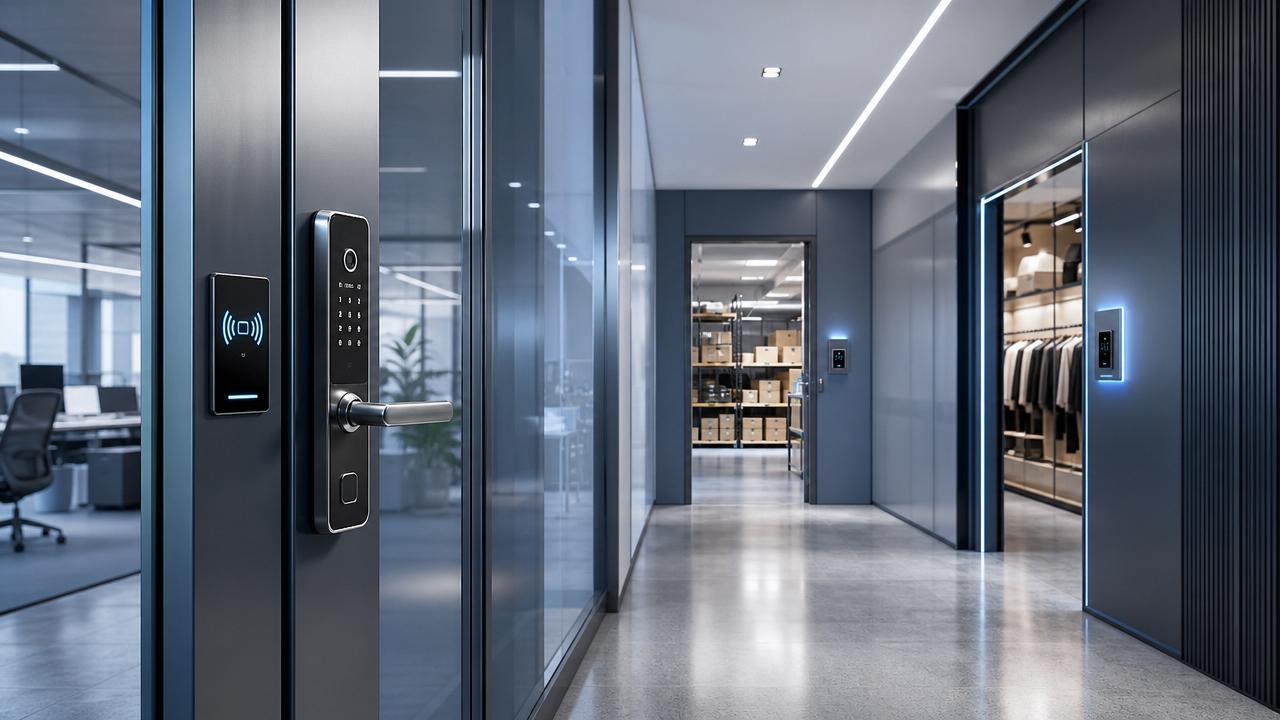
In today’s high-traffic business environments, smart locks for commercial space are becoming essential tools for stronger daily security, access control, and operational consistency. For quality control and security managers, these systems offer more than convenience—they help reduce human error, improve traceability, and support compliance across offices, retail sites, and mixed-use facilities. Understanding their practical value is key to building safer, smarter commercial spaces.
Why security needs change across commercial settings
Not every building faces the same risk pattern. A small office, a retail branch, and a shared-use complex all manage access in different ways.
That is why smart locks for commercial space should be judged by traffic volume, user turnover, door type, and incident response needs.
Traditional keys often create blind spots. Lost keys, copied credentials, and delayed lock changes can weaken daily control.
Digital locking systems improve visibility. They create permission layers, event logs, and faster updates when staffing or tenant conditions change.
For modern buildings, this matters beyond security alone. It also affects compliance, maintenance planning, and occupant confidence.
Office buildings need flexible access without daily key risks
In office environments, access patterns change often. Teams move, visitors arrive, contractors need temporary entry, and sensitive rooms require tighter control.
Here, smart locks for commercial space help by replacing static key ownership with managed permissions. Access can be assigned by role, schedule, or department.
This is especially valuable for meeting rooms, server rooms, archives, and executive areas. Each zone may need a different rule set.
When staff changes happen, credentials can be edited quickly. That reduces the cost and disruption of full rekeying.
Key judgment points for offices
- How often departments or seating plans change
- Whether visitors require escorted or time-limited access
- Which rooms hold confidential assets or records
- Whether audit logs are required for incident review
Retail spaces need speed, accountability, and after-hours control
Retail sites face different pressure. Open hours bring heavy foot traffic, while back rooms, cash areas, and stock zones need restricted entry.
In this setting, smart locks for commercial space support fast staff entry while protecting high-risk zones behind the sales floor.
Temporary workers and shift rotation are common in retail. Static keys are hard to control when schedules change daily.
Digital access makes it easier to issue short-term permissions. It also creates a clearer record of who entered stockrooms or cash-handling areas.
After-hours delivery access is another concern. Timed credentials can lower the risk of shared keys circulating beyond intended use.
Core retail decision factors
- Peak-hour entry speed at employee doors
- Protection for cash rooms and inventory storage
- Temporary credentials for seasonal staffing
- Reliable access logs for incident tracing
Mixed-use properties need layered access by zone and schedule
Mixed-use buildings combine multiple functions. Offices, retail units, service corridors, and shared amenities often operate under different timing rules.
That complexity makes smart locks for commercial space especially useful. A single building may need public, semi-public, private, and restricted layers.
Cleaning teams, maintenance crews, and delivery personnel also require controlled movement between zones. Their access should be limited by both place and time.
Smart credentials reduce overlap between unrelated users. They help ensure that access to one area does not expose another.
For building operators, this improves consistency across entrances, elevators, service rooms, and shared support areas.
What to assess in mixed-use spaces
- How many user groups share the property
- Whether schedules differ across floors or units
- Which shared routes need tighter restrictions
- How emergency override procedures will work
How scenario needs differ in real daily operations
The best smart locks for commercial space are not selected by features alone. They should match the real operating pattern of each site.
This comparison shows why one lock policy rarely fits every commercial property. Security performs better when the system mirrors actual building behavior.
Practical fit recommendations before deployment
Choosing smart locks for commercial space should begin with a site review, not a product brochure. Real entrances behave differently from drawings.
Door material, fire requirements, network conditions, and emergency procedures all influence the right setup.
- Map every door by risk level, traffic, and business function.
- Separate public entries from operational and sensitive zones.
- Define access rules by user group, schedule, and exceptions.
- Check compatibility with existing doors and life-safety standards.
- Plan response steps for battery alerts, outages, and urgent lock changes.
- Review reporting needs for compliance, incidents, and routine audits.
A good deployment also respects user experience. If entry feels confusing or slow, workarounds may appear and weaken the security goal.
Common mistakes when evaluating commercial lock scenarios
Many projects adopt smart locks for commercial space but still leave operational gaps. The issue is often poor scenario judgment, not weak technology.
Mistakes that reduce security value
- Treating all doors as equal, regardless of risk or traffic
- Ignoring visitor and contractor access patterns
- Focusing only on opening methods, not event logging
- Failing to define emergency or override responsibilities
- Overlooking maintenance routines and credential reviews
Another common error is underestimating transition periods. During move-ins, tenant changes, or renovations, access rules often become more complex.
These are exactly the moments when smart locks for commercial space can add the most value, if policies are defined early.
A smarter next step for safer commercial environments
Daily security improves when access control matches the building’s real rhythm. That is the practical strength of smart locks for commercial space.
From offices to retail sites and mixed-use properties, the most effective approach starts with scenario analysis, zone planning, and permission discipline.
A useful next move is to audit current doors, list user groups, and identify where key-based processes create delays or blind spots.
With that foundation, commercial spaces can adopt smarter locking strategies that support safety, accountability, and long-term operational stability.
As GIAM continues tracking spatial intelligence, material upgrades, and digital building systems, solutions like smart locks for commercial space remain central to safer and more adaptive environments.
Industry Briefing
Get the top 5 industry headlines delivered to your inbox every morning.