
How to Install Smart Locks on Different Door Types Without Alignment Problems
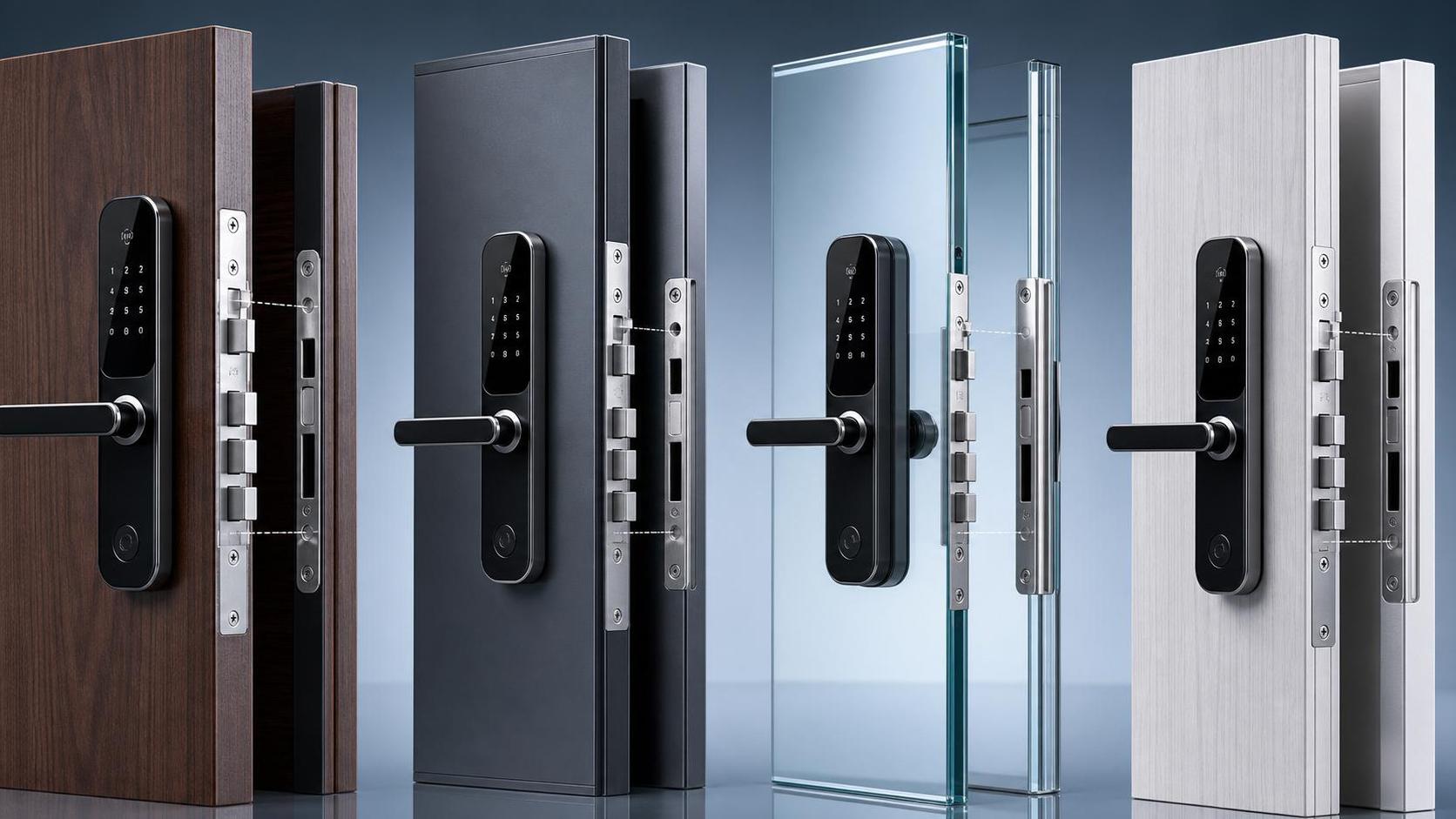
Why do smart lock installations fail on some doors even when the hardware is correct?
A smart locks installation guide usually starts with measurements, but alignment problems rarely come from dimensions alone.
In real projects, the door, frame, strike position, and closing pressure work as one system.
If one part is slightly off, the lock may bind, misread status, drain batteries faster, or fail to latch consistently.
That is why a practical smart locks installation guide must address door material behavior, not only drilling templates.
Wood doors can shift with humidity. Metal doors may resist clean cutouts. Glass doors depend on clamp accuracy. Composite doors often hide variable internal reinforcement.
The common thread is simple: smart locks perform well only when latch travel, spindle position, and door closing path remain stable.
Within GIAM’s broader view of building materials and intelligent living systems, this matters because installation quality links directly to safety, service costs, and long-term user trust.
Before any retrofit, confirm four basics: door thickness, backset, vertical centerline, and strike alignment under closed-door pressure.
What should be checked before installing on wood, metal, glass, or composite doors?
Pre-checks save more time than post-install adjustments.
A strong smart locks installation guide treats the survey stage as part of the installation itself.
Start with the door condition.
- Check whether the leaf sags when half open.
- Close the door slowly and note where friction begins.
- Measure the gap at top, latch side, and hinge side.
- Confirm the existing lock prep is square and not elongated.
Then assess the material-specific risks.
This step is often skipped when schedules are tight.
Yet it is the most reliable way to reduce return visits.
How does the installation method change from one door type to another?
The best smart locks installation guide does not treat all doors the same.
Even with the same lock body, the fitting sequence should change with the substrate.
Wood doors
Mark from the actual latch center, not only from the old bore.
If the previous hole is oversized, use a reinforcement plate or filler method before mounting.
Do not tighten the interior and exterior assemblies fully until latch movement is tested several times.
Metal doors
Remove burrs after drilling or enlarging holes.
A minor burr can push the escutcheon out of plane and create spindle drag.
If reinforcement plates exist inside the door, verify screw length carefully.
Glass doors
Use only hardware designed for glass mounting or approved patch systems.
Alignment depends on even clamping pressure and correct gasket seating.
Any side loading can affect sensor accuracy and cause delayed locking feedback.
Composite doors
Probe carefully for reinforcement zones before drilling.
A composite skin may look uniform while the internal structure changes across the stile.
Where compression is likely, add manufacturer-approved support plates to keep the lock body square.
Across all door types, complete the installation in this order: latch fit, body alignment, strike adjustment, then software setup.
Reversing that order often hides a mechanical fault behind a temporary digital success.
Which alignment mistakes cause the most callbacks?
Most repeat faults are predictable.
They appear small during handover, then become obvious after daily use.
- The strike box is centered visually, but not centered to the latch travel.
- The lock body is tightened on a twisted face, causing internal friction.
- Cable routing behind the interior unit presses against the assembly.
- Door closers push too aggressively, masking poor mechanical alignment.
- A retrofit keeps the old latch position although the new lock has different tolerances.
A useful smart locks installation guide should also warn against over-correcting with software settings.
Auto-lock timing, door-open alerts, or calibration routines cannot fix a dragging latch.
One practical test works well on site.
With the door open, cycle the lock five times.
Then repeat five cycles with the door closed and normal closing pressure applied.
If performance changes, the issue is alignment, not electronics.
How can you judge whether the door or the lock is the real problem?
This is one of the most searched questions behind any smart locks installation guide.
The answer comes from separating mechanical resistance from smart control behavior.
Use a short diagnostic path.
- Operate the latch manually with the lock removed or loosened.
- Check whether the spindle turns freely without faceplate pressure.
- Apply marking compound or a pencil line on the strike contact area.
- Review event logs only after mechanical movement is confirmed stable.
If the latch works perfectly off the door but fails under compression, the door set is at fault.
If the latch remains inconsistent in free operation, inspect the lock assembly, spindle length, or wrong handing configuration.
GIAM’s intelligence focus on material science and spatial systems is relevant here.
A lock issue is often a substrate issue in disguise.
That is especially true in mixed-material projects where hardware is standardized but door behavior is not.
What should be included in a field-ready smart locks installation guide to prevent repeat issues?
A field-ready document should be short, visual, and decision-based.
It should not read like a generic factory leaflet.
The most effective version includes these checkpoints:
- Door type and material response notes.
- Acceptable gap and vertical deviation limits.
- Approved drilling or clamping method by substrate.
- Strike alignment verification under real closing force.
- Battery, cable, and firmware checks after mechanical approval.
- A handover test record for future service reference.
This is also where broader building intelligence becomes useful.
As standards, energy-saving envelopes, and interior systems evolve, door assemblies become tighter and more complex.
That means smart lock fitting is no longer a simple accessory task.
It sits inside the same performance chain as materials, sealing, access control, and occupant experience.
A good smart locks installation guide therefore supports both technical reliability and smarter space management.
What is the practical takeaway before the next installation?
The safest approach is to stop treating every smart lock retrofit as a hardware swap.
Alignment problems usually begin with door behavior, frame tolerance, or an inherited prep error.
A reliable smart locks installation guide should help you inspect the opening, adapt the method to the door type, and verify operation under real closing conditions.
Before the next job, build a simple checklist for wood, metal, glass, and composite doors.
Track where latch friction, strike offset, or face distortion appears most often.
That record will improve installation speed, reduce avoidable service calls, and make future hardware selection more accurate.
In practice, better alignment is not a small finishing detail.
It is the difference between a smart lock that merely powers on and one that performs reliably from day one.
Industry Briefing
Get the top 5 industry headlines delivered to your inbox every morning.