
How to vet a smart locks supplier before placing orders
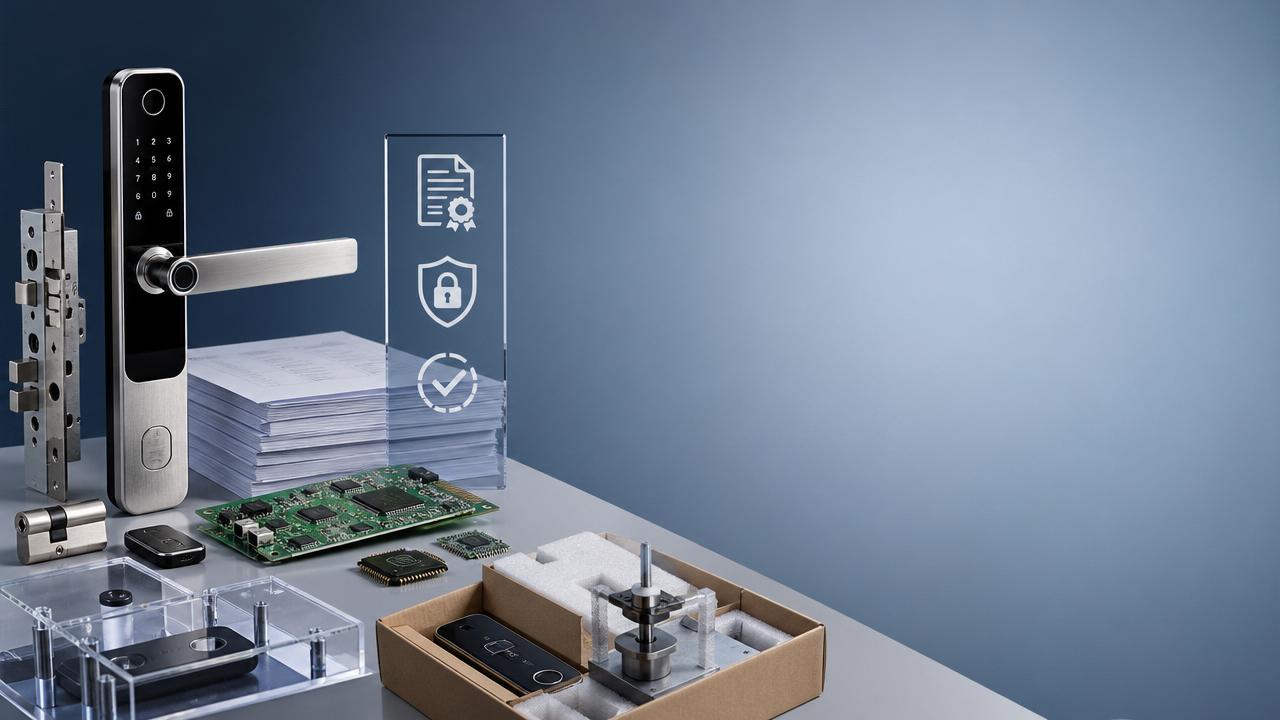
Choosing a reliable smart locks supplier is about more than price. It shapes product quality, compliance, delivery stability, and brand trust. A disciplined review process lowers sourcing risk, prevents costly returns, and supports stronger long-term performance. This guide explains how to evaluate a smart locks supplier before placing orders, covering certifications, production capability, cybersecurity, testing, service, and commercial terms.
Why a checklist matters before selecting a smart locks supplier
Smart locks sit at the intersection of hardware, software, security, and regulation. That makes supplier review more complex than standard mechanical products or low-risk electronic accessories.
A structured checklist keeps decisions consistent. It also helps compare multiple quotes using the same technical, legal, and operational criteria instead of relying on price alone.
In building materials and smart space projects, poor supplier selection can delay installation, trigger warranty disputes, or create access-control failures. Those risks directly affect property value and user confidence.
Core checklist to vet a smart locks supplier before placing orders
- Verify business licenses, export records, and factory ownership to confirm the smart locks supplier is a real operating entity, not only a trading layer without production control.
- Check product certifications and market access documents, including CE, FCC, RoHS, ANSI, BHMA, or regional fire and safety standards required in your target sales market.
- Review core security architecture, including encryption methods, app authentication, firmware update processes, and access log protection, because digital vulnerability can damage the entire product line.
- Inspect mechanical durability data, such as cycle testing, corrosion resistance, battery performance, and emergency override reliability under heavy-use residential or commercial entry conditions.
- Confirm manufacturing capacity, lead times, and component sourcing stability so the smart locks supplier can support pilot orders, repeat volumes, and urgent replenishment without quality drift.
- Ask for quality control documents, incoming inspection standards, in-process checkpoints, and final testing records to understand whether defects are prevented systematically or found too late.
- Request sample testing across real door types, mortise formats, and installation environments to verify fit, software behavior, lock response speed, and user experience before contract commitment.
- Evaluate engineering support, including API documentation, app localization, firmware customization, and integration capability for hospitality, rental, office, or smart home platforms.
- Clarify warranty terms, spare parts availability, failure response time, and return handling so after-sales support is measurable rather than based on vague verbal promises.
- Audit commercial terms, including tooling charges, payment milestones, Incoterms, packaging specifications, and penalty clauses related to late delivery or non-conforming product batches.
What to ask for during document review
A dependable smart locks supplier should provide more than a product catalog. Request audit reports, testing records, quality manuals, and traceability procedures linked to actual models.
It is also useful to compare certificates against issuing bodies. Fake, expired, or unrelated documents still appear in global sourcing, especially in fast-growing smart hardware categories.
- Ask for the latest factory audit, not a generic corporate profile.
- Match test reports to exact model numbers and firmware versions.
- Confirm whether certifications cover the finished lock or only components.
- Request a bill of materials for critical chips, sensors, and motors.
How vetting priorities change by application scenario
Residential projects
For home use, user experience matters as much as physical security. The smart locks supplier should show stable app pairing, intuitive setup, battery alerts, and quiet operation.
Compatibility with common door thicknesses, handle directions, and retrofit conditions is also critical. Installation complexity can quickly raise service costs after sales begin.
Hospitality and rental properties
Hotels and short-stay properties need centralized credential control, high turnover reliability, and integration with property management systems. Here, software stability becomes a major supplier selection factor.
The smart locks supplier should demonstrate remote code issuance, audit trail accuracy, and rapid firmware patching. Delayed fixes can disrupt room access and damage guest satisfaction.
Commercial offices and mixed-use buildings
Office projects often require broader access hierarchy, higher cycle durability, and integration with building management or attendance systems. Mechanical life and network security both deserve deeper testing.
In this scenario, a strong smart locks supplier should explain maintenance procedures, credential revocation logic, and upgrade support across multiple deployment phases.
Commonly overlooked issues when evaluating a smart locks supplier
Firmware ownership and update control
Some buyers confirm hardware quality but ignore software ownership. If firmware depends on a third party, update rights and security patches may become difficult to manage later.
Component substitution without notice
Electronic lock performance can change when motors, chips, or sensors are replaced. Require formal engineering change notification procedures before approving any production order.
Packaging and transit protection
A good smart locks supplier should protect screens, finishes, and internal components during shipment. Weak packaging creates hidden failures that only appear after installation or battery activation.
Local compliance gaps
A product that passes one market’s standards may still fail another market’s electromagnetic, privacy, or fire door requirements. Regional compliance checks should happen before deposit payment.
Unclear failure rate benchmarks
Do not accept “low defect rate” as a useful answer. Ask for measurable field failure data, return percentages, and root-cause categories for the last twelve months.
Practical steps to execute supplier vetting
Start with a shortlisting matrix. Score each smart locks supplier across compliance, production control, cybersecurity, engineering support, delivery reliability, and total cost, not unit price alone.
Then move to sample validation. Test at least one standard model and one customized configuration under real installation conditions, including repeated unlocking, low battery state, and network interruption.
If order volume matters, conduct a remote or on-site factory audit. Review assembly flow, aging tests, traceability labels, warehouse discipline, and how non-conforming units are isolated.
Before issuing a purchase order, lock the final specification. Confirm drawings, firmware version, approved components, packaging, carton marks, inspection method, and acceptance criteria in writing.
- Create a weighted scorecard and compare every supplier on the same basis.
- Run pilot orders before scaling to larger or multi-market shipments.
- Set pre-shipment inspection checkpoints for hardware and software items.
- Write corrective action timelines into the supply agreement.
Conclusion and next action
The right smart locks supplier should prove quality, security, compliance, and service with evidence. A lower quotation means little if product risk, support gaps, or delivery instability remain unresolved.
Use this checklist to narrow candidates, validate samples, and formalize specifications before payment. A careful review today creates more reliable sourcing, stronger project outcomes, and better long-term value.
For businesses tracking smart space and building materials trends, supplier vetting should be treated as a strategic decision. In fast-evolving access technology, disciplined selection is a competitive advantage.
Industry Briefing
Get the top 5 industry headlines delivered to your inbox every morning.