
Indonesia Digital Lock Imports Jump 63% as Spec Shift Deepens
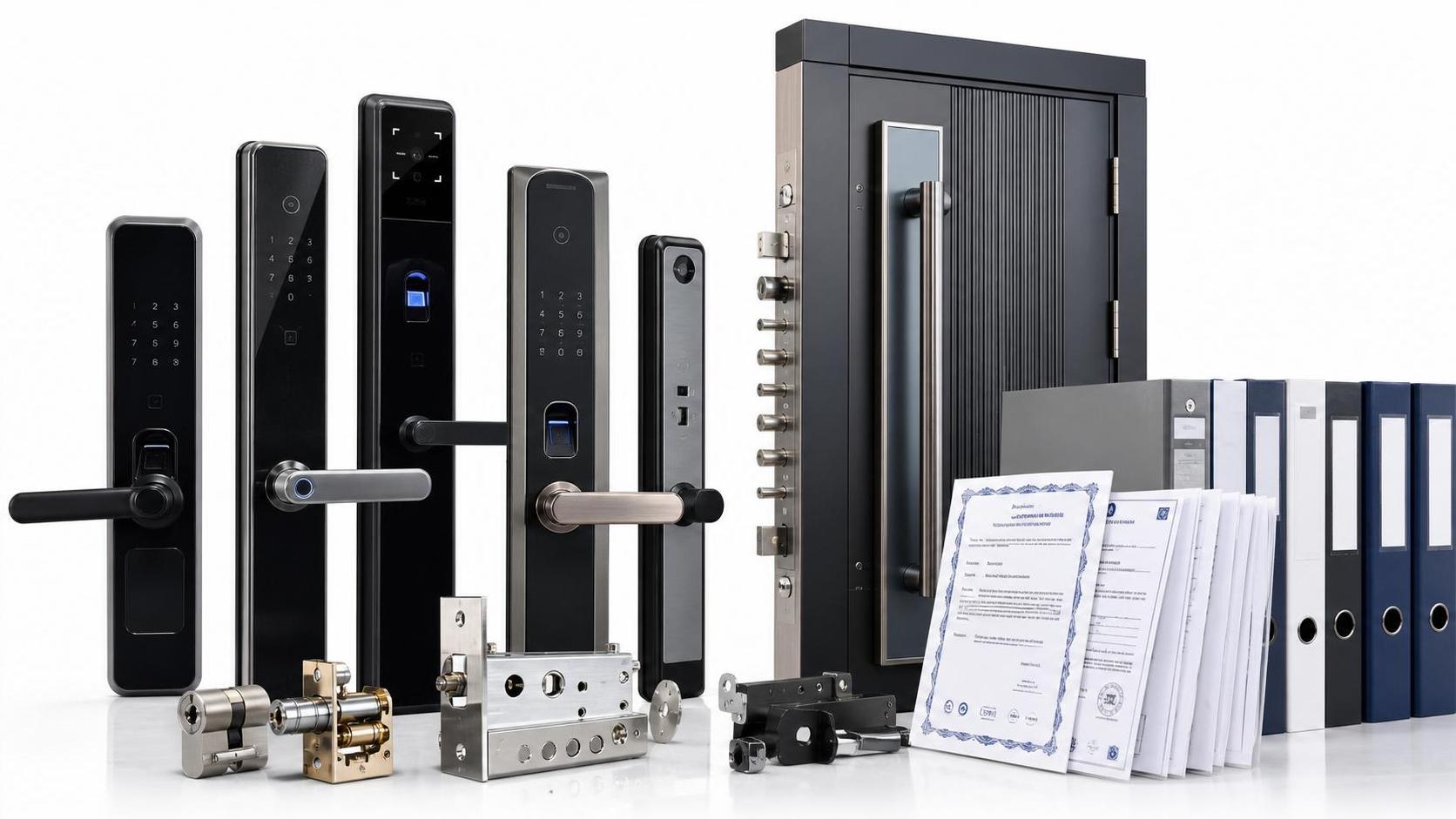
The timing of the underlying market shift is not explicitly stated in the available information, but the latest data released by Indonesia’s Central Statistics Agency (BPS) on July 7, 2026 points to a clear change in import structure and procurement expectations for digital locks. The update matters not only because import value rose sharply in the first half of 2026, but because product mix, technical standards, and tender requirements now appear more closely linked. For importers, manufacturers, project suppliers, certification-related service providers, and commercial buyers, this is worth watching as a signal that compliance alignment and specification matching may be moving closer to the center of market access and delivery decisions.
What the latest import and tender data confirms
According to BPS, Indonesia’s imports of digital locks reached US$128 million in January-June 2026, representing a 63% year-on-year increase.
Within that total, high-end models that support dual biometric recognition through fingerprint and facial recognition, and that comply with SNI IEC 62368-1:2025, accounted for 78.3%.
The same input information also states that tender documents for newly built commercial complexes in Jakarta have listed compatibility with EN 1303:2026 as a mandatory technical requirement.
These are the confirmed facts provided: a sharp rise in import value, a dominant share for higher-spec biometric models tied to a named standard, and the appearance of a specific compatibility requirement in project procurement documents.
Where the pressure is likely to show up across the chain
Import and trading companies may face tighter specification screening
From an industry perspective, importers and trading firms are likely to be among the first to feel the effect of this shift because they sit between overseas suppliers and local project demand. If a larger share of imports is already concentrated in models aligned with SNI IEC 62368-1:2025, then product selection, customs documentation support, and pre-shipment technical verification may become more commercially important. What deserves closer attention is whether sales opportunities increasingly depend on proving that the offered model matches both declared safety compliance and buyer-side specification language.
Manufacturers and exporters may need closer alignment between product design and bid documents
Analysis shows that manufacturers supplying the Indonesian market may need to pay more attention to the relationship between product configuration and downstream procurement requirements. The mention of mandatory EN 1303:2026 compatibility in Jakarta commercial project tenders suggests that technical bid alignment could matter alongside product performance claims. For exporters, this may affect model selection, test documentation preparation, and how technical files are presented to buyers and intermediaries. It is more appropriate to understand this as a specification-access issue rather than only a demand increase story.
Project buyers and procurement teams appear to be raising the baseline
For buyers involved in new commercial developments, the available information suggests a stronger preference for higher-end biometric products and for clearly stated compatibility conditions. Observably, procurement decisions may be shifting from broad category sourcing toward requirement-based sourcing, where compliance wording in tender documents becomes a gatekeeping factor. That can affect supplier qualification, technical comparison, and delivery planning, especially if non-conforming models are screened out early in the bid process.
Testing, certification, and after-sales support functions may see higher documentation demands
Certification-related companies, testing bodies, and after-sales service providers may also be affected if buyers increasingly request evidence tied to SNI IEC 62368-1:2025 or compatibility statements linked to EN 1303:2026. Analysis shows that the practical impact may appear less in headline regulation and more in day-to-day paperwork, product traceability, installation support, and post-delivery dispute handling. Where specifications become more detailed, the burden of proving conformity often shifts into reports, declarations, and service records.
What companies should examine now
Review whether current models match the cited standards and compatibility language
Companies active in this segment should first examine whether their current digital lock portfolio is positioned against the requirements explicitly referenced in the available information. This includes checking how product claims, technical parameters, and model descriptions correspond to SNI IEC 62368-1:2025 and to any buyer request for EN 1303:2026 compatibility. The input does not provide detailed enforcement rules, so this should be treated as a compliance review priority rather than as proof of a uniform market-wide mandate.
Prepare technical files for procurement-side scrutiny
What deserves closer attention is the quality and completeness of technical documentation. Tender-driven demand can turn a documentation gap into a lost order even before pricing is evaluated. Businesses may therefore need to verify the readiness of test reports, conformity statements, product specifications, model mapping tables, and bid-support materials. The current information does not confirm a standard documentation package, but it does indicate that procurement language is becoming more technical.
Watch for changes in tender wording and execution practice
Observably, one of the most practical near-term tasks is to monitor whether similar mandatory wording appears in additional project tenders beyond the example already cited. This matters because repeated use of the same requirement would indicate broader execution momentum. For now, the available information supports close monitoring, not a definitive conclusion about universal adoption across all projects or buyers.
Reassess delivery planning and supplier qualification
If higher-spec biometric models continue to dominate import demand, companies may need to revisit supplier qualification and delivery scheduling. Analysis shows that compliance-sensitive products can create extra steps in model approval, testing coordination, and replacement handling. That does not automatically mean longer lead times in every case, but it does suggest that procurement and fulfillment teams should avoid treating all digital lock models as interchangeable.
Why this looks more like an execution signal than a simple demand story
Analysis shows that the most important takeaway is not only the 63% increase in import value, but the combination of three elements appearing at once: strong growth in imports, a high share for dual-biometric models associated with SNI IEC 62368-1:2025, and a mandatory compatibility clause in at least one category of commercial tender documents. Taken together, these elements suggest that purchasing decisions may be moving toward tighter specification control.
At the same time, it would be premature to describe this as a fully settled regulatory outcome across the whole market. The available information does not define enforcement scope, transition arrangements, or a wider official implementation framework beyond the cited facts. It is more appropriate to understand this as a concrete execution signal with broader implications that still require follow-up observation.
How this update is best understood for now
From an industry perspective, this development should be read as a sign that market access in Indonesia’s digital lock segment may increasingly depend on the ability to align products with named standards and procurement-side technical clauses. The immediate significance lies less in abstract policy discussion and more in the practical intersection of imports, certification language, bid compliance, and product selection. A measured conclusion is that the market signal is already visible, while the full extent of rule adoption and execution still needs to be tracked through subsequent tenders, compliance practice, and buyer behavior.
Basis of this article and points requiring continued verification
This article is generated based on the user-provided news title, event timing, and event summary. The specific official source link was not provided in the input and therefore still requires further verification.
For this type of development, commonly relevant source categories may include official announcements, releases by regulatory authorities, customs or trade administration information, industry association updates, standards organization documents, and reporting by authoritative media. Further observation is still needed on detailed implementation language, certification interpretation, tender document changes, market feedback, and how companies are executing against these requirements in practice.
Industry Briefing
Get the top 5 industry headlines delivered to your inbox every morning.