
OFAC SDN Move Hits Smart Lock and Door Supply Chains
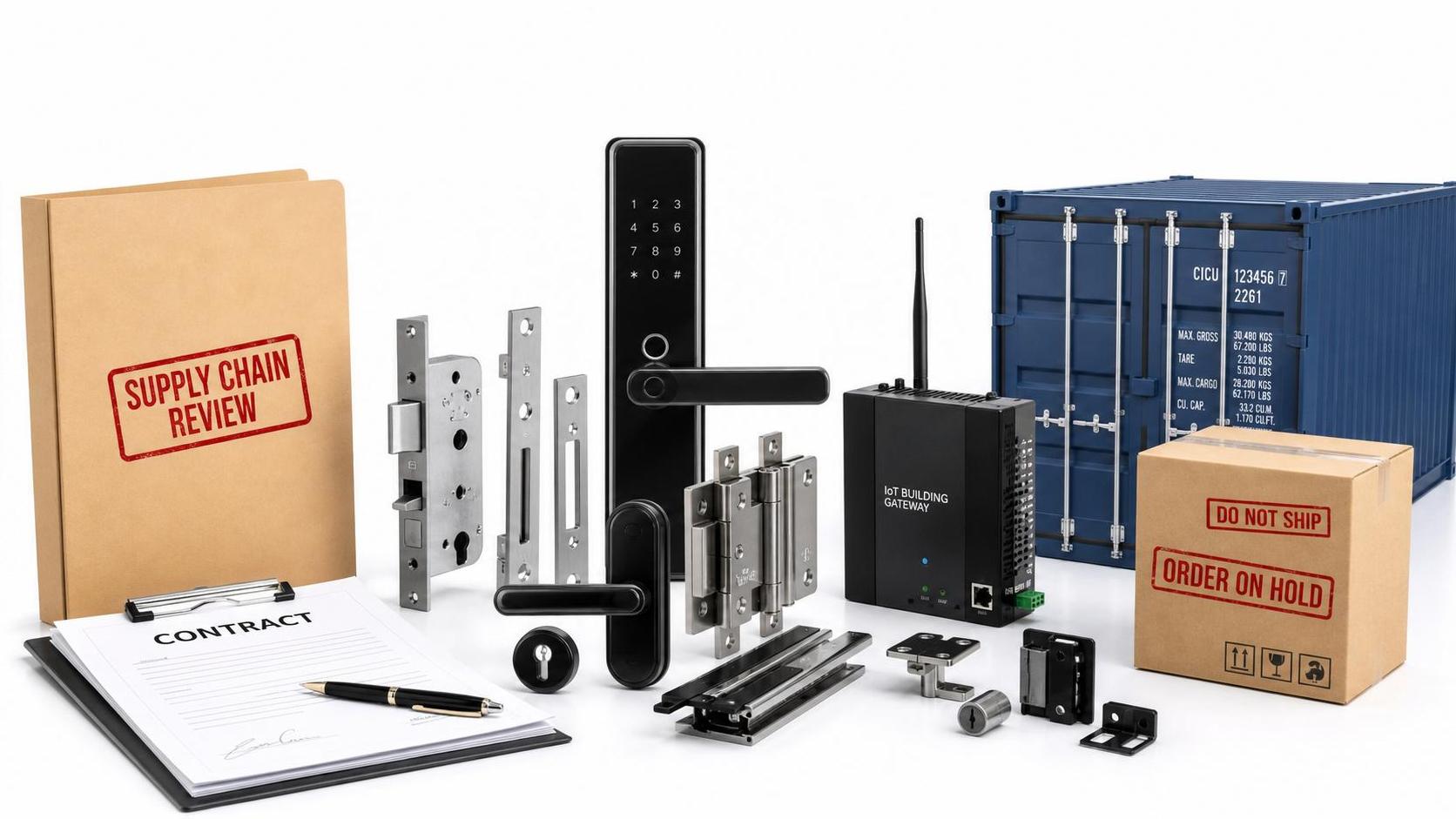
On June 10, 2026, the U.S. Treasury’s Office of Foreign Assets Control (OFAC) added four Chinese companies to the SDN list under an action labeled “Economic Fury,” bringing immediate attention to parts of the smart lock, door and window hardware, and building IoT supply chain. The move does not amount to a direct ban on end products, but the asset freeze and dollar-settlement restrictions have already pushed some U.S. security distributors to pause new orders, making this a development that exporters, distributors, sourcing teams, and project-based buyers need to watch closely.
What the June 10 action confirms
According to the information provided, OFAC listed four Chinese companies on June 10, 2026. Among them, two are engaged in exports of smart electronic lock modules, one is a systems integrator for high-end door and window hardware, and one manufactures building IoT gateways. As a result of the SDN designation, any assets these entities hold in the United States are frozen, and financial institutions globally are barred from conducting U.S. dollar settlement with them. The information also states that the measure does not directly prohibit end products, but that several U.S. security distributors have already suspended new orders and started supply-chain de-risking reviews.
Where the pressure may appear first
Order flow is likely to tighten at the distribution end
From an industry perspective, U.S. security distributors are among the first market participants likely to feel the impact because the information already points to paused new orders. The immediate issue is not only product availability, but also whether existing sourcing relationships can pass internal compliance review. What deserves closer attention is whether distributors broaden their reviews beyond the listed entities to adjacent suppliers, module providers, or system partners connected to the same product lines.
Module and system suppliers may face payment and fulfillment friction
Analysis shows that companies involved in smart electronic lock modules, door and window hardware systems, and building IoT gateway production may face disruptions in transaction execution even where end products are not directly banned. The key pressure points are likely to be dollar settlement, contract continuity, and delivery planning. Businesses in these categories need to pay attention to whether customers begin delaying confirmations, adjusting payment terms, or requesting added compliance documentation.
Project buyers and integrators may reassess supplier exposure
Observably, buyers involved in security projects, smart building deployments, or hardware integration may review whether designated entities sit anywhere in their approved supply base. The impact here is less about a formal product prohibition and more about procurement risk, financing channels, and delivery certainty. What deserves closer attention is whether sourcing teams begin asking for alternative supplier options or more detailed supply-chain mapping before releasing new purchase commitments.
Supply-chain service providers may face screening and documentation pressure
From an industry perspective, firms supporting cross-border settlement, trade coordination, and compliance checks may also see added workload. The information provided makes clear that dollar settlement is restricted, so the practical issue for service providers is whether existing workflows and records are sufficient to identify affected counterparties and transactions. The focus is likely to fall on screening accuracy, document consistency, and the handling of orders already in process.
What companies should watch now
Separate product status from counterparty status
Analysis shows that one of the most important practical distinctions is that the action does not directly ban end products, while the listed entities themselves face asset-freeze and dollar-settlement consequences. Companies should therefore avoid treating all related products as automatically prohibited, but they should also avoid assuming business can continue unchanged where a listed entity is involved.
Review exposed categories and customer-facing commitments
What deserves closer attention is whether smart lock modules, high-end door and window hardware systems, and building IoT gateway-related business are tied to customers or channels that are sensitive to OFAC screening. For exporters and suppliers, this means checking which quotes, open orders, and delivery schedules may be affected by customer-side compliance reviews or distributor pauses.
Prepare documentation and communication for ongoing transactions
Observably, the first business friction often appears in questions rather than outright termination: who the supplier is, whether any listed entity is involved, how settlement will be handled, and whether delivery timelines remain credible. Companies should be ready to organize supplier identity records, transaction documents, and customer communications around those issues, particularly where projects are already under negotiation or fulfillment.
Track follow-up wording and operational interpretation
From an industry perspective, the policy signal and the way market participants implement it are not always identical. What deserves closer attention is not only the listing itself, but also how distributors, banks, and procurement teams interpret the practical boundary between a named-entity restriction and broader supplier de-risking. That distinction may shape the actual business impact more than the headline alone.
Why this matters beyond the headline
Analysis shows that this development is best understood as both an immediate transactional issue and a wider compliance signal for the smart access and building systems supply chain. The confirmed facts already show operational effects through paused U.S. distributor orders and de-risking reviews. At the same time, the information provided does not establish a full end-product embargo or a final industry-wide outcome. For that reason, it is more appropriate to understand this as a concrete short-term disruption with potential longer-term implications that still require observation.
How to read the situation at this stage
At this point, the most balanced reading is that the June 10 OFAC action has created a real compliance and commercial inflection point for parts of the smart lock, door and window systems, and building IoT chain, especially where U.S. channels and dollar settlement matter. It should not yet be treated as a universal shutdown of related products, but neither should it be seen as a purely symbolic move. The industry relevance lies in how quickly counterparties extend risk reviews from named entities to surrounding suppliers and product categories.
About the information used here
This article is based on the user-provided news title, event date, and event summary. For this type of development, commonly relevant source categories may include official government notices, corporate disclosures, industry association updates, authoritative media reporting, and compliance-related documentation. A specific official source link was not provided in the input, so the exact source record still requires ongoing verification. Follow-up attention should remain on any additional official wording, distributor responses, and further signs of how supply-chain de-risking is being applied in practice.
Industry Briefing
Get the top 5 industry headlines delivered to your inbox every morning.