
Saudi SASO Mandates Localized Cybersecurity Testing for Smart Locks
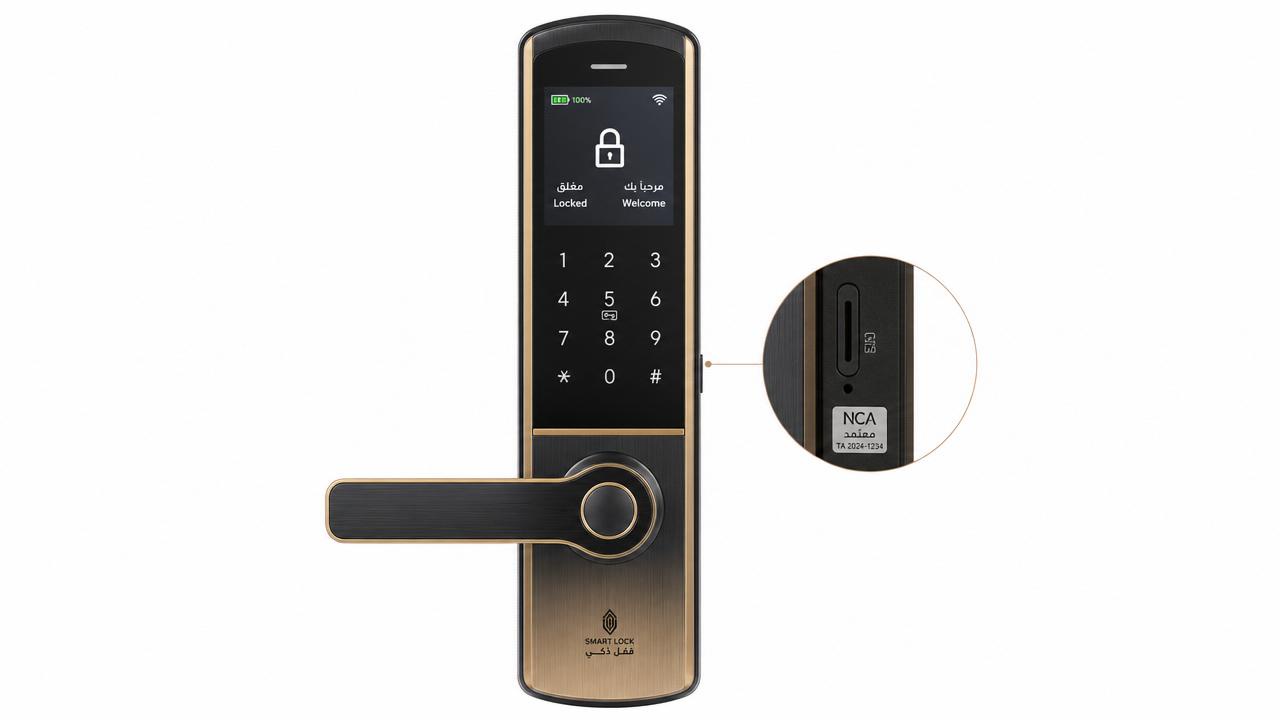
RIYADH, May 14, 2026 — The Saudi Standards, Metrology and Quality Organization (SASO) issued Revision No. 3 of 2026 on May 14, 2026, introducing mandatory localized cybersecurity testing requirements for smart door locks, digital door systems, and window fittings entering the Saudi market. The revision reflects an intensified regulatory focus on digital product safety, data sovereignty, and user accessibility — particularly amid rising adoption of IoT-enabled building hardware across Gulf Cooperation Council (GCC) countries.
Event Overview
On May 14, 2026, SASO published the SASO IEC 62443-3-3:2026 Local Implementation Guide. It stipulates that all Digital Locks, Door Systems, and Window Fittings imported into Saudi Arabia must comply with three additional verification steps beyond international IEC 62443-3-3 requirements: (1) penetration testing of Arabic-language user interfaces; (2) audit of remote management protocols using locally issued SIM cards; and (3) successful API integration and functional validation with the National Cybersecurity Authority’s (NCA) regulatory platform. Enforcement begins August 1, 2026. The measure directly affects over 200 Chinese export-oriented enterprises in the smart security sector.
Industries Affected
Direct Trading Enterprises
Exporters and distributors handling smart lock and architectural hardware shipments to Saudi Arabia face immediate compliance risk. Non-compliant products will be rejected at customs or recalled post-import. Impact manifests in delayed clearance, increased pre-shipment testing costs (estimated +18–25% per SKU), and potential contract renegotiation with local partners due to extended lead times for certification.
Raw Material Procurement Enterprises
Suppliers of core components — including Arabic UI firmware modules, embedded SIM modules compliant with Saudi Communications and Information Technology Commission (CITC) specifications, and NCA-certified cryptographic libraries — are seeing revised procurement demands. Buyers now require traceable localization documentation (e.g., Arabic UI source code repository access, CITC-approved SIM vendor letters), shifting sourcing criteria from cost and lead time toward regulatory readiness and technical transparency.
Manufacturing Enterprises
OEM/ODM manufacturers must re-engineer firmware architecture to support dual-language UI fallback logic, integrate Saudi-specific remote command sets (e.g., SMS-based lock/unlock via local carrier networks), and embed NCA-mandated logging and reporting hooks. This requires firmware versioning control, updated QA test scripts, and cross-functional coordination between software, hardware, and compliance teams — extending time-to-market by an average of 6–10 weeks per certified model.
Supply Chain Service Providers
Third-party certification bodies, testing labs, and regulatory consultants operating in GCC markets are adjusting service portfolios. Demand is surging for bilingual (English–Arabic) penetration testing reports, CITC-SIM interoperability validation, and NCA API sandbox onboarding support. Providers without accredited Saudi lab presence or NCA API integration experience face competitive disadvantage — especially as SASO has confirmed it will only accept test reports issued by SASO-recognized entities located within KSA or holding formal MoUs with NCA.
Key Focus Areas and Recommended Actions
Verify SASO Recognition Status of Your Testing Lab
Confirm whether your current third-party lab holds active SASO recognition for IEC 62443-3-3 testing — and specifically for Arabic UI penetration testing and NCA API integration validation. Labs without documented SASO accreditation or a signed cooperation agreement with NCA cannot issue valid certificates after August 1, 2026.
Conduct Early Firmware Localization Audit
Assess existing firmware for Arabic UI completeness (including error messages, setup wizards, and OTA update prompts), RTL-level input sanitization for Arabic Unicode, and secure storage of language preference settings. Prioritize models with high Saudi market share or contractual delivery commitments.
Initiate NCA Platform Integration Planning
Register with the NCA Developer Portal and request sandbox API credentials. Validate endpoint authentication (OAuth 2.0 with Saudi national ID-based issuer), event schema alignment (e.g., lock status change payloads must include arabic_device_name and saudi_timezone_offset fields), and logging retention compliance (minimum 90 days, stored in KSA-hosted infrastructure).
Review SIM-Based Remote Management Architecture
Evaluate whether remote commands (e.g., temporary access grant, firmware update trigger) rely exclusively on global GSM standards or require adaptation to CITC-mandated local SIM provisioning workflows — including eSIM profile binding to Saudi mobile network operators (e.g., STC, Mobily, Zain) and adherence to CITC’s Device Identity Register (DIR) requirements.
Editorial Perspective / Industry Observation
Observably, this revision signals a broader regional shift: GCC regulators are moving beyond ‘certification as checklist’ toward ‘compliance as continuous operation’. The inclusion of Arabic UI penetration testing — not just linguistic translation but security-hardened rendering and interaction logic — suggests SASO views interface-layer vulnerabilities as critical attack surfaces in consumer-facing IoT devices. Analysis shows that less than 12% of currently exported smart locks from China have undergone Arabic UI-specific OWASP MASVS-L2 assessments. From an industry perspective, this requirement is better understood not as a language mandate, but as a usability-security convergence standard — where linguistic accessibility and input validation rigor are treated as interdependent controls.
Conclusion
This regulation marks a structural inflection point for smart building hardware exporters targeting Saudi Arabia. It does not merely add a testing step; it redefines the boundary of ‘market-ready’ — requiring deeper localization investment, tighter regulatory coordination, and earlier engagement with national infrastructure platforms. For firms treating GCC compliance as a post-design add-on, the timeline leaves little margin for remediation. A rational interpretation is that SASO is aligning product safety expectations with Vision 2030’s digital trust pillars — making cybersecurity readiness inseparable from market access.
Source Attribution
Official text: SASO IEC 62443-3-3:2026 Local Implementation Guide, published May 14, 2026, available via SASO e-Regulatory Portal (https://eservices.saso.gov.sa).
NCA API specifications and sandbox access: National Cybersecurity Authority Developer Portal (https://developer.nca.gov.sa).
CITC SIM and device registration requirements: CITC Device Type Approval Handbook v4.2 (effective April 2026).
Note: SASO has indicated that transitional arrangements for legacy models may be announced before July 15, 2026 — subject to public consultation. This remains under active monitoring.
Industry Briefing
Get the top 5 industry headlines delivered to your inbox every morning.