
Smart Home Construction Mistakes That Create Long-Term Retrofit Costs
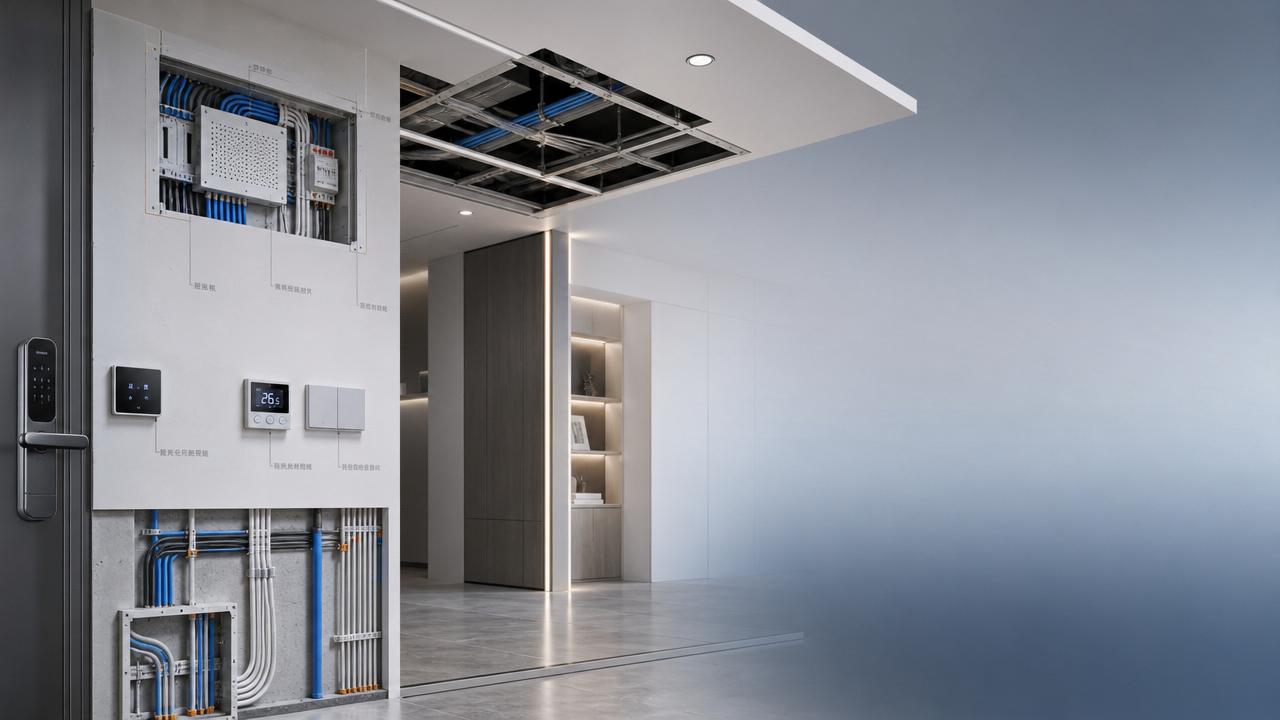
In smart home construction, early design and coordination mistakes can quietly turn into expensive retrofits, delayed handovers, and long-term system conflicts. For project managers and engineering leaders, avoiding these hidden costs starts with understanding where planning, wiring, interoperability, and infrastructure decisions often go wrong. This article highlights the most common pitfalls and how to prevent budget erosion before it reaches the jobsite.
Why smart home construction mistakes vary by project scenario
Not every smart home construction project fails for the same reason. A luxury villa, a mid-rise apartment block, a serviced residence, and a mixed-use development may all specify smart access, lighting automation, leak detection, HVAC controls, and integrated kitchen or bath systems, yet the retrofit risks are very different. The root issue is not just technology selection. It is whether the construction team matched the system design to the operational reality of the building, the handover model, and the long-term maintenance structure.
For project managers, this matters because many avoidable retrofit costs begin as coordination gaps between architecture, MEP, interior fit-out, low-voltage systems, and procurement. In one scenario, the biggest risk may be insufficient conduit capacity. In another, it may be platform lock-in, weak Wi-Fi planning, or device choices that conflict with local code, energy standards, or trade availability. Smart home construction should therefore be evaluated as a scenario-based delivery problem, not simply a device-installation package.
Typical project scenarios where hidden retrofit costs appear
The most common smart home construction mistakes emerge in a small number of repeatable business contexts. Understanding these contexts helps teams prioritize the right preconstruction checks.
These scenarios show why a single smart package rarely works across all project types. The correct design approach depends on whether the priority is premium user experience, repeatable deployment, operational resilience, or low-disruption modernization.
Scenario 1: Custom residences where late changes destroy budget discipline
In custom homes, smart home construction often starts with ambition: integrated lighting scenes, smart locks, climate zoning, motorized shading, audiovisual routing, kitchen automation, bathroom comfort controls, and security monitoring. The problem is that owners frequently refine preferences after interior layouts, joinery, and ceiling details are already frozen. This turns what looked like a premium feature package into a chain of coordination changes.
The most expensive mistake in this scenario is designing smart systems after decorative intent has already advanced too far. If switch positions, panel capacities, rack locations, door hardware clearances, and sensor sightlines are not validated early, every additional requirement becomes invasive work. Retrofit costs rise fast when electricians must reopen finished surfaces or when millwork must be modified to accommodate hidden equipment.
For this scenario, project leaders should insist on a pre-fit-out smart home construction coordination package. That package should include reflected ceiling plans, device zoning, gateway locations, low-voltage routes, ventilation for equipment cabinets, and fallback manual controls. Premium clients may request advanced automation, but they still need a disciplined freeze date for control logic and interface decisions.
Scenario 2: Multi-unit developments where standardization matters more than gadget count
In apartments and condominiums, the biggest smart home construction mistake is assuming that more devices equal more value. For a developer delivering hundreds of units, long-term success usually depends on standardization, interoperability, and serviceability rather than on highly customized automation. A system that performs well in one show unit can become a warranty burden when multiplied across an entire tower.
Common failures include selecting consumer-grade devices for developer-grade deployment, underestimating shared network requirements, and omitting clear boundaries between in-unit systems and base building systems. Once residents begin moving in, support calls quickly expose design weaknesses: unstable app pairing, inconsistent lock enrollment, weak hallway-to-unit signal transfer, or water sensors that cannot report effectively to property operations.
The right approach here is to simplify the feature set and strengthen infrastructure. Standard device families, repeatable wiring methods, and clearly documented commissioning procedures reduce future retrofit pressure. If smart home construction is intended as a differentiator in sales, the real differentiator should be reliability at scale, not feature inflation.
Scenario 3: Renovation projects where old infrastructure defeats new intent
Renovation and adaptive reuse projects carry a distinct risk profile. Here, smart home construction mistakes usually come from assuming existing electrical, wall, and network conditions can support modern systems without meaningful upgrades. Older buildings often contain shallow boxes, limited grounding quality, congested risers, and materials that complicate wireless performance. Even if the devices are modern, the building fabric may not be ready for them.
A typical misjudgment is selecting wireless devices to avoid wiring work, then discovering that concrete, metal framing, or fragmented floor plans compromise signal stability. Another is adding smart kitchen and bath equipment without checking electrical loads, moisture exposure, valve compatibility, or maintenance access. These oversights do not always appear during installation; they often surface during occupancy, when troubleshooting becomes more disruptive and expensive.
In this scenario, survey quality is everything. Before final specification, teams need a field-based assessment of box depths, panel spare capacity, router and access point placement, pipe conditions, waterproofing interfaces, and likely interference zones. Smart home construction in renovation projects should be phased around what the building can realistically absorb.
Scenario 4: Rental, serviced, and operational assets where maintainability is the true KPI
For rental housing, serviced apartments, and similar operating assets, smart home construction should be judged less by novelty and more by reset speed, access control governance, and maintenance workload. A beautiful automation package that is difficult to reassign between tenants can create continuous operational friction.
The most common mistake in this scenario is specifying systems around the end user while neglecting the operator. Property teams need role-based access, remote diagnostics, battery replacement planning, and simple procedures for turnover. If these requirements are missed, the result is not only retrofit cost but also recurring labor cost and poor service consistency.
Project managers should evaluate whether every smart component supports the asset’s management model. Smart locks, leak sensors, thermostats, and energy monitoring tools can deliver strong value in rental environments, but only when the back-end administration is stable, scalable, and easy to train.
The mistakes that most often trigger long-term retrofits
Across all scenarios, several repeat failures repeatedly drive retrofit spending in smart home construction.
1. Planning smart systems too late
When automation, access, and sensor strategy are reviewed after ceiling closure, wet area detailing, or joinery release, coordination becomes reactive. This is one of the clearest pathways to avoidable rework.
2. Ignoring interoperability and platform lifecycle
Products may function individually but fail as a system. Smart home construction needs a platform roadmap, not a basket of disconnected products. Teams should confirm protocol support, update policies, third-party integration limits, and regional availability of replacement parts.
3. Treating network design as an afterthought
Wi-Fi and low-voltage infrastructure are core construction issues, not optional IT add-ons. Dead zones, overloaded access points, and poorly placed racks undermine every dependent subsystem.
4. Underestimating power, enclosure, and access needs
Controllers, hubs, power supplies, and valves need physical space, ventilation, and service access. If these are forgotten, maintenance requires destructive opening or awkward secondary installations.
5. No commissioning logic tied to real occupancy
Systems that pass bench testing may still fail in use. Commissioning should reflect actual door schedules, water use patterns, HVAC zoning, and user hierarchy.
How requirements differ by scenario
Practical smart home construction safeguards for project leaders
To reduce retrofit exposure, project managers should build scenario-specific controls into early delivery stages. First, require a coordinated smart systems matrix that connects every major function to power, data, physical location, control method, and responsible trade. Second, align procurement with lifecycle support rather than upfront unit price only. Third, create mock-up or pilot testing where scenario complexity is high, especially in premium homes, repetitive residential units, or renovation environments with uncertain conditions.
It is also wise to define handover ownership early. Who owns resident onboarding? Who updates firmware? Who replaces failed devices under warranty? Who approves substitutions if supply chain conditions change? In smart home construction, unclear responsibility frequently turns a minor systems issue into a costly post-completion modification.
Common scenario misjudgments that teams should challenge
- Assuming wireless means infrastructure-light. In reality, wireless stability still depends on good planning and often stronger network design.
- Assuming premium buyers want maximum complexity. Many want invisible reliability and intuitive operation more than extensive automation layers.
- Assuming developer standard packages can be copied into older buildings without adaptation. Existing conditions often rewrite feasibility.
- Assuming operating teams can absorb any system after handover. If training, permissions, and support are weak, the asset pays later.
FAQ for project managers evaluating smart home construction risk
When should smart home construction coordination begin?
Before interior detailing and before MEP routes are locked. Early coordination protects ceiling space, conduit strategy, and equipment placement.
Which projects are most vulnerable to retrofit overruns?
High-customization homes, legacy building renovations, and large multi-unit developments with weak standardization are especially vulnerable.
Is wireless always better for retrofit-sensitive projects?
No. Wireless can reduce intrusive works, but only if the building envelope, layout, and operational model support reliable coverage and device management.
Final decision guide: match the solution to the scenario before construction starts
The most costly smart home construction mistakes are rarely caused by technology alone. They come from applying the wrong system logic to the wrong project scenario, then discovering the mismatch after finishes, occupancy, or operations begin. For project managers and engineering leaders, the best protection is to evaluate each scheme through a scenario lens: what type of asset is this, who will operate it, how repeatable must the solution be, and what existing constraints can undermine performance?
If your team is defining a new residential, renovation, or mixed-use specification, use that scenario-based review to confirm infrastructure readiness, interoperability, maintainability, and user expectations before procurement closes. In smart home construction, the cheapest correction is the one made on the coordination drawing, not after handover.
Industry Briefing
Get the top 5 industry headlines delivered to your inbox every morning.