
Smart Living Standards and the New Baseline for Premium Digital Locks
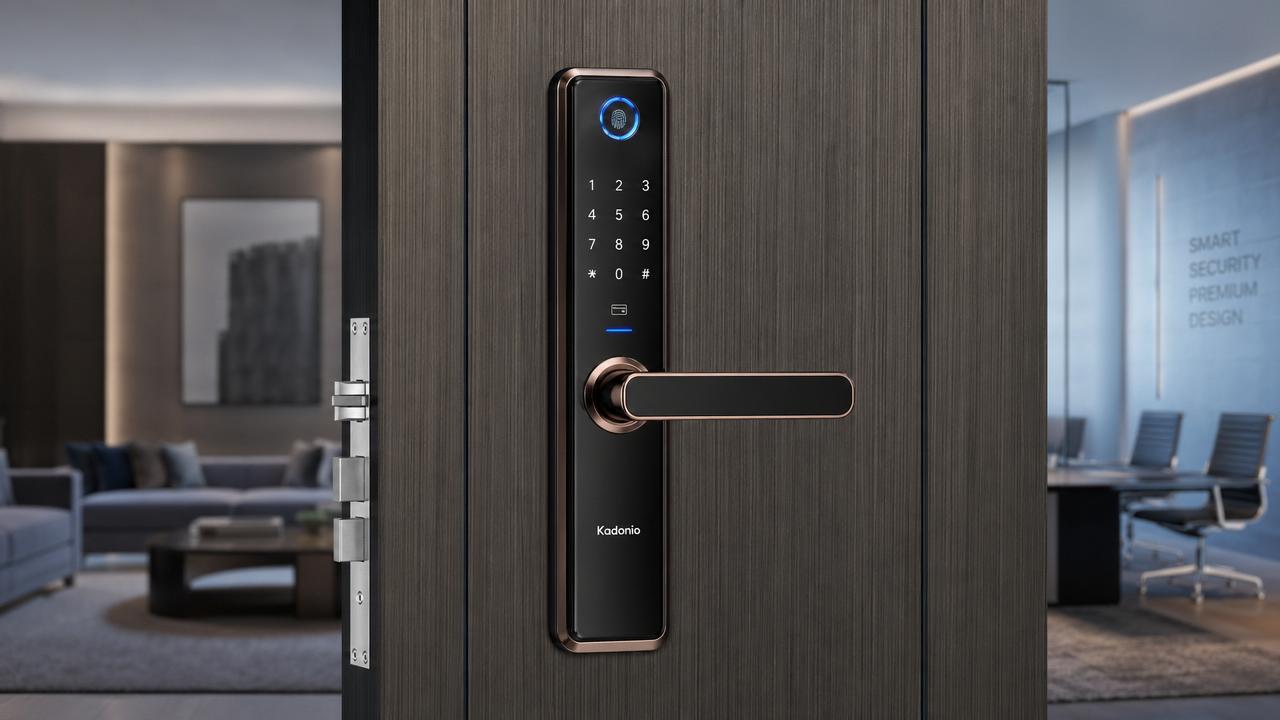
As smart living standards continue to redefine expectations in residential and commercial spaces, premium digital locks are emerging as a new benchmark for security, design, and connected convenience. For business decision-makers, understanding this shift is essential to aligning product strategy, project value, and long-term competitiveness in an increasingly intelligent built environment.
Why decision-makers should use a checklist first, not assumptions
When companies evaluate premium digital locks under rising smart living standards, the biggest mistake is treating them as a simple hardware upgrade. In practice, a lock now sits at the intersection of access control, user experience, compliance, building intelligence, and brand positioning. A poor decision can affect handover quality, after-sales workload, tenant satisfaction, and even project bidding competitiveness for the next 12 to 36 months.
A checklist-based approach helps executives avoid fragmented decisions. Instead of comparing only finish, price, or app features, teams can review core criteria in a consistent order: security architecture, installation compatibility, connectivity protocol, battery cycle, credential management, and service response. This matters across hospitality, multifamily housing, office fit-outs, senior living, and mixed-use developments where smart living standards are becoming a baseline rather than a premium add-on.
For GIAM’s audience in the building materials, sanitary space, and smart kitchen and bath ecosystem, digital locks also signal a larger pattern. They are a visible entry point into connected environments, where doors, lighting, ventilation, water control, and occupancy logic increasingly share data. In other words, evaluating locks correctly is not just a procurement task; it is part of a broader smart living standards strategy.
The first questions every project team should answer
- Is the lock intended for a high-turnover environment, such as rental units or hospitality, where access credentials may change weekly or even daily?
- Will the lock operate as a standalone product, or must it connect with broader smart living standards such as property platforms, building access layers, and room automation?
- Does the project need premium visual integration with interior finishes, handle sets, sanitary hardware, and door materials to support an upscale design narrative?
- What is the acceptable maintenance threshold: a 6 to 12 month battery replacement cycle, remote health monitoring, or low-touch service over a 24 month period?
These early questions create a shared decision framework between procurement, design, operations, and technical teams. They also reduce the common mismatch where a lock looks premium in the showroom but underperforms in real operating conditions.
Core checklist: what to verify before selecting a premium digital lock
The most effective way to align with smart living standards is to evaluate digital locks through a structured checklist. This is especially important for enterprise buyers managing multiple stakeholders, phased deliveries, or cross-border supply chains. The following table can be used as a practical evaluation sheet during supplier discussions, mock-up reviews, or specification approval rounds.
This checklist helps separate feature-rich products from project-ready products. A lock may offer five unlocking methods, but if it fails basic retrofit conditions or requires frequent on-site intervention, it may not support smart living standards in any meaningful operational sense.
Non-negotiable technical checks
Premium does not simply mean expensive materials or a sleek mobile app. It should mean durable mechanical performance, stable credential logic, and predictable field support. Decision-makers should confirm whether the lock can maintain stable use across high-frequency access cycles and whether audit trail features are available where accountability is important.
It is also wise to review communication resilience. For example, a Bluetooth-based lock may be sufficient for owner-occupied apartments, while managed rentals often need gateway-based remote management. In a portfolio of 100 units, the difference between manual resetting and remote credential issuance can translate into major labor savings over a single year.
Another often overlooked issue is local fail-safe behavior. Teams should ask what happens when batteries run low, internet service is interrupted, or a user credential expires unexpectedly. Smart living standards are not only about convenience in ideal conditions; they are about continuity when conditions are less than ideal.
Quick screening checklist for supplier meetings
- Request the supported door preparation and thickness range in writing before sampling.
- Confirm whether remote credential management requires a gateway, subscription, or separate software layer.
- Ask for the typical battery replacement cycle under normal traffic, not only the best-case standby figure.
- Review how emergency override, low-battery entry, and access logs are handled in real use.
- Check whether finish options can coordinate with interior hardware packages across kitchens, bathrooms, and doors.
Match the lock to the scenario: different smart living standards require different priorities
Not every premium digital lock should be evaluated by the same standard. A lock suitable for a luxury apartment may be inefficient in a co-living project, and a hospitality-focused model may be excessive for low-turnover office suites. The point of smart living standards is not to specify one universal device, but to define the right level of intelligence, usability, and resilience for each environment.
Enterprise buyers should therefore build a scenario matrix before final selection. This avoids over-specification in low-risk zones and under-specification in high-touch areas. In projects with 3 to 5 access types, such as resident, visitor, housekeeping, facility, and contractor access, credential logic often becomes more important than cosmetic differentiation.
The table below provides a practical scenario comparison that can be used in early specification reviews or value-engineering discussions.
This scenario-based view helps leaders align lock specifications with actual operating models. It also supports a more rational investment discussion, since premium value should be measured by fit, not by the longest feature list.
How smart living standards influence specification depth
In projects targeting a stronger smart living standards profile, specifiers typically move beyond basic unlocking features and ask about data visibility, remote management, and connection to other touchpoints. For example, a smart lock may need to coordinate with elevator permissions, shared amenities, or utility-linked room status in some developments.
That does not mean every project needs a highly complex ecosystem. In many cases, a 2-layer setup works well: local secure access for the user, plus remote administrative visibility for the operator. The right balance depends on occupancy pattern, service model, and the cost of manual intervention when something goes wrong.
For architects, developers, and brand owners, another consideration is consistency. If sanitary systems, kitchen systems, and access systems all speak to comfort, hygiene, and efficiency, the lock becomes part of the overall spatial intelligence message, not an isolated device purchase.
Common blind spots that weaken project performance
Many lock decisions fail not because the product is poor, but because critical details were overlooked during planning. Smart living standards raise user expectations, so minor oversights can quickly become operational headaches. The most common issues appear in retrofit compatibility, software ownership, battery service planning, and coordination with door suppliers or interior contractors.
Another blind spot is assuming that a premium finish equals premium durability. In real projects, touch frequency can exceed dozens of cycles per day on some doors. Teams should evaluate wear resistance, cleaning tolerance, and surface consistency alongside aesthetics, especially in hospitality, multifamily corridors, and mixed-use properties.
A third issue is fragmented accountability. If the lock supplier, door fabricator, installer, and software provider each own a different piece of the system, fault resolution can become slow. For enterprise projects with delivery windows of 8 to 16 weeks, such ambiguity increases commissioning risk and handover pressure.
Risk reminders for procurement and operations teams
- Do not approve a lock only from a catalog. A door mock-up is often necessary to verify fit, handle clearance, user ergonomics, and finish compatibility.
- Do not separate hardware and software review. A lock that is easy to install but hard to administer can create recurring cost over every 6 to 12 month operating cycle.
- Do not ignore emergency access logic. Business continuity depends on what happens when power is low, credentials are lost, or staff need temporary entry after hours.
- Do not evaluate only unit price. Include maintenance inputs, battery replacement labor, service call frequency, and training burden in the ownership picture.
A practical warning on standards and compliance
Where projects involve fire-rated doors, regulated access routes, or hospitality operations, companies should verify applicable local building requirements and product suitability before final procurement. Smart living standards should strengthen compliance and user safety, not create conflicts with door sets, exit behavior, or operating rules.
It is also good practice to define responsibility for commissioning, user training, and handover documentation at the purchase stage. Even a well-designed digital lock can underperform if staff receive only partial setup instructions or if credential policies are unclear from day one.
In cross-border supply programs, ask early about manuals, interface language, firmware update process, and support time zones. These details may seem small, but they influence whether the smart living standards experience remains smooth after installation.
Execution guide: what to prepare before moving forward
Once a company decides that premium digital locks should support its smart living standards strategy, the next step is preparation. The fastest projects are not necessarily the simplest; they are the ones where technical, commercial, and operational inputs are gathered early. A disciplined preparation pack can shorten specification alignment and reduce back-and-forth during the quotation stage.
For most projects, teams should prepare door schedules, quantity estimates, access user types, finish preferences, and intended management mode. Even a basic brief covering 20 to 30 doors can significantly improve recommendation quality. For larger rollouts above 100 doors, phased deployment logic and maintenance ownership should also be defined in advance.
Decision-makers should also map the lock’s role in the wider space strategy. If the development emphasizes hygiene, efficiency, energy awareness, and connected convenience, then digital access should complement these priorities rather than sit apart from them. That is where GIAM’s broader view of material systems and spatial intelligence becomes particularly relevant.
Information checklist to gather before consultation
- Door details: quantity, material, thickness, opening direction, and whether the doors are new-build or retrofit conditions.
- Use case details: residential, rental, hospitality, office, or mixed-use, plus expected traffic level and credential turnover frequency.
- Access logic: who needs entry, for how long, and whether temporary, scheduled, or remote permissions are required.
- Integration expectations: standalone use, app-based control, platform connection, or wider smart living standards ecosystem alignment.
- Commercial boundaries: target delivery window, sample request needs, budget range, finish requirements, and after-sales service expectations.
Why work with us
GIAM supports decision-makers who need more than product visibility. Our value lies in connecting building materials intelligence, smart space evolution, and practical specification logic. When smart living standards reshape procurement and project expectations, we help teams interpret what matters: from product selection criteria and scenario fit to delivery considerations and system-level coordination.
If you are evaluating premium digital locks for residential, hospitality, commercial, or mixed-use projects, contact us to discuss the points that affect real outcomes. We can help you clarify parameter confirmation, product selection direction, project compatibility, delivery cycle expectations, customization possibilities, certification-related considerations, sample support needs, and quotation communication priorities.
For companies building future-ready spaces, smart living standards are no longer a branding phrase. They are an operating baseline. The right digital lock strategy can strengthen security, improve user experience, reduce friction in daily management, and support a more intelligent built environment from the first specification meeting onward.
Industry Briefing
Get the top 5 industry headlines delivered to your inbox every morning.