
Smart Lock Integration Price Breakdown: Hardware, Software, Installation, and Maintenance
Why does smart lock integration price vary so much?
Smart lock integration price rarely depends on the lock alone. The full number usually combines hardware, software, installation, compatibility work, and long-term support.
That is why early budget drafts often miss 15% to 30% of the real project value. The gap usually sits in system connection, network preparation, and service coverage.
In residential towers, hospitality upgrades, offices, and mixed-use assets, the cost logic changes again. Door count, user turnover, fire code, and access policy all reshape the final spend.
GIAM has tracked this shift across smart spaces, building materials, and digital living systems. One clear pattern appears repeatedly: the better the cost structure is mapped upfront, the better the return stays over time.
So the useful question is not simply, “How much does it cost?” A better question is, “Which cost layer drives the investment, and which layer creates avoidable waste?”
What is usually included in a smart lock integration price breakdown?
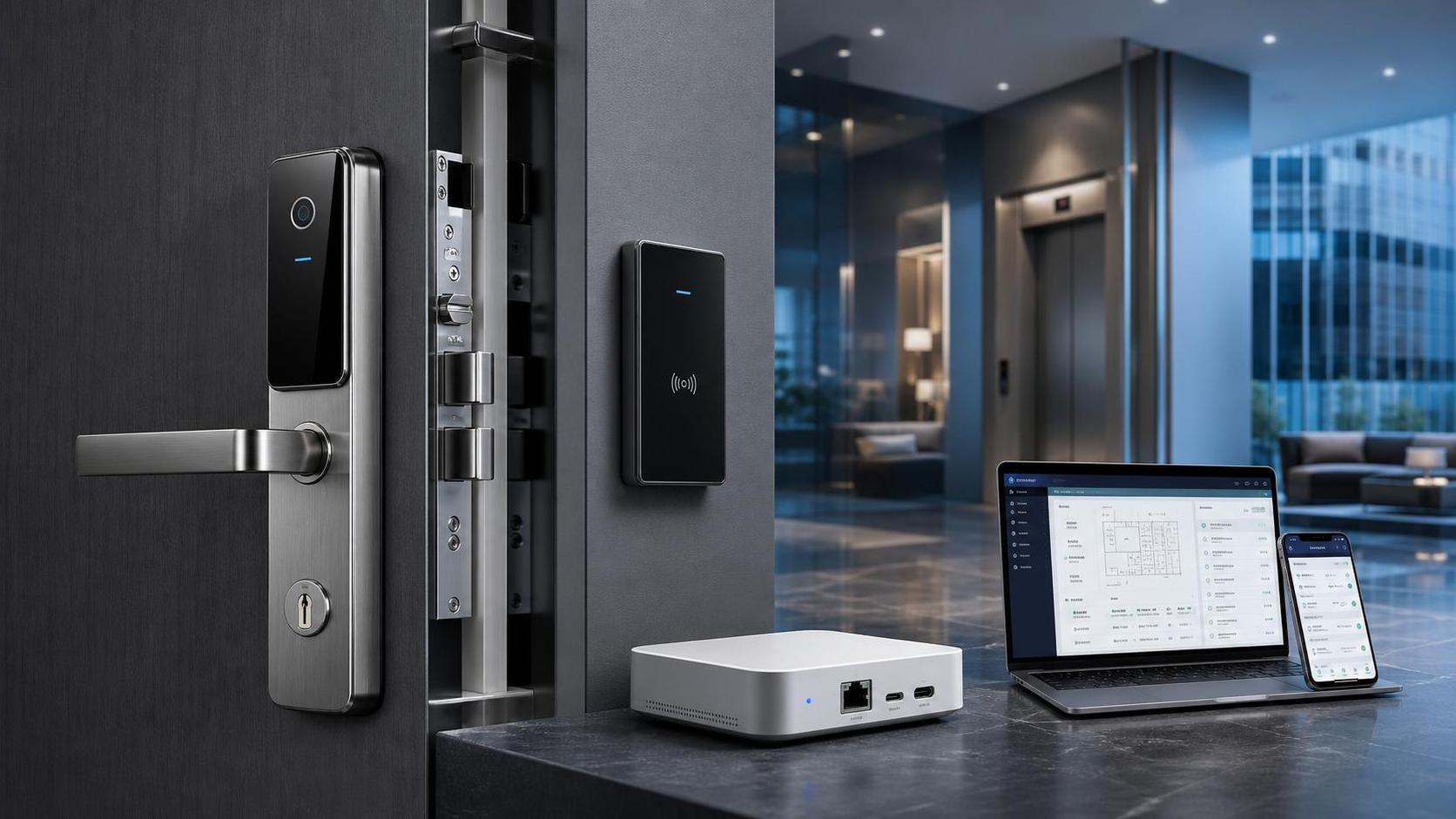
A practical smart lock integration price breakdown has five cost blocks. Missing any one of them creates a distorted approval case.
- Lock hardware: smart mortise locks, deadbolts, readers, cylinders, batteries, and backup keys.
- Access software: cloud platform, mobile credential management, dashboards, API use, and user licenses.
- Integration layer: links to PMS, BMS, intercom, elevator control, ERP, or visitor systems.
- Installation labor: door preparation, wiring, commissioning, testing, and on-site corrections.
- Maintenance: battery replacement, firmware updates, support contracts, and failed component swaps.
In many projects, hardware still takes the largest visible share. Yet software and integration often decide whether the system remains manageable after the handover phase.
This matters in commercial space upgrades. A lower hardware quote can become more expensive later if credentials, audit logs, or third-party interfaces are billed separately.
A quick reference table for budget review
The table below helps separate direct purchase cost from cost drivers that usually appear later in the procurement cycle.
Is hardware really the main cost, or do software and integration catch up?
For small deployments, hardware often dominates. For larger or more connected buildings, software and integration can reach the same level, or exceed it over several years.
A simple apartment project may use standalone locks with mobile credentials. In that case, the smart lock integration price stays relatively easy to forecast.
A hotel, clinic, or office campus is different. There may be check-in tools, lift permissions, visitor access, cleaning schedules, and audit retention requirements.
Each extra system creates one more integration point. Each integration point adds testing time, cyber review, and support responsibility. Those are real costs, even when they are not visible in the first quotation.
More common in actual approvals is a three-part view:
- Initial capital cost for devices and installation.
- Operational software cost over three to five years.
- Change cost when the building expands, changes use, or updates security rules.
That third part is often underestimated. If the platform scales poorly, every additional door becomes disproportionately expensive.
Which hidden costs change the smart lock integration price after approval?
The usual hidden cost is not a dramatic surprise. It is a chain of smaller items that were treated as “project conditions” instead of budget lines.
Door condition is one example. If existing frames are misaligned, fire-rated, or non-standard, installation time rises quickly. Some locks may need adapter plates or door leaf modification.
Network reality is another. Wireless locks sound simple, but gateways, signal quality, and cyber policy can add unplanned work. Offline models reduce network demands, yet increase manual management effort.
Compliance can also move the number. Local life-safety rules, emergency egress standards, and data protection requirements may force a higher specification than the original shortlist assumed.
Need a short checklist before signing? These points usually deserve a separate line item:
- Legacy door survey and retrofit allowance.
- Gateway count, network segmentation, and IT validation.
- Migration from cards, keys, or old access databases.
- Training hours for site teams and administrators.
- Spare stock and replacement response time.
- Battery service schedule across all installed doors.
When GIAM reviews smart living trends, the strongest projects are not always the cheapest at bid stage. They are the ones with fewer unmanaged conditions after deployment.
How should different project types compare smart lock integration price?
Projects should compare cost according to building behavior, not just door quantity. Two sites with the same number of locks can have very different operating costs.
In residential property, turnover rhythm matters. Short-stay or serviced units need faster credential changes and stronger remote control. That shifts value toward software quality.
In office environments, integration with employee identity systems may matter more than lock appearance. The smart lock integration price should therefore be judged against admin time saved.
For healthcare or education spaces, audit trails and restricted zones often drive specification. Here, the cheapest locking package may fail operationally, even if it looks efficient on paper.
A useful comparison framework looks like this:
What separates a solid investment from an expensive smart lock project?
A solid investment usually has a clean scope, realistic lifecycle assumptions, and a measurable operating benefit. An expensive project usually hides complexity behind a low entry quote.
One reliable test is to ask how the smart lock integration price behaves over five years, not only at purchase. That view exposes subscription escalation, battery labor, and replacement risk.
Another test is interoperability. If the lock ecosystem only works inside one narrow vendor path, later upgrades can become negotiation problems rather than technical decisions.
It also helps to compare the project against broader building priorities. GIAM’s market intelligence often connects lock decisions with energy strategy, sanitation planning, and smart kitchen or bath system upgrades.
That wider view matters because smart access is not isolated anymore. In modern residential civilization and commercial space planning, security infrastructure now affects occupancy flow, service labor, and digital user experience.
Questions worth asking before final approval
- What is the full five-year smart lock integration price, including software renewals?
- Which functions require paid add-ons after installation?
- How many doors need non-standard retrofit work?
- What happens if the property changes operator or management platform?
- How fast can failed locks be replaced without service disruption?
So, what is the smartest next step?
Start with a structured cost map, not a headline quote. Break the smart lock integration price into hardware, software, installation, integration, and maintenance before comparing suppliers.
Then match those numbers to the building’s real operating pattern. A residential block, office floor, hotel, and institutional facility should not use the same evaluation lens.
It is also worth confirming lifecycle assumptions with current sector intelligence. Standards, tariffs, and digital access expectations continue to shift, and those shifts can change total cost faster than unit price suggests.
A careful review usually leads to better outcomes than chasing the lowest visible quote. The real goal is a system that stays secure, manageable, and financially predictable across the life of the space.
From there, the practical move is simple: define the site conditions, compare total ownership cost, and verify where future expansion or maintenance could alter the budget.
Industry Briefing
Get the top 5 industry headlines delivered to your inbox every morning.