
Vietnam Requires QCVN 129:2026 for Imported Digital Locks
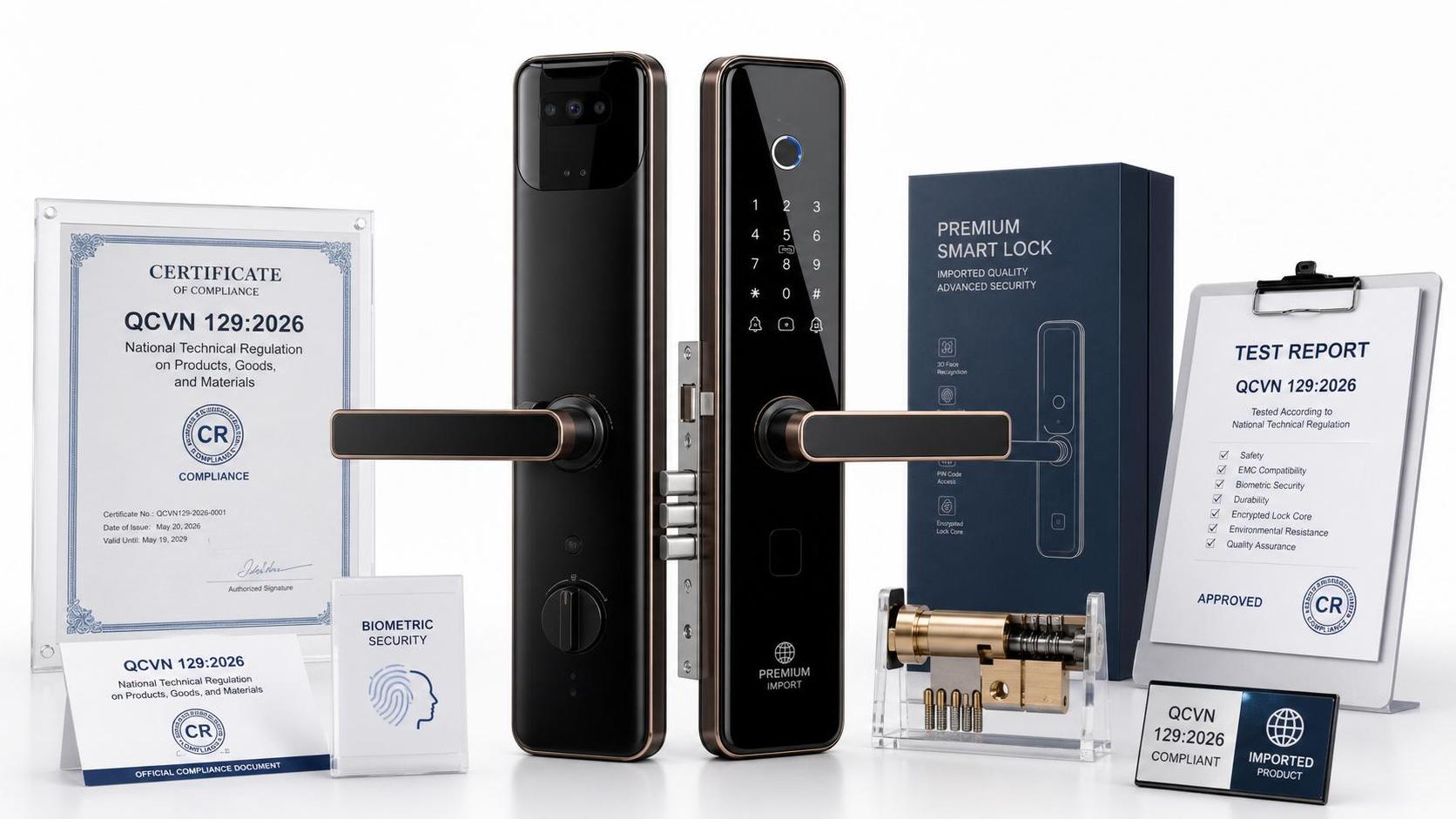
On July 4, 2026, Vietnam’s Directorate for Standards, Metrology and Quality (STAMEQ) issued Circular No. 22/2026/TT-BKHCN, setting a new compliance threshold for imported Digital Locks from September 1, 2026. The update is especially relevant for lock manufacturers, importers, distributors, testing and certification teams, and procurement functions serving the Vietnam market, because it introduces specific biometric security requirements and makes clear that existing CE or ANSI certifications will not be accepted in place of the new mandatory standard.
What the new requirement clearly sets out
According to the provided information, all imported Digital Locks will need to pass mandatory certification under QCVN 129:2026 starting on September 1, 2026. The newly highlighted technical indicators focus on three areas: resistance of fingerprint and facial recognition modules to image replay attacks, liveness detection response latency of no more than 300 ms, and protection of locally stored keys against extraction. The same information also states that QCVN 129:2026 differs in key ways from China’s GB/T 38737-2020, and that existing CE or ANSI certification is not recognized for this requirement.
Where the pressure will likely appear first in the supply chain
Import-facing product approvals may become the immediate bottleneck
From an industry perspective, companies directly importing Digital Locks into Vietnam are likely to face the earliest impact because market entry will depend on certification against QCVN 129:2026 rather than on previously held CE or ANSI documentation. The business effect is likely to center on product approval timing, shipment planning, and import readiness for models that include biometric functions.
Manufacturers may need to reassess biometric module readiness
Analysis shows that manufacturers supplying fingerprint- or face-enabled Digital Locks to Vietnam should pay close attention to whether current products can meet the newly named technical indicators. The practical impact is likely to fall on product validation, technical file preparation, and coordination between hardware, firmware, and security teams, especially where a product was previously aligned to other standards rather than to this Vietnam-specific requirement.
Channel partners and distributors may face portfolio and delivery questions
Distributors and channel partners could be affected where existing product portfolios rely on certifications that Vietnam will not accept under the new rule. What deserves closer attention is the risk of mismatch between products already planned for sale and products that can actually clear the new compliance threshold, which may affect sell-in schedules, stock planning, and communication with downstream buyers.
Procurement and project buyers will need clearer compliance confirmation
For procurement teams and enterprise buyers, the main issue is likely to be document reliability rather than marketing claims. Observably, products presented as compliant in other markets may still require separate confirmation for Vietnam, so sourcing decisions, bid qualification, and project delivery timelines may need closer review before orders are finalized.
Practical points businesses should track now
Do not treat overseas certifications as interchangeable
Based on the provided facts, CE and ANSI certifications are not recognized for this requirement. For companies selling into Vietnam, that means internal compliance checks should be tied specifically to QCVN 129:2026 rather than inferred from approvals already obtained in other markets.
Review whether biometric claims can be supported under the new metrics
Businesses handling fingerprint- or facial-recognition Digital Locks should focus on the three named indicators in the new rule: replay-attack resistance, liveness response time, and local key storage protection. The immediate issue is not broad product positioning, but whether product specifications, test preparation, and technical evidence can match those stated criteria.
Separate policy wording from shipment execution
Analysis shows that the policy signal is already clear, but operational execution depends on how companies align products, documentation, testing, and customer commitments before the September 1, 2026 effective date. Firms involved in purchase orders, manufacturing schedules, and channel delivery should therefore watch for any gap between a model’s commercial availability and its certification readiness for Vietnam.
Prepare for supplier and customer communication around timing
What deserves closer attention is the communication chain across suppliers, importers, and buyers. Where products were planned on the assumption that CE or ANSI credentials were sufficient, teams may need to revisit lead times, compliance statements, and contract discussions to avoid misunderstandings related to import acceptance.
Why this looks like more than a routine filing update
As an editorial observation, this development is better understood as a targeted compliance tightening around biometric security in imported Digital Locks, rather than as a routine documentation change. The named technical indicators point to a more specific scrutiny of biometric attack resistance, response performance, and local key protection. At the same time, it remains important to distinguish confirmed facts from broader market conclusions: the notice establishes a mandatory requirement and a timetable, but the full commercial effect across brands, models, and supply arrangements still needs continued observation.
How to interpret the signal at this stage
It is more appropriate to understand this update as both an immediate operational requirement and a longer-term regulatory signal for companies serving Vietnam’s Digital Lock market. In the short term, the key issue is certification readiness before imports occur after September 1, 2026. In the longer term, the more meaningful takeaway is that biometric security performance is being treated as a concrete compliance matter rather than a secondary product feature. That does not by itself define the final market outcome, but it does raise the threshold for market access.
Basis of this article and points still requiring verification
This article is based on the user-provided news title, event date, and event summary. For this type of industry update, relevant source categories typically include official government notices, standardization documents, company disclosures, industry association materials, and reporting by authoritative trade media. A specific official source link was not provided in the input, so the precise publication text and any later implementation clarifications still need ongoing verification. Continued attention should be paid to any further official wording, certification practice details, and implementation guidance related to QCVN 129:2026.
Industry Briefing
Get the top 5 industry headlines delivered to your inbox every morning.