
EN 14351-2:2026 for Door and Window Systems Enters Force on 8 May 2026
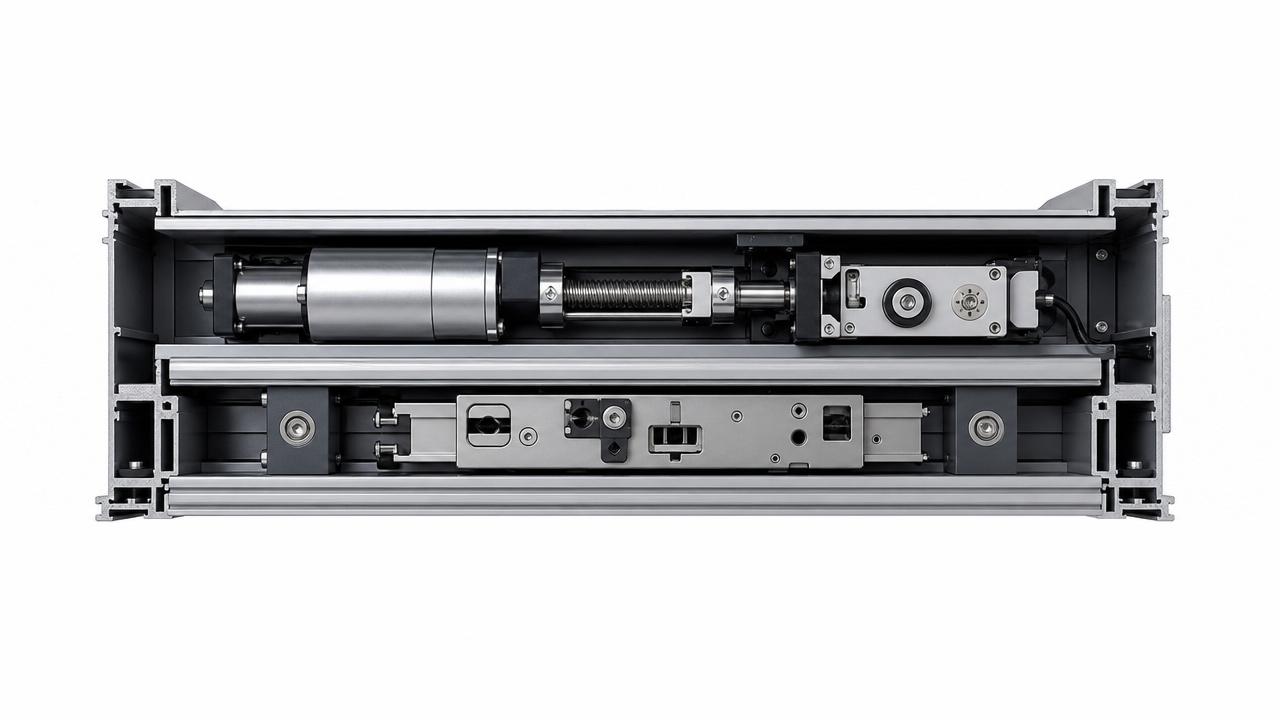
On 8 May 2026, the European Union will enforce EN 14351-2:2026 — the revised standard for door and window systems — mandating AI-driven operational durability testing for smart actuation mechanisms. This update directly affects manufacturers and exporters of door systems, window fittings, and integrated building hardware targeting the EU market.
Event Overview
The European Committee for Standardization (CEN) has confirmed that EN 14351-2:2026 becomes mandatory on 8 May 2026. The standard newly includes intelligent opening/closing mechanisms — such as electric sliding actuators, adaptive wind-pressure regulators, and digitally linked locking systems — within its compulsory durability and fail-safe testing requirements. Products failing to meet these criteria will be denied CE marking and excluded from EU distribution channels. Third-party laboratory certification using AI-simulated operational conditions must be completed within six weeks prior to placing products on the market.
Impact on Specific Industry Segments
Direct Exporters of Door and Window Systems
These enterprises face immediate compliance risk: EN 14351-2:2026 explicitly ties CE marking eligibility to successful completion of AI-based durability testing. Non-compliant shipments after 8 May 2026 may be detained at EU borders or rejected by notified bodies during post-market surveillance.
Manufacturers of Smart Actuation Components
Suppliers of electric drives, digital locks, and pressure-responsive controllers are now subject to upstream validation under the new standard. Their components must be tested not only individually but also in system-integrated configurations — increasing technical documentation and test coordination burdens.
Contract Manufacturers and OEMs
OEMs integrating third-party hardware into final door/window assemblies must verify traceability of all subcomponents’ conformity assessments. Under EN 14351-2:2026, system-level durability claims require full chain-of-certification evidence, including AI-simulated cycle logs and failure-mode reports from accredited labs.
Supply Chain Service Providers (Testing & Certification)
Laboratories offering EN 14351-2:2026 testing must demonstrate capability in AI-driven workload simulation — including variable environmental stressors (e.g., wind load fluctuations, thermal cycling, intermittent power supply). Accreditation scope updates and capacity planning are now urgent priorities for service providers supporting Chinese exporters.
What Relevant Enterprises or Practitioners Should Focus On and How to Respond
Verify current product certification status against the 8 May 2026 deadline
Exporters should audit existing CE certificates to confirm whether they reference EN 14351-2:2016 or earlier versions. Certificates issued under legacy standards will expire upon enforcement; no grace period is specified in the official CEN announcement.
Prioritize AI-simulated durability testing for high-volume or high-risk SKUs
Given the six-week lab turnaround window cited in the standard’s implementation guidance, companies should identify top export SKUs — especially those incorporating motorized or digitally coordinated mechanisms — and initiate testing immediately to avoid shipment delays.
Confirm alignment between hardware design documentation and AI test protocols
Test laboratories require detailed functional specifications (e.g., actuation torque profiles, lock engagement sequences, sensor response thresholds) to configure AI simulation parameters. Manufacturers must ensure technical files reflect real-world operational logic — not just static mechanical tolerances.
Engage notified bodies early to clarify interpretation of ‘system-level’ testing scope
EN 14351-2:2026 does not prescribe exact AI model architecture or simulation fidelity thresholds. Early dialogue with notified bodies helps align on acceptable test evidence formats — particularly where modular components are sourced from multiple suppliers.
Editorial Perspective / Industry Observation
Observably, EN 14351-2:2026 represents a structural shift — not merely a technical revision — in how the EU regulates intelligent building hardware. Its requirement for AI-simulated durability testing signals a move toward performance-based, scenario-aware conformity assessment rather than fixed-cycle mechanical testing alone. Analysis shows this is less about incremental tightening and more about establishing a new benchmark for system resilience in dynamic environments. From an industry perspective, it functions primarily as a forward-looking signal: while enforcement begins 8 May 2026, widespread adoption of AI test infrastructure among labs remains emergent, meaning practical implementation timelines may vary across jurisdictions. Continuous monitoring of CEN and EU Commission guidance on test methodology harmonisation is therefore warranted.
This development underscores that regulatory compliance for smart building products is increasingly inseparable from software-in-the-loop validation capabilities — a capability gap currently observed among many mid-tier hardware suppliers.
Current understanding better reflects a transitional phase: the standard is formally in force, but its operational maturity depends on parallel developments in testing ecosystem readiness and notified body capacity.
Conclusion: EN 14351-2:2026 marks the formal integration of intelligent actuation into EU construction product regulation. Its significance lies not only in mandatory testing but in redefining what constitutes sufficient evidence of long-term reliability for digitally enabled hardware. For stakeholders, it is best understood not as a one-time compliance checkpoint, but as the first enforceable milestone in an evolving framework for AI-augmented product assurance.
Source: Official CEN announcement of EN 14351-2:2026; Implementation notice published by the European Commission’s Joint Research Centre (JRC) on construction product standards; Publicly available CEN/TC 33 standardisation roadmap (2024–2027). Note: AI simulation protocol details remain under development; further technical guidance is expected from CEN/TC 33 and notified bodies in Q2 2026.
Industry Briefing
Get the top 5 industry headlines delivered to your inbox every morning.