
EN 1670:2026 Corrosion Standard Effective 15 May 2026
EN 1670:2026 Corrosion Standard Effective 15 May 2026
The European Committee for Standardization (CEN) has officially accelerated the enforcement date of the updated hardware corrosion resistance standard EN 1670:2026 to 15 May 2026 — 45 days earlier than originally scheduled. Published in the Official Journal of the European Union (OJEU) on 11 May 2026, the decision triggers immediate implications for manufacturers, exporters, and supply chain stakeholders engaged in the production and distribution of metal architectural hardware destined for the EU market.
Event Overview
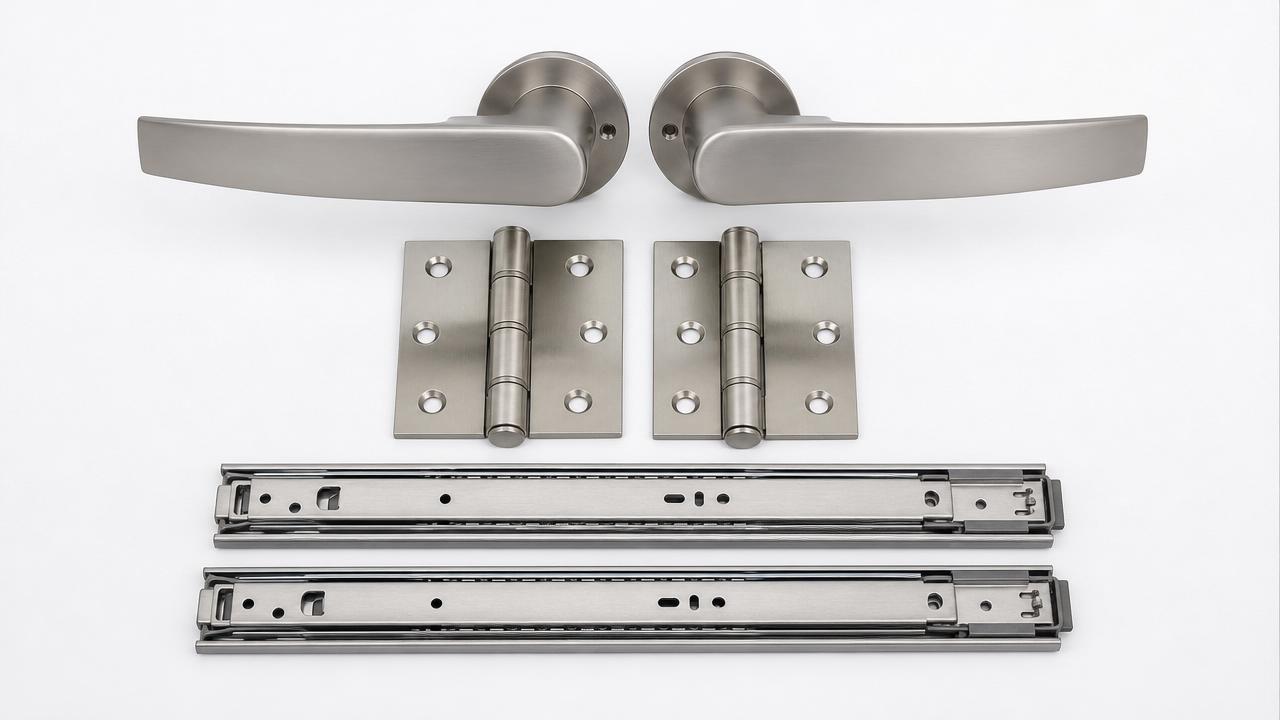
The Official Journal of the European Union (OJEU) confirmed on 11 May 2026 that EN 1670:2026 enters into mandatory application on 15 May 2026. Under the revised standard, the neutral salt spray (NSS) test duration increases from 96 hours to 720 hours. Additionally, a new combined test method — cyclic damp heat exposure followed by hydrogen sulfide (H2S) gas exposure — is introduced. The scope covers metallic hardware components including door and window handles, hinges, sliding tracks, and similar mechanically operated fittings intended for permanent installation in buildings. Products failing to meet EN 1670:2026 are ineligible for CE marking and may be barred from placement on the EU market or removal from distribution channels upon verification.
Industries Affected
Direct Exporters and Trading Enterprises
These entities face direct compliance risk at the point of customs clearance and market surveillance. Since CE marking is a prerequisite for legal market access, non-compliant consignments risk rejection, detention, or mandatory recall. Moreover, contractual liabilities with EU-based distributors — particularly those referencing harmonised standards — may trigger penalties or termination clauses if certification lags behind the 15 May deadline.
Raw Material Suppliers
Suppliers of base metals (e.g., zinc-alloy die-castings, stainless steel grades, surface-treated brass) must now align material specifications with the enhanced corrosion performance requirements. For instance, standard-grade zinc alloys without trivalent chromium passivation or duplex coatings may no longer suffice under the 720-hour NSS test. This necessitates tighter technical collaboration with downstream clients and potential requalification of existing material batches.
Manufacturing and Finishing Enterprises
Hardware producers must revise their quality control protocols, update test reports to reflect the new test durations and composite methods, and validate coating systems against both NSS and H2S-damp heat cycles. Facilities lacking accredited in-house corrosion testing capability will need to secure third-party validation well ahead of May 2026 — a process typically requiring 6–8 weeks for scheduling, execution, and reporting.
Supply Chain and Certification Service Providers
Notified Bodies, testing laboratories, and technical documentation consultants are experiencing increased demand for EN 1670:2026-specific assessments. Lead times for test certifications have extended significantly; some labs report backlogs exceeding 10 weeks. Concurrently, logistics and customs brokers are updating internal checklists to flag hardware shipments lacking valid EN 1670:2026 test reports dated on or after 15 May 2026.
Key Focus Areas and Recommended Actions
Verify Current Test Reports Against Revised Requirements
Enterprises must audit all existing EN 1670:2007 or EN 1670:2013 test certificates: neither satisfies the 720-hour NSS nor the composite H2S test. Retesting — not mere certificate reissue — is mandatory. Prioritise high-volume SKUs and best-selling product families first.
Engage Accredited Labs Early for Composite Testing
The new damp heat + H2S test is technically demanding and not widely available. Confirm laboratory accreditation per ISO/IEC 17025 for this specific method — not just general corrosion testing — and request evidence of method validation before submission.
Update Technical Documentation and EU Declaration of Conformity
The EU DoC must explicitly reference EN 1670:2026 (not prior editions), and the technical file must include full test reports, coating specifications, and traceability records for critical raw materials. Internal revision control processes should log all updates effective from 15 May 2026 onward.
Editorial Perspective / Industry Observation
Observably, the accelerated timeline reflects growing regulatory emphasis on durability-as-safety in building products — particularly where hardware failure could compromise fire compartmentation, emergency egress, or long-term structural integrity. Analysis shows that the 720-hour NSS threshold approximates 20+ years of coastal or industrial urban exposure, suggesting CEN intends EN 1670:2026 to serve as a de facto service life benchmark. From an industry perspective, this shift signals a broader move toward performance-based rather than prescriptive conformity assessment — one that rewards robust material science and validated finishing processes over legacy compliance shortcuts. Current more critical concern lies less in technical feasibility and more in the uneven global readiness of testing infrastructure to deliver timely, comparable results across jurisdictions.
Conclusion
The early enforcement of EN 1670:2026 marks a pivotal calibration in EU construction product regulation — not merely a tightening of corrosion thresholds, but a structural recalibration of accountability across the hardware value chain. It underscores that market access is increasingly contingent on verifiable, real-world performance data, not just procedural adherence. Rational industry response requires proactive alignment — not reactive remediation — and treats compliance as an integrated element of product development, not a final gatekeeping step.
Source Attribution
Official source: Official Journal of the European Union (OJEU), Notice C/2026/2872, published 11 May 2026. Harmonised standard status confirmed under Regulation (EU) No 305/2011 (CPR). Ongoing monitoring is advised for: (1) CEN’s forthcoming Technical Report clarifying interpretation of the H2S-damp heat test protocol; (2) potential amendments to EN 1670:2026 Annex ZA following post-implementation feedback; (3) national market surveillance trends reported via the EU’s RAPEX system.
Industry Briefing
Get the top 5 industry headlines delivered to your inbox every morning.