
Anti-bacterial construction claims: what holds up on site?
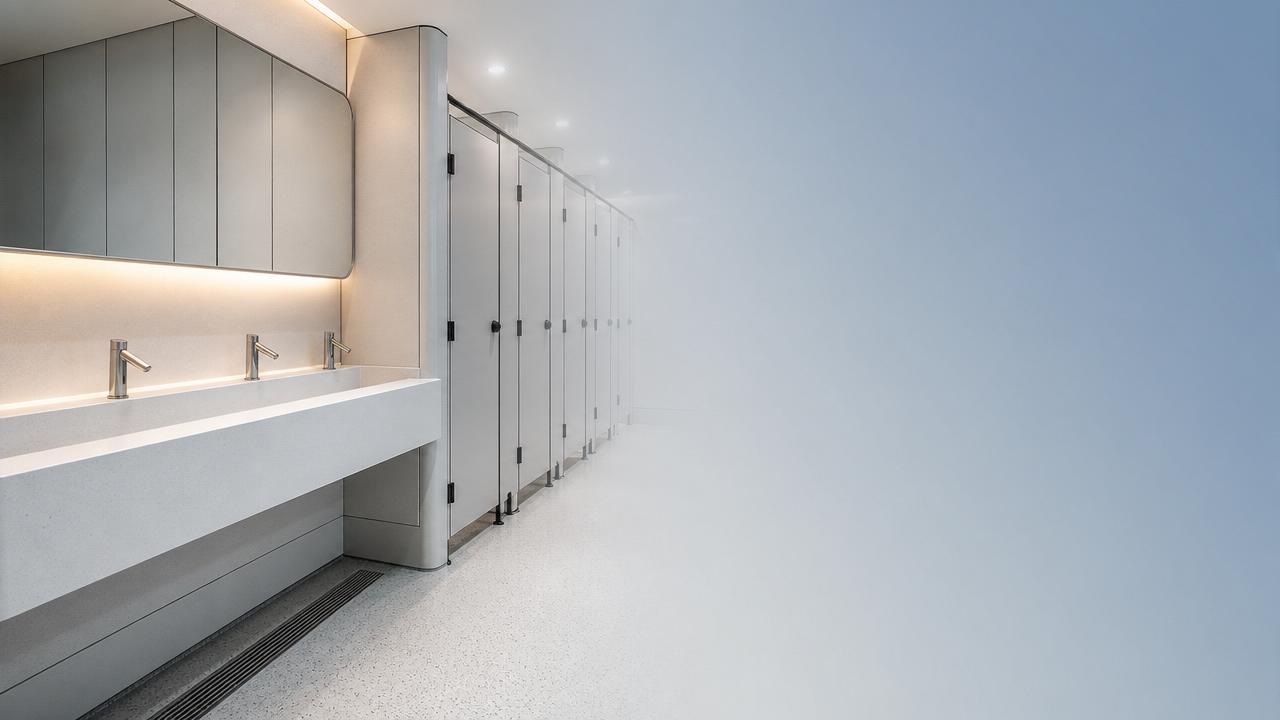
Anti-bacterial construction claims are everywhere, but which ones truly perform under real site conditions? For quality control and safety managers, the answer goes beyond labels and lab tests. This article examines what holds up in practice, from material durability and surface performance to compliance, cleaning routines, and long-term risk control—helping you separate credible solutions from marketing noise.
Why anti-bacterial construction claims often fail when projects move from lab to site
In anti-bacterial construction, the biggest gap is not usually between good and bad marketing. It is between controlled laboratory conditions and the messy reality of building use. A surface may show microbial reduction in a test chamber, then lose practical value after abrasion, detergent exposure, grout staining, moisture cycling, or poor maintenance.
For quality teams, this means anti-bacterial construction claims should never be reviewed as a single feature. They must be judged as a system issue involving substrate stability, installation quality, cleaning chemistry, traffic load, humidity, contact frequency, and replacement difficulty.
Safety managers face a related risk. Overstated anti-bacterial claims can create false confidence in high-contact or wet environments such as washrooms, healthcare-adjacent spaces, food preparation areas, staff housing, and commercial kitchens. If the specification relies on the coating alone, hygiene performance may decline long before defects become visible.
- A treated surface can still harbor contamination if joints, edges, sealants, and drainage details are neglected.
- A high-performing material can underperform if installers damage the finish or use incompatible cleaners.
- A compliant product can become a liability if procurement does not confirm durability, maintenance instructions, and expected service life.
This is where GIAM’s intelligence approach matters. By linking material science, hydraulic design, and commercial insight, GIAM helps project teams assess anti-bacterial construction claims not as isolated labels, but as part of wider performance in sanitary spaces, interior systems, and evolving building standards.
What actually holds up on site: the performance factors that matter most
When reviewing anti-bacterial construction materials, quality and safety teams should focus less on headline claims and more on retention of performance under daily stress. The table below organizes the site factors that most often determine whether anti-bacterial construction remains credible after handover.
The key takeaway is simple: anti-bacterial construction succeeds when hygiene performance survives friction, moisture, and maintenance routines. A product that performs only when untouched is not robust enough for demanding building operations.
Surface performance is only one layer of risk control
Project teams often focus on wall panels, tiles, coated metals, laminates, or sanitary fittings. That is necessary, but incomplete. Joints, backing materials, installation methods, and cleaning access often determine the real hygiene outcome. In practice, anti-bacterial construction is strongest when paired with low-porosity surfaces, smooth transitions, controlled water exposure, and easy inspection access.
High-contact zones need different judgment than decorative zones
A reception wall and a hand-washed washroom partition may both be sold with anti-bacterial construction claims, yet their risk profiles differ sharply. For high-contact areas, durability and cleanability matter more than brochure language. For lower-contact decorative zones, appearance retention and maintenance cost may become the better decision factors.
Which anti-bacterial construction solutions are most suitable by application scenario?
Not every space needs the same anti-bacterial construction strategy. Quality control and safety managers should match the solution to contact level, moisture load, occupant profile, and cleaning frequency. The following table compares common scenarios in commercial and residential-related projects.
This scenario-based view helps prevent overspecification and underspecification. In some spaces, anti-bacterial construction is worth the premium. In others, better ventilation, smoother detailing, and stronger cleaning discipline may deliver more reliable risk reduction per budget dollar.
Where specification teams commonly overbuy
- Choosing expensive treated surfaces for low-touch decorative walls with minimal hygiene exposure.
- Paying for anti-bacterial construction on visible panels while ignoring porous grout, open joints, or difficult-to-clean hardware.
- Accepting premium pricing without asking how performance changes after repeated cleaning cycles.
Where teams commonly underbuy
- High-traffic sanitary areas where frequent moisture and hand contact justify higher-grade surfaces and better edge protection.
- Staff kitchens and service areas where food residue and repeated cleaning rapidly expose weak finishes.
- Refurbishment projects where hidden substrate conditions increase moisture-related hygiene risks.
How should quality and safety managers verify anti-bacterial construction claims?
A practical review process should combine document checks, sample evaluation, installation control, and post-installation monitoring. The goal is not to reject anti-bacterial construction claims by default, but to identify which claims remain meaningful after site exposure.
A practical verification checklist
- Ask what the claim actually covers. Is it the full material body, a surface treatment, an additive, or only a top coating?
- Request the test basis. Was the result measured under a recognized lab method, and does the supplier explain its limitations?
- Review durability evidence. How does the surface respond to abrasion, moisture, detergents, and disinfectants used in your building operation?
- Inspect system components. Check joints, trims, sealants, fasteners, and backing materials that may become hygiene weak points.
- Run a maintenance fit review. Confirm the building’s cleaning team can follow the specified care routine without damaging the finish.
- Document replacement and repair rules. A strong anti-bacterial construction strategy should still work after local damage or phased refurbishment.
This verification logic fits GIAM’s wider market intelligence model. Instead of looking only at product statements, GIAM tracks how material trends, standards updates, operational practices, and procurement pressure interact across sanitary spaces and smart interior systems.
Documents worth requesting before approval
- Technical data sheets showing substrate type, finish structure, cleaning guidance, and limitations of use.
- Installation manuals addressing seams, moisture protection, sealants, fixing methods, and edge treatment.
- Test references or declarations linked to recognized methods where applicable, without assuming that one test proves all site conditions.
- Maintenance instructions aligned with the actual chemical products used by the facility management team.
Standards, compliance, and the limits of anti-bacterial labels
Anti-bacterial construction sits at the intersection of materials, hygiene, product claims, and building performance. That makes compliance especially important. A quality manager should distinguish between a material tested for microbial activity, a product legally marketed with hygiene-related claims, and a full building system that supports sanitary operation.
Depending on region and project type, teams may review general hygiene-related test methods, VOC and indoor air expectations, fire performance, slip resistance in wet zones, and construction product documentation. The right mix depends on application, not marketing language.
It is also wise to stay careful with broad promises. Anti-bacterial construction is not the same as sterile construction, and it does not replace ventilation design, drainage control, hand hygiene, or cleaning procedures. For safety managers, that distinction should appear clearly in internal risk communication.
Common compliance questions to ask suppliers
- Is the anti-bacterial claim limited to the surface, or does it apply to the full exposed system?
- What cleaning chemicals are approved, and what chemicals void expected performance?
- How should damaged edges, chips, or worn sections be repaired to avoid hygiene gaps?
- Are there stated restrictions for wet rooms, food zones, or continuous high-humidity areas?
Cost, alternatives, and smarter procurement decisions
Budget pressure often drives teams to choose between treated materials and simpler, easier-to-maintain assemblies. In many projects, the best answer is not “buy the most advanced anti-bacterial construction product.” It is “buy the most robust hygiene outcome.” That may include a mix of treated high-touch surfaces and non-treated low-porosity materials with better detailing.
The table below helps compare procurement paths without reducing the decision to upfront price alone.
For many organizations, the hybrid path is the most defensible. It supports anti-bacterial construction where it matters most, while protecting budget for ventilation, water management, safer cleaning routines, and durable installation quality.
FAQ: the questions quality and safety managers ask most often
Does anti-bacterial construction eliminate the need for regular cleaning?
No. Anti-bacterial construction should be treated as a support measure, not a replacement for cleaning. Dust, grease, soap residue, hard water deposits, and organic matter can all reduce the practical value of a treated surface. A realistic specification always connects the material choice with a defined cleaning protocol.
Which areas benefit most from anti-bacterial construction?
The strongest candidates are high-touch or high-moisture spaces where hygiene control is operationally important: public sanitary rooms, pantry areas, care-related interiors, wet service spaces, and selected kitchen and bath applications. In low-contact decorative areas, better detailing and cleanability may be enough.
What is the most common mistake during procurement?
The most common mistake is approving anti-bacterial construction based on a product label without checking installation details and maintenance chemistry. Many failures occur because the treatment cannot withstand the actual cleaning routine, or because joints and sealants remain the real contamination points.
How should anti-bacterial construction be evaluated during mock-up review?
Use the mock-up to inspect edges, seams, cleaning access, water runoff, touchpoint wear, and repair visibility. Ask the installation team to show exactly how corners, penetrations, and transitions will be finished. A mock-up that only demonstrates color and texture is not enough for hygiene-critical spaces.
Why choose GIAM for anti-bacterial construction insight and project support?
GIAM supports decision-makers who need more than product promotion. Our platform connects material science, sanitary space intelligence, commercial demand signals, and evolving building standards so quality and safety teams can judge anti-bacterial construction in context. That means understanding not only what a supplier claims, but how the solution fits real use, maintenance, compliance, and project competition.
If you are reviewing anti-bacterial construction for sanitary partitions, wall systems, kitchen and bath surfaces, or smart space upgrades, you can consult GIAM on concrete issues such as parameter confirmation, application matching, delivery timing, documentation review, sample assessment, certification expectations, and budget-sensitive specification paths.
- Need help comparing treated versus non-treated materials for a specific risk zone? We can help structure the decision.
- Need support checking whether anti-bacterial construction claims align with your cleaning SOP and handover conditions? We can help map the risk points.
- Need guidance on samples, specification language, or compliance documentation before procurement approval? We can help define the review framework.
For project teams under pressure to balance hygiene, durability, carbon-aware material choices, and commercial practicality, GIAM offers a clearer route from claim to evidence to implementation. Contact us to discuss your anti-bacterial construction requirements, shortlisted materials, expected delivery cycle, certification questions, and scenario-based specification priorities.
Industry Briefing
Get the top 5 industry headlines delivered to your inbox every morning.