
Architectural Material Science and the New Fire Safety Trade-Offs
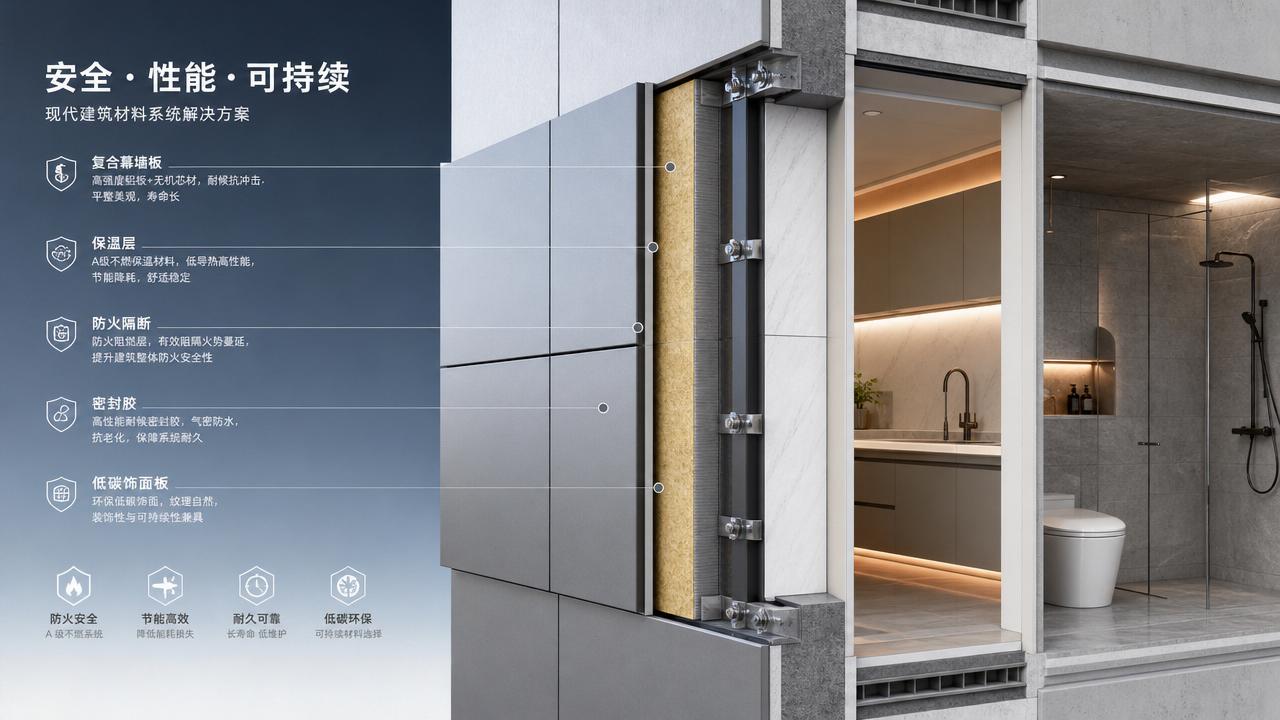
As fire codes tighten and material innovation accelerates, architectural material science is reshaping how technical evaluators balance safety, performance, and sustainability. From composite facades to low-carbon finishes, every specification now carries new fire safety trade-offs. This article explores how evolving material choices influence compliance, risk assessment, and long-term project value in modern residential and commercial spaces.
Why the fire safety conversation has shifted so quickly
The most important change in architectural material science is not simply that materials are becoming more advanced. It is that performance expectations are converging. A wall panel, adhesive, insulation layer, decorative laminate, sealant, and smart surface finish are no longer assessed in isolation. Technical evaluators now review them as an interacting system shaped by fire behavior, smoke generation, toxicity concerns, embodied carbon targets, moisture resistance, maintenance cycles, and insurance pressure.
This shift is especially visible in high-density residential projects, hospitality fit-outs, healthcare interiors, commercial towers, and mixed-use developments. In all of these settings, architectural material science has moved from a specification support function to a strategic decision layer. A product that supports carbon reduction or aesthetic flexibility may also introduce uncertainty in flame spread, delamination under heat, concealed cavity ignition, or repair complexity after a fire event.
For technical evaluation teams, the result is a new kind of trade-off. The question is no longer whether a material is innovative, but whether its total risk profile remains acceptable once installation detail, building height, occupancy type, evacuation strategy, local code interpretation, and future retrofit requirements are considered together.
The strongest trend signals in architectural material science
Several trend signals explain why fire safety trade-offs are becoming more visible across the built environment. These signals do not point to one universal material winner. Instead, they show that evaluation standards are broadening and becoming more conditional.
For GIAM’s audience, this matters because architectural material science increasingly sits at the intersection of building materials, sanitary spaces, and smart kitchen and bath systems. Fire safety is no longer only a facade discussion. It now affects partition systems, ventilation interfaces, cabinetry substrates, decorative surfaces, electrical integration points, and service penetrations in wet areas and compact living spaces.
What is driving the new fire safety trade-offs
The trade-offs seen today are the product of multiple pressures arriving at the same time. Architectural material science is being pushed forward by sustainability goals, manufacturing innovation, digitized procurement, urban density, and changing user expectations. Each driver creates value, but each also changes the conditions under which fire safety must be judged.
1. Decarbonization is changing the material palette
Lower embodied carbon targets are encouraging the use of timber hybrids, recycled polymers, plant-based binders, and lighter assemblies. These materials may improve environmental performance and logistics efficiency, but they can complicate ignition resistance, charring behavior, smoke characteristics, or post-fire structural reliability. Technical evaluators therefore need broader evidence than generic sustainability claims.
2. Prefabrication reduces waste but raises system dependency
Off-site manufacturing and modular construction can deliver consistency and speed. Yet fire safety in prefabricated systems depends heavily on factory tolerances, concealed void control, joint integrity, and site assembly quality. In architectural material science, this means the tested product and the installed condition must be aligned more carefully than before.
3. Aesthetic minimalism often hides technical complexity
Thin-profile finishes, seamless panels, concealed fixtures, and integrated appliances support modern design language. However, sleek visual outcomes can mask layered combustible materials, adhesives, foams, cable runs, and access limitations. As a result, technical evaluators must look beneath the finished surface and review hidden interfaces as rigorously as exposed materials.
4. Codes are becoming more performance-sensitive
Many jurisdictions are refining requirements around reaction to fire, smoke production, cavity detailing, facade testing, and occupancy-specific risk. The practical implication is that product-level certificates may not be enough. Architectural material science must now support project-level judgments that account for use case, assembly design, and maintenance realities.
Where the impacts are most visible across projects
Not every material decision carries the same fire safety significance. The most visible impacts are appearing where design ambition, user density, and layered material systems meet. Technical evaluators should prioritize the following zones.
This is where architectural material science becomes highly practical. A surface may perform well in one occupancy class and become problematic in another. A water-saving enclosure or smart kitchen module may appear low-risk, yet the combined behavior of backing materials, fasteners, cable channels, and sealants can create a very different fire profile from what single-product literature suggests.
How the evaluation role is changing for technical teams
For technical assessment professionals, the market is moving away from checklist-only approval. Architectural material science now demands judgment across three layers: product evidence, assembly behavior, and operational context. This changes how reviews should be structured.
First, product data must be interrogated beyond headline classifications. Teams should ask what standard was used, whether the tested build-up matches the project, whether aging or moisture exposure alters performance, and whether the fire result is valid for the exact substrate and fastening method being proposed.
Second, evaluators must examine interfaces. Many failures occur not because one material is poor, but because transitions between materials were under-assessed. Examples include facade-to-floor slab junctions, pipe penetrations in bathroom pods, appliance recesses in compact kitchens, and decorative finish transitions near escape routes.
Third, the evaluation horizon is extending. Architectural material science is no longer about first installation only. Teams are being asked to consider replacement cycles, likely tenant modifications, maintenance access, cleaning chemicals, thermal loading from upgraded devices, and the availability of equivalent compliant products over the building lifecycle.
What procurement and specification teams should watch next
One clear market direction is that procurement decisions are becoming less price-linear. Fire-safe specification is increasingly tied to whole-life value, approval certainty, and reputational resilience. This does not mean every project will move toward the highest-cost product class. It means uncertainty itself is becoming expensive.
In architectural material science, the strongest future signal is the premium on traceable and assembly-relevant evidence. Suppliers that can provide tested system documentation, clear installation boundaries, compatibility guidance, and lifecycle performance information are likely to gain trust. By contrast, products supported only by broad marketing claims may face delayed approvals, redesign costs, or restricted use in sensitive occupancies.
Another signal is the growing importance of cross-discipline review. Fire engineers, facade consultants, interior designers, MEP teams, sustainability leads, and procurement managers increasingly influence the same material decision. This is particularly true in GIAM-relevant sectors where intelligent living systems intersect with wet areas, compact mechanical integration, and premium finish expectations.
A practical judgment framework for the next specification cycle
Technical evaluators can respond more effectively by using a structured review model that reflects current architectural material science realities. The objective is not to slow innovation, but to identify where the new fire safety trade-offs are acceptable and where they are not.
This framework is especially useful where low-carbon ambitions, premium aesthetics, and smart-space integration are all present. In such cases, architectural material science should be treated as a risk-balancing discipline, not merely a source of product substitution.
The bigger strategic direction for manufacturers and project teams
Looking ahead, the market is likely to reward materials and systems that reduce evaluation ambiguity. That means more than achieving a favorable test result. It means providing dependable installation logic, compatibility transparency, maintenance guidance, and clear boundaries of use. In architectural material science, trust is becoming a specification asset.
For manufacturers, the implication is straightforward: product development should integrate fire performance validation earlier, especially for composites, lightweight assemblies, and smart-interior applications. For developers and consultants, early-stage coordination matters more than late-stage substitution. For technical evaluators, the most valuable skill is the ability to connect material innovation with real project risk rather than reviewing certificates in isolation.
GIAM’s industry lens is especially relevant here because global construction value is increasingly shaped by how material intelligence links structural safety, interior comfort, water efficiency, hygiene, and intelligent living standards. Fire safety is one of the areas where this linkage becomes measurable, commercial, and immediate.
Questions worth confirming before the next decision
If an enterprise wants to judge how these trends will affect its own pipeline, several questions deserve immediate attention. Does the selected material have evidence for the exact assembly condition? Are low-carbon substitutions changing smoke, cavity, or interface risks? Which project zones combine dense services and combustible layers? How might future upgrades in kitchens, bathrooms, or smart systems alter the fire profile? And which suppliers can support traceable, project-specific compliance rather than generic claims?
Those are the questions that now define effective architectural material science. The trade-offs are not disappearing. But with sharper evaluation methods, stronger system evidence, and better cross-discipline coordination, project teams can make material decisions that support compliance, resilience, and long-term value at the same time.
Industry Briefing
Get the top 5 industry headlines delivered to your inbox every morning.