
Commercial Interior Wall Panels: Fire Ratings, Durability, and Cleaning
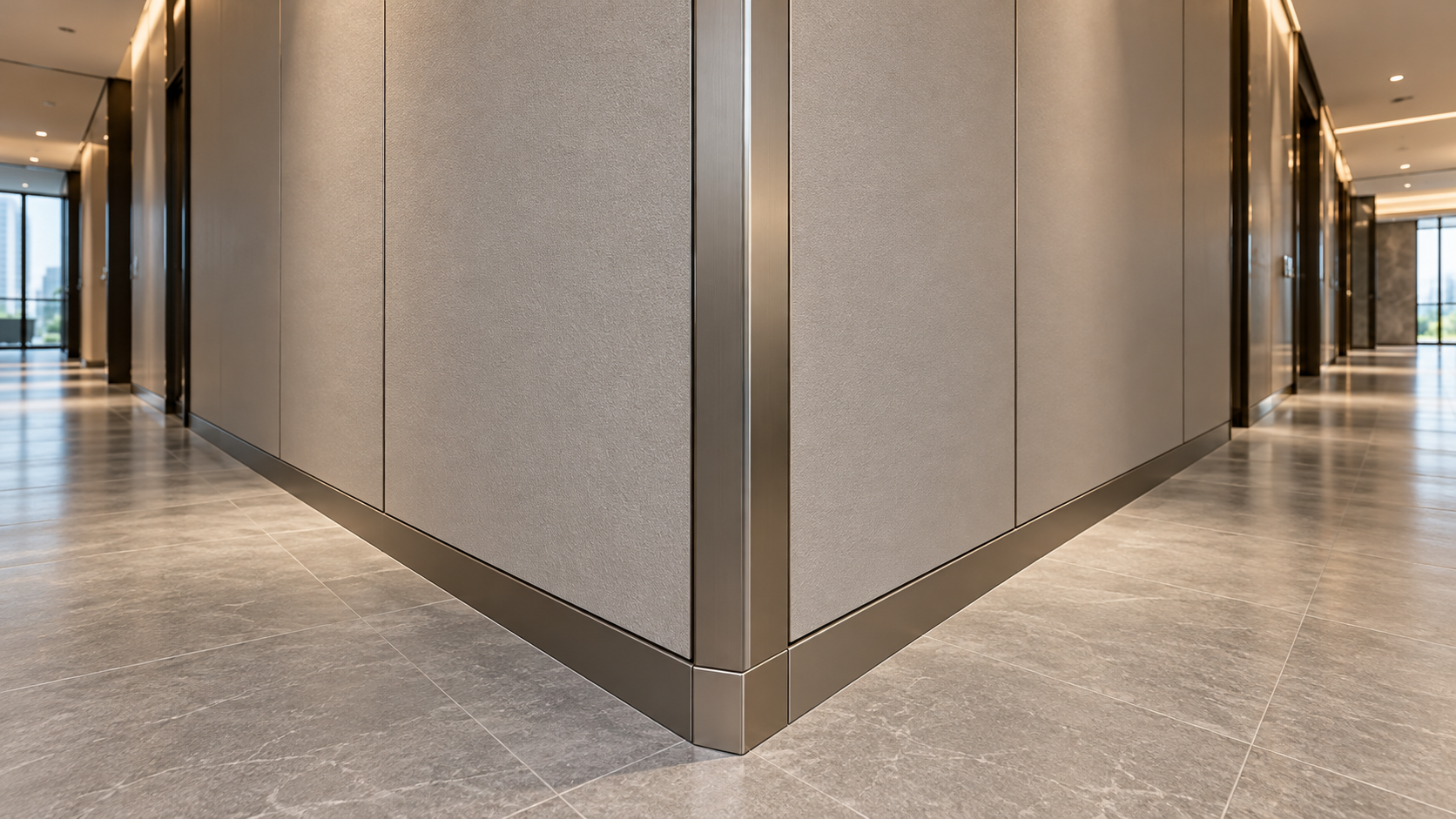
Commercial interior wall panels should pass three separate checks before a finish is selected: suitable fire-performance evidence, resistance to the damage expected in the space, and compatibility with the cleaning products staff will actually use. A panel can perform well in one area and fail in another. A hard surface may chip at exposed edges, while an easy-clean finish may discolor under repeated disinfectant use.
A reliable commercial interior application solution connects those requirements to the complete installed system. The panel face, core, adhesive, substrate, joints, and trims all influence performance. Compare products against the same installation and maintenance conditions; otherwise, similar-looking specifications can conceal substantial differences in service life and suitability.
Establish the exposure before comparing materials
Start with a room-by-room description of what the walls must withstand. “Commercial use” is too broad to guide selection. A hotel corridor encounters luggage and housekeeping carts. A restaurant service area faces grease, food splashes, and frequent wiping. A public washroom combines moisture with cleaning chemicals, while an office reception wall may need little more than resistance to scuffs and occasional cleaning.
Record where damage will concentrate. Lower wall sections, outside corners, door approaches, and areas behind seating often need more protection than upper decorative surfaces. A single panel specification throughout a building can either leave demanding areas underprotected or add unnecessary cost to quieter rooms.
Also distinguish incidental splashes from repeated wet cleaning or sustained moisture exposure. A water-resistant panel face does not establish that its joints, backing, or supporting wall can tolerate those conditions. This distinction helps narrow the shortlist before decorative samples begin driving the decision.
Read fire ratings as evidence about a specific installation
Surface fire performance and wall fire resistance answer different questions. Reaction-to-fire classifications describe aspects of how a product behaves when exposed to fire, such as flame spread, heat release, or smoke production, depending on the test system. Fire resistance concerns how a complete building assembly maintains specified functions during fire exposure.
A favorable surface classification does not establish that a partition provides a required duration of fire resistance. Equally, attaching a decorative panel to a fire-resisting wall should not be assumed to preserve the wall’s documented performance without checking the applicable assembly details.
Match the documentation to the proposed build-up
A useful fire report identifies the product and the conditions under which it was assessed. Review the panel construction, thickness, finish, backing, mounting method, and substrate. Adhesive fixing, mechanical attachment, and installation over battens can create different conditions, particularly where cavities are introduced.
The proposed installation should fall within the documented scope of the test, classification, listing, or supporting assessment. Differences are not automatically unacceptable, but they need an established technical basis. A report for a directly bonded panel does not, by itself, demonstrate equivalent performance for the same panel mounted over an air gap.
- Product identity: Does the evidence cover the exact panel construction being supplied, including its core and decorative surface?
- Installation scope: Are the substrate, fixing method, joints, and any cavity represented?
- Classification meaning: Which fire characteristics were measured, and how do they relate to the project requirements?
- Use restrictions: Are there limitations affecting the intended location or installation?
Terms such as “fire-rated,” “fire-retardant,” and “Class A” are insufficient on their own. Their meaning depends on the referenced classification system and scope. Classifications from different jurisdictions should not be treated as directly interchangeable. Establish the applicable project requirements with the responsible design team, then compare evidence within that framework.
Compare durability by failure mode, not surface hardness alone
Durability includes scratching, abrasion, staining, indentation, cracking, edge damage, and loss of adhesion. These failures have different causes. A panel that withstands routine wiping may still fracture when struck by a cart; a resilient sheet may absorb that impact but show scratches under strong corridor lighting.
These are starting points, not performance guarantees. Products within the same family can differ substantially in construction and behavior. Compare actual test information and installation details rather than assigning a fixed ranking to each material category.
For impact resistance, examine what the test represents. A small hard object striking the panel creates different damage from a broader impact. Panel support and fixing spacing also affect the outcome. Results obtained on a continuously supported specimen may not describe a panel installed across unsupported areas.
Appearance retention deserves a separate judgment. Dark colors and glossy finishes can make scratches or surface distortion more visible. A textured finish may conceal scuffs but require more cleaning effort. View a representative sample under the intended lighting, including light that falls across the wall at a shallow angle.
Inspect the details most likely to fail first
The middle of a panel often receives the most attention during selection, yet exposed edges and transitions can determine maintenance performance. Outside corners take repeated knocks. Bottom edges encounter mop water. Cutouts around dispensers, sockets, and plumbing interrupt the protective surface and can expose vulnerable layers.
Inspect a proposed wall section that includes an outside corner, a panel joint, the base transition, and a typical penetration. Check whether trims create dirt-catching ledges, whether cut edges remain exposed, and whether cleaning tools can reach recessed joints. Where moisture is expected, the detail must manage water at transitions as well as across the panel face.
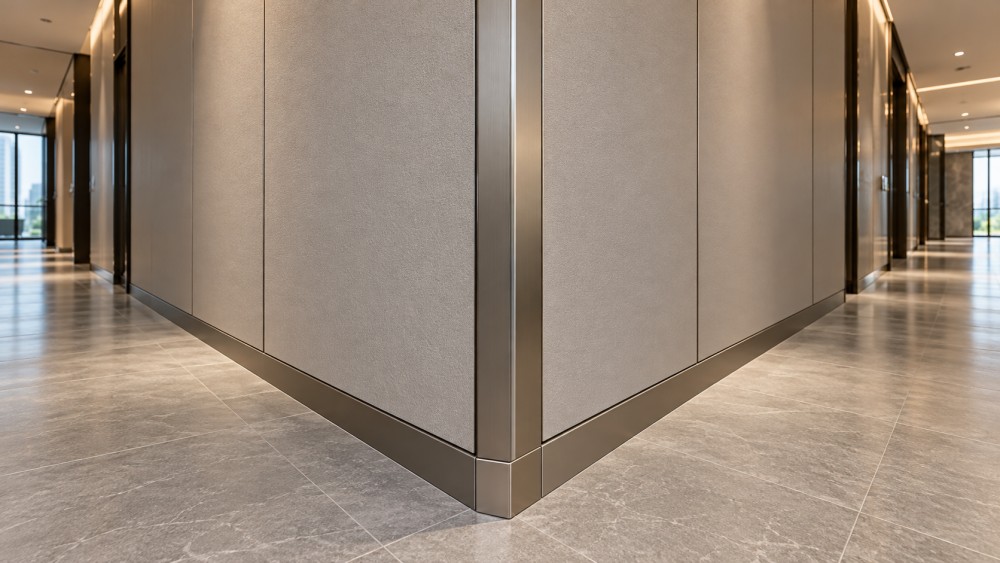
Movement also matters. Panels, substrates, and adhesives can respond differently to temperature and humidity. Missing movement allowances or unsuitable fixing details may contribute to buckling, open joints, or bond failure. The installation specification should carry the selected system’s requirements for conditioning, clearances, substrate preparation, and adhesive application.
Evaluate cleaning against the actual maintenance protocol
“Easy to clean” is not a complete specification. Obtain the intended cleaning products, dilution instructions, application method, and frequency from the operations team. For disinfectants, include the required wet contact time and any rinsing instructions. A brief wipe with a mild detergent is a different exposure from repeated saturation with a disinfectant.
Compatibility must cover the finished system. A panel face may tolerate a chemical that softens a sealant, damages printed decoration, corrodes a trim, or affects exposed adhesive. Seams and repairs therefore belong in the assessment alongside the main surface.
Cleaning removes soil; disinfection addresses microorganisms under defined conditions. A smooth wall can support effective cleaning, but an antimicrobial claim does not establish cleanability or replace the required hygiene procedure. Such a claim also does not demonstrate resistance to the facility’s chosen chemicals.
Ask how chemical-resistance evidence was produced. Relevant details include concentration, contact duration, repeated exposure, temperature, and the criteria used to judge damage. Color retention alone may miss changes in gloss, tackiness, cracking, or surface texture.
Where published evidence does not cover the intended protocol, assess a representative sample assembly before selection. Include a joint and trim, follow the proposed cleaning procedure, and inspect for visible or tactile changes after repeated cycles. This helps identify compatibility problems; it does not establish a guaranteed service life.
Cleaning instructions must also be practical. A finish that requires a separate product or special handling may be manageable in a small reception area but difficult across a large facility. Align panel selection with a procedure staff can consistently follow.
Use location-specific priorities to resolve tradeoffs
In a hospital corridor or busy circulation route, impact protection, corner detailing, and disinfectant compatibility may dominate selection. Protective rails can reduce direct contact with panels, but their fastenings and junctions introduce additional maintenance details.
In food-service preparation and wash areas, prioritize accessible joints, resistance to the specified cleaning agents, and details that prevent moisture from reaching vulnerable backing materials. A heavily textured decorative finish may add cleaning effort where grease and soil accumulate. Exposure near heat-producing equipment needs separate consideration; routine cleanability does not establish suitability for heat exposure.
Retail, hospitality, and office spaces often place greater weight on visual consistency. Here, selective reinforcement can be more useful than increasing panel performance everywhere. Use more robust protection at luggage routes, seating zones, and corners while retaining the desired finish elsewhere.
For washrooms, examine the base, plumbing penetrations, and interfaces with adjacent finishes. If the wall forms part of a wet-area construction, define the water-management layer separately. Decorative panels should only serve that function where the complete system is designed and documented for it.
Make the final comparison about installed service life
Compare quotations on a common scope that includes substrate preparation, adhesives, trims, sealants, corner protection, and installation labor. Panel price alone can obscure the cost of achieving the required finish and performance. Difficult removal or extensive preparation may also affect future refurbishment.
Repairability can change the preferred choice. Determine whether a damaged panel can be replaced individually, how adjacent finishes are affected, and whether concealed fixings remain accessible. Replacement stock can help preserve appearance, although later production batches may still show differences in color or texture.
Before issuing the specification, assemble a concise acceptance package:
- Define fire, impact, moisture, and cleaning requirements by location.
- Identify the exact panel construction and compatible installation components.
- Connect performance evidence to the proposed substrate and fixing arrangement.
- Approve a representative assembly showing joints, corners, cutouts, and the base detail.
- Record cleaning instructions, repair methods, and acceptable substitution criteria.
Treat mandatory performance requirements as pass-or-fail conditions before weighing appearance and cost. A lower purchase price cannot compensate for an unsupported fire classification or an incompatible cleaning protocol. Among systems that meet those conditions, favor the one whose detailing, maintenance demands, and repair process fit the building’s everyday use.
Industry Briefing
Get the top 5 industry headlines delivered to your inbox every morning.