
EU PPWR Takes Effect Aug 12: EPR Registration Becomes Mandatory
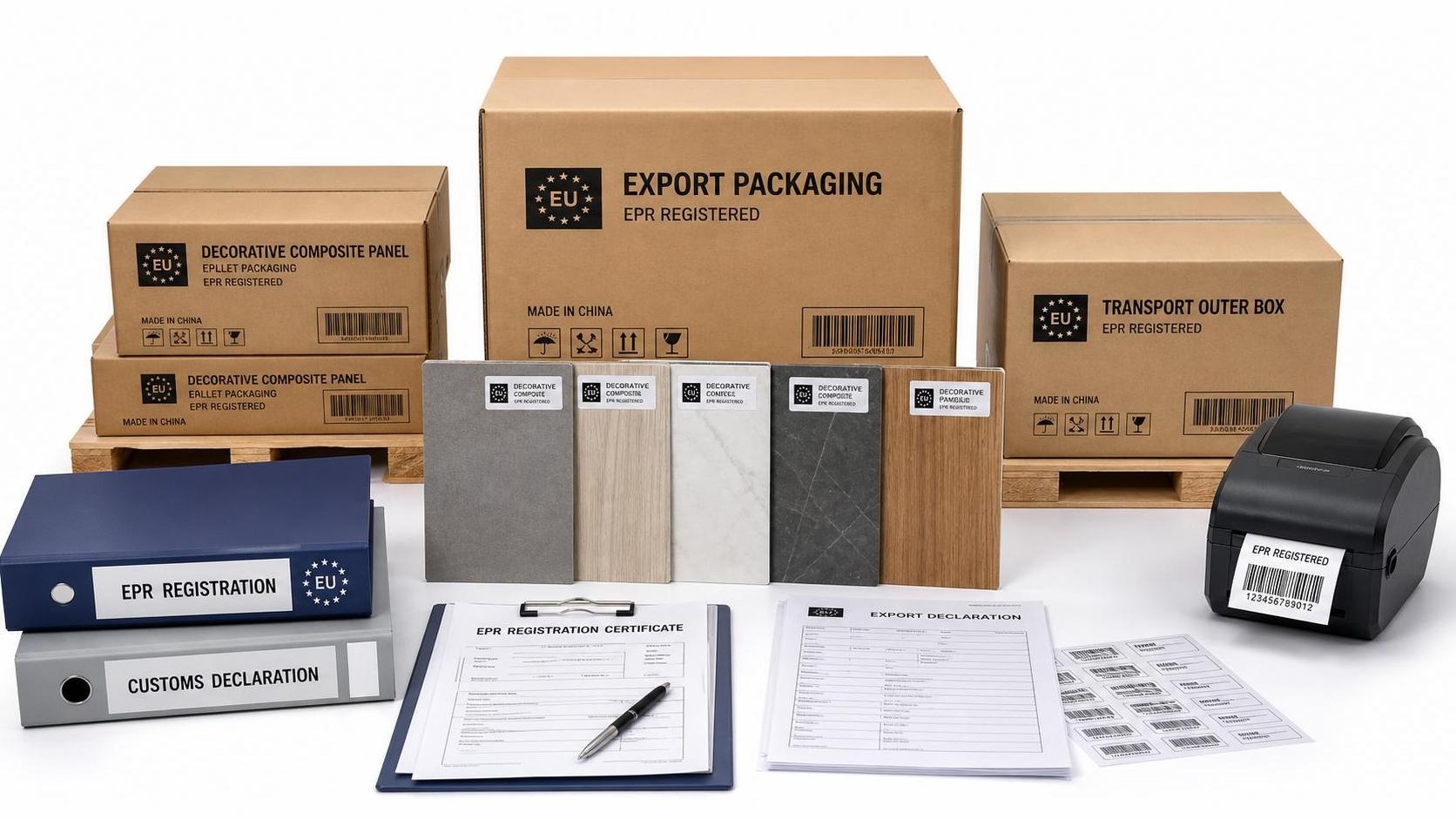
On August 12, 2026, the EU Packaging and Packaging Waste Regulation (PPWR) is set to take effect, bringing a direct compliance requirement for packaging used in exports to the European market, including both transport and retail packaging for composite decorative panels. For Chinese exporters, this is not only a packaging compliance issue but also a market-access and customs-clearance issue, especially for companies selling through cross-border platforms or shipping into multiple EU member states.
What the rule changes on August 12
According to the information provided, the PPWR will formally enter into force on August 12, 2026. The rule requires all packaging products exported to the EU, including transport packaging and retail packaging for composite decorative panels, to complete Extended Producer Responsibility (EPR) registration in each relevant member state.
The confirmed compliance consequence is also clear in the provided information: companies that do not complete the required registration may face product delisting on platforms such as Amazon and OZON, and they may also encounter customs shipment holds. The regulation therefore has a direct bearing on customs timing and market entry for Chinese composite decorative panel exporters.
Where the pressure is likely to appear across the trade chain
Exporters face a combined access and delivery risk
From an industry perspective, direct export companies are the first group likely to feel the impact because the requirement is tied to whether packaging entering the EU is properly registered by country. The practical pressure is likely to appear in shipment preparation, customs processing, and platform compliance, rather than only in product manufacturing itself.
Manufacturers need to review packaging as part of export readiness
For processing and manufacturing enterprises producing composite decorative panels, the issue extends beyond the panel product to the packaging attached to it. Analysis shows that companies shipping to the EU will need to pay closer attention to whether transport packaging and retail packaging are treated as compliance items within the export process, because the business risk described in the event summary is linked directly to market access and cargo release.
Channel and platform sellers may see faster enforcement exposure
Businesses operating through platforms deserve particular attention because the provided information explicitly mentions delisting risks on Amazon and OZON for non-compliant registrations. Observably, this means the impact is not limited to border control; it can also affect online sales continuity and listing availability in EU-facing channels.
Supply chain service providers may be drawn into execution details
Supply chain service providers, including those involved in shipment coordination and document handling, may also be affected indirectly. What deserves closer attention is whether clients have completed the required country-level registration before cargo moves, since delays or holds at customs could become an operational issue even when the service provider is not the regulated producer itself.
What companies should check now
Country-by-country registration cannot be treated as a single EU formality
The provided information specifies registration in each member state, which means businesses should not assume that one completed step covers the full EU market. From a practical standpoint, companies exporting to more than one EU destination should focus on how their target markets are mapped against registration obligations.
Packaging scope needs to be reviewed carefully
Another immediate point is the packaging scope itself. The event summary explicitly includes both transport packaging and retail packaging for composite decorative panels. Analysis shows that companies should pay close attention to how packaging is defined within their own export workflow so that compliance checks do not stop at the product level while missing outer packaging or sales packaging.
Platform compliance and customs readiness should be handled together
The information provided links non-registration to both platform delisting and customs shipment holds. This suggests that businesses should not separate e-commerce compliance from logistics compliance when preparing EU orders. What deserves closer attention is whether internal teams handling listings, shipping documents, and customer delivery commitments are working from the same compliance status.
Customer communication and document preparation may become more important
Observably, the rule matters not only for legal registration but also for delivery predictability. Exporters and service teams may need to pay closer attention to registration proof, supporting documents, and communication with buyers when confirming lead times, because the event summary indicates possible effects on clearance efficiency and market entry.
Why this looks like more than a short-term procedural update
Analysis shows that this development is better understood as an operational compliance signal rather than a routine policy headline. The reason is that the confirmed consequences in the provided information are tied directly to sales continuity and customs handling, two areas that affect real transaction execution.
At the same time, it is more appropriate to understand this as a rule with immediate business implications rather than as a distant long-term trend. The effective date is explicit, the registration requirement is explicit, and the affected packaging scope is explicit. What remains important for the industry is continued observation of how implementation and verification may be reflected in actual cross-border workflows.
How the market should interpret this development now
For the composite decorative panel export business, this update should be read as a concrete compliance threshold for entering and serving the EU market. It does not by itself define every operational outcome, but it clearly indicates that packaging compliance is now closely connected to listing continuity, shipment release, and delivery timing.
A neutral reading is that the event already establishes a clear requirement, while the full business impact will depend on how companies organize registration, documentation, and market-by-market execution. At this stage, it is more appropriate to treat the development as a confirmed compliance change that still requires continued operational attention.
Basis of this article and points for continued verification
This article is based on the user-provided news title, event date, and event summary. The analysis is written from that provided information only and does not add unverified data, company cases, market figures, or external conclusions.
For this type of development, commonly relevant source categories may include official regulatory notices, company announcements, industry association updates, authoritative media coverage, and standard-setting documents. A specific official source link was not provided in the input, so further verification is still needed. Continued attention should focus on any later official wording, implementation details, and market-specific execution requirements related to country-level EPR registration.
Industry Briefing
Get the top 5 industry headlines delivered to your inbox every morning.