
How to Choose Anti-Bacterial Construction Wall Panels for Hygienic Commercial Spaces
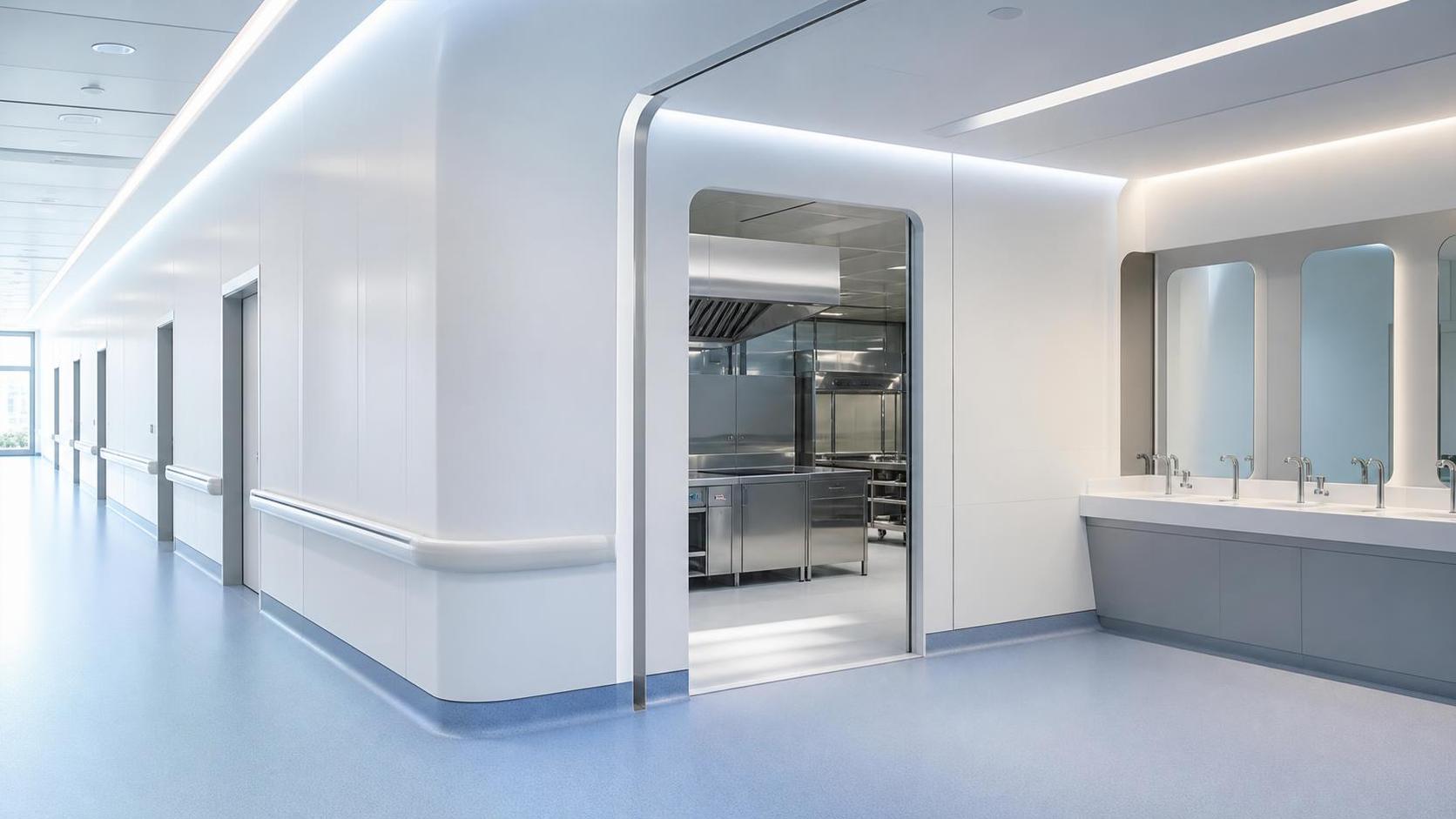
Choosing anti-bacterial construction wall panels has become a strategic specification decision in commercial interiors. In hygienic spaces, wall finishes influence not only appearance, but also cleaning efficiency, contamination control, regulatory alignment, maintenance planning, and long-term operating cost.
That shift is visible across healthcare, hospitality, food preparation, education, laboratories, and mixed-use developments. As GIAM continues tracking sanitary materials and spatial intelligence trends, one pattern stands out: surface systems are now evaluated as part of operational performance, not as isolated decorative products.
Why these panels matter in commercial hygiene planning
Anti-bacterial construction wall panels are interior wall systems designed to reduce microbial growth on exposed surfaces. They are commonly used where frequent touch, moisture, splash, vapor, or strict sanitation routines place pressure on conventional painted walls, tiles, or laminated boards.
In practice, these panels sit at the intersection of material science and facility management. They can help create cleaner wall envelopes, but their true value depends on the full system: panel core, surface treatment, joint detail, edge protection, sealants, and installation quality.
This is why a panel that performs well in a brochure may still underperform on site. If seams trap moisture, if impact damage exposes the substrate, or if cleaning chemicals degrade the finish, the hygiene benefit quickly weakens.
The market is paying closer attention for good reasons
Commercial projects are under pressure from several directions at once. Operators want durable spaces with lower downtime. Designers want refined interiors. Compliance teams want documented performance. Investors want predictable lifecycle cost. Occupants expect visible cleanliness.
At the same time, hygiene standards are becoming more integrated with sustainability and smart building targets. GIAM’s coverage of evolving building materials shows that decision-making now includes carbon considerations, cleaning resource efficiency, replacement cycles, and compatibility with intelligent facility systems.
That broader context matters. Anti-bacterial construction wall panels should not be treated as a single-feature purchase. They need to support hygiene performance while fitting energy-conscious construction, modern aesthetics, and practical maintenance routines.
What to evaluate before specifying anti-bacterial construction wall panels
A useful selection process starts with evidence rather than claims. “Anti-bacterial” can describe very different technologies, surface chemistries, and testing methods. The right question is not whether the label exists, but how the material performs under actual commercial use.
Surface performance and cleanability
Smooth, non-porous finishes are usually easier to sanitize. Panels should resist staining, moisture penetration, and repeated cleaning cycles. The finish should also remain stable after exposure to approved disinfectants, detergents, and occasional aggressive cleaning agents.
It is worth asking for chemical resistance data, abrasion testing, and evidence of surface integrity after repeated washdowns. A panel that supports fast cleaning can reduce labor time and help preserve hygiene routines during heavy operating periods.
Joint design and installation detailing
Many failures happen at the edges, corners, and seams. Hygienic commercial spaces benefit from flush joints, sealed transitions, and compatible trims that do not create dirt traps. Internal corners, service penetrations, and floor-wall junctions deserve careful review.
When comparing anti-bacterial construction wall panels, request complete system drawings. Panel performance cannot be judged separately from adhesives, fixings, welds, sealants, and the substrate condition.
Impact resistance and durability
Commercial walls face carts, trolleys, beds, luggage, cleaning equipment, and furniture movement. A surface that chips or cracks easily can become harder to sanitize and more expensive to repair. Durability is therefore a hygiene issue, not only a maintenance issue.
Fire, moisture, and indoor environment requirements
Panels must align with local fire ratings, moisture exposure levels, and indoor air quality expectations. Low emissions, mold resistance, and thermal stability may carry more weight in enclosed or continuously conditioned spaces.
Different environments need different panel logic
Not every hygienic commercial space requires the same anti-bacterial construction wall panels. Selection becomes sharper when the panel is matched to contamination profile, cleaning intensity, visual standard, and service life expectations.
Healthcare and care environments
Hospitals, clinics, and care facilities usually prioritize seamless surfaces, robust impact resistance, and compatibility with strong disinfectants. Bed traffic, mobile equipment, and infection control protocols make detailing especially important.
Food-service and preparation areas
These spaces face grease, steam, splashes, and frequent washdowns. The wall system needs high cleanability, moisture resistance, and durable joints. A polished appearance matters less than reliable sanitation and fast maintenance recovery.
Hospitality and public-facing interiors
Hotels, lounges, wellness spaces, and premium washrooms often require a balance between hygiene and design expression. Here, anti-bacterial construction wall panels are chosen for both operational cleanliness and their ability to maintain a refined finish over time.
Education, laboratories, and mixed-use facilities
These projects often have varied risk zones within one building. It can be more efficient to grade wall panel specifications by area rather than over-specifying every room. Corridors, wet rooms, prep areas, and treatment spaces rarely need identical solutions.
Common mistakes that weaken performance
The most common error is selecting by face value alone. A visually clean finish does not guarantee hygienic performance. Another mistake is assuming all anti-bacterial construction wall panels offer permanent protection without understanding wear, chemical exposure, or repair conditions.
- Treating test claims as universal, without checking the exact standard and conditions.
- Ignoring substrate preparation and moisture behavior behind the wall system.
- Using incompatible sealants or trims that interrupt hygiene performance.
- Focusing on initial material cost while overlooking cleaning labor and replacement cycles.
- Applying one specification across dry, wet, public, and back-of-house spaces.
These gaps are costly because they usually appear after handover. Once operations begin, remediation affects occupancy, labor scheduling, and brand perception more than the original product price difference.
A practical framework for comparing options
A strong comparison process starts by mapping wall zones to risk level, traffic load, cleaning frequency, and visual expectation. That makes the panel decision more objective and prevents attractive but unsuitable substitutions later.
Then build a short technical checklist around the issues that matter most to the facility. In many cases, the best-performing anti-bacterial construction wall panels are not the ones with the broadest claims, but the ones with the clearest evidence and the best system fit.
- Define each zone by moisture, traffic, contamination exposure, and cleaning method.
- Review certified test data, not summary marketing sheets alone.
- Compare full installed systems, including trims, joints, and repair procedures.
- Ask how the finish performs after years of routine disinfection.
- Estimate lifecycle cost across cleaning, repair, downtime, and replacement intervals.
For teams tracking broader market signals, GIAM’s intelligence approach is useful here. Material performance, sanitary design, tariff exposure, and sustainability pressure increasingly shape one another, especially in international sourcing and specification planning.
Where to focus next
The right anti-bacterial construction wall panels are selected through context, not assumption. Start with the hygiene burden of the space, then test each option against cleaning practice, detailing quality, compliance needs, durability, and total service life.
A clear next step is to build an area-by-area specification matrix before requesting quotations or approving substitutions. That creates a better basis for comparing wall systems and helps ensure that hygiene performance remains intact after installation, use, and maintenance.
Industry Briefing
Get the top 5 industry headlines delivered to your inbox every morning.