
How to Choose Premium Building Materials for Office Spaces by Durability and Lifecycle Cost
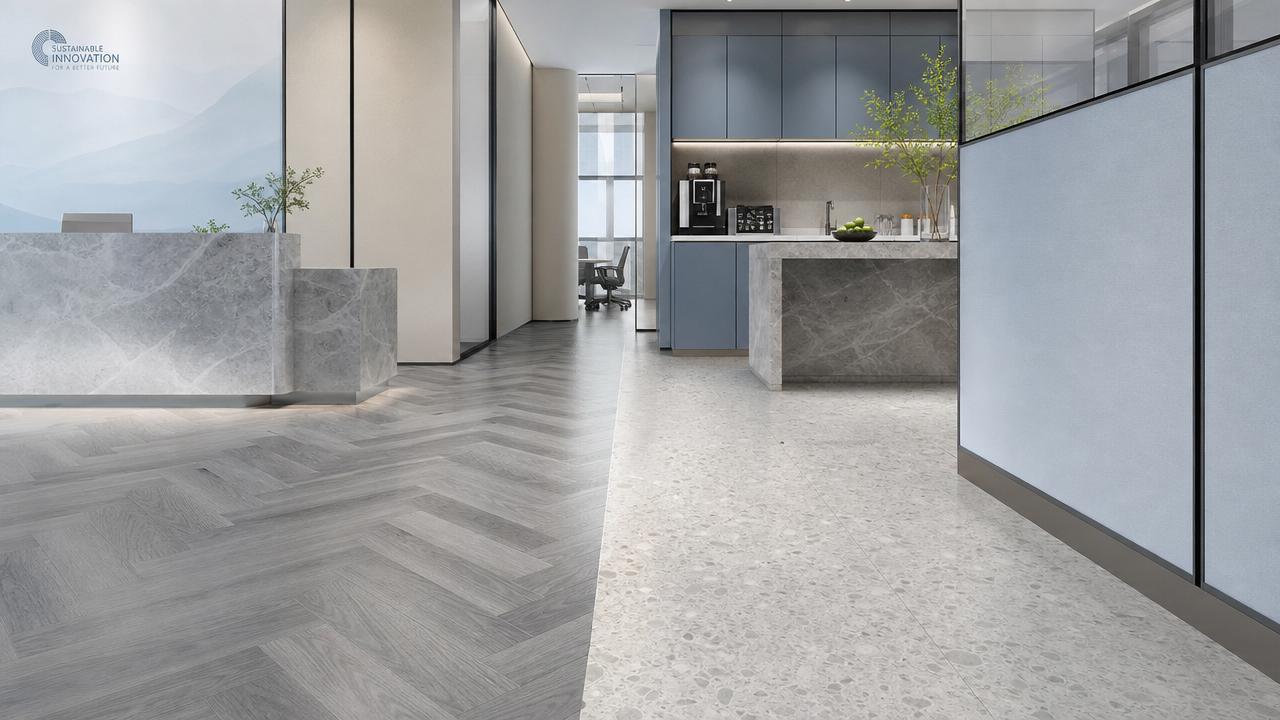
Why do premium building materials for office spaces deserve a closer look?
Choosing premium building materials for office spaces is rarely a design-only decision.
It shapes repair frequency, cleaning effort, occupant comfort, and the total cost carried over many years.
That is why lifecycle cost matters more than the opening quotation in many office projects.
A lower purchase price can look attractive, yet repeated replacement often erases that early saving.
In practical terms, premium building materials for office spaces should perform under daily traffic, cleaning chemicals, moisture, and frequent layout changes.
They also need to support safety, sustainability goals, and a consistent brand image.
This broader view is increasingly visible in GIAM market intelligence.
Its Strategic Intelligence Center often highlights how material science, energy standards, and commercial space expectations now intersect.
The result is simple.
Better material selection is now part of operational planning, not just project finishing.
What makes a material “premium” in an office, beyond appearance?
A premium label should never rest on visual appeal alone.
For office use, the stronger test is whether the material keeps its function and finish over time.
This usually means looking at five practical dimensions.
- Surface durability, including scratch, impact, stain, and wear resistance.
- Maintenance burden, especially cleaning methods, spare parts, and refinishing cycles.
- Environmental fit, such as humidity tolerance, acoustic value, and indoor air quality.
- Compliance value, including fire rating, slip resistance, and regional standards.
- Lifecycle predictability, meaning the product performs consistently across years, not months.
More refined office environments may also require anti-bacterial finishes, water-saving fittings, or smart access compatibility.
These are no longer niche preferences.
They increasingly reflect the same commercial-space evolution tracked by GIAM across materials, sanitary systems, and smart interior infrastructure.
So, when comparing premium building materials for office spaces, the better question is not “Does it look expensive?”
The better question is “Will it still justify its cost after five to ten years of use?”
How should durability be judged in real office conditions?
Durability sounds straightforward, yet office wear is rarely uniform.
Reception zones, washrooms, pantry areas, meeting rooms, and executive suites place very different demands on materials.
A reliable evaluation starts with use intensity, not catalog claims.
Questions worth asking before comparing options
- How many users will contact the surface each day?
- Will rolling chairs, carts, or luggage create concentrated abrasion?
- Is the area exposed to water, coffee, sanitizer, or cleaning agents?
- Will the office undergo frequent reconfiguration or tenant change?
- Can damaged sections be repaired locally, or must the full area be replaced?
For example, natural stone may carry a strong premium image.
Yet in some pantry or washroom settings, dense porcelain or engineered surfaces may deliver lower maintenance and more stable appearance.
Similarly, a high-end timber finish can work beautifully in executive spaces.
But heavy circulation zones may benefit more from commercial-grade LVT, ceramic tile, or high-pressure laminate systems.
The point is not to avoid premium materials.
It is to match premium building materials for office spaces with the real stress profile of each zone.
Where does lifecycle cost usually change the decision?
This is often where initial assumptions shift.
Lifecycle cost combines purchase price with installation, maintenance, downtime, repair, replacement, and disposal.
In office projects, downtime is frequently underestimated.
If a floor, wall panel, or washroom surface fails early, disruption affects operations as much as budgets.
The table below offers a practical way to compare premium building materials for office spaces.
A premium specification pays off when it extends service life, reduces cleaning complexity, or lowers the chance of full replacement.
That cost logic matters even more when tariffs, energy rules, and supply volatility shift sourcing decisions.
Which mistakes make premium building materials for office spaces less cost-effective?
The most common mistake is buying by appearance tier instead of performance tier.
A polished finish can still be operationally weak.
Another frequent issue is evaluating materials in isolation.
Office materials work as a system, including adhesives, substrates, fittings, drainage details, and maintenance protocols.
Several warning signs deserve attention:
- Warranty terms look strong, but exclude heavy commercial use.
- Replacement parts are imported with long lead times.
- Cleaning requirements demand specialized products or intensive labor.
- Sustainability claims are broad, but test reports are unclear.
- The finish is attractive, yet edge details fail under moisture or impact.
In actual projects, misalignment between aesthetic intent and maintenance reality is expensive.
This is especially true in sanitary areas, collaborative kitchens, and shared circulation zones.
A more disciplined review process usually prevents these errors better than negotiating unit price alone.
How can office material choices balance durability, sustainability, and future flexibility?
This balance is becoming central to office fit-out strategy.
Durable materials are not automatically sustainable, but short-life materials rarely support sustainability goals either.
The more useful approach is to compare retained value over time.
Premium building materials for office spaces often justify their footprint when they stay in service longer and avoid repeated replacement.
Future flexibility matters as well.
Many offices now change layouts faster than before.
That makes modular flooring, demountable partitions, replaceable surface components, and smart-compatible hardware more valuable than static finishes.
GIAM’s intelligence perspective is relevant here.
It consistently connects premium material demand with carbon reduction, healthier interiors, water efficiency, and smart-space readiness.
Those factors are no longer separate conversations.
They increasingly influence one procurement decision together.
What is a practical shortlist process before final selection?
A practical shortlist usually starts with zones, not brands.
Break the office into high traffic, wet, quiet, client-facing, and service areas.
Then compare premium building materials for office spaces against those exact conditions.
A useful review checklist
- Request commercial-use test data, not residential references.
- Check maintenance instructions and estimate annual cleaning cost.
- Review fire, slip, moisture, acoustic, and emissions performance.
- Confirm local service support and replacement availability.
- Model five-year and ten-year cost, including downtime scenarios.
- Test samples under realistic light, touch, and cleaning conditions.
This approach keeps selection grounded in evidence.
It also helps separate premium performance from premium marketing.
In the end, the best materials are the ones that continue to perform quietly while the office evolves around them.
If the next step is unclear, start by mapping each office zone, listing stress conditions, and scoring options by lifecycle cost.
That creates a stronger basis for comparing premium building materials for office spaces with confidence and consistency.
Industry Briefing
Get the top 5 industry headlines delivered to your inbox every morning.