
Indonesia BPS Updates HS Code Rules for Composite Panels
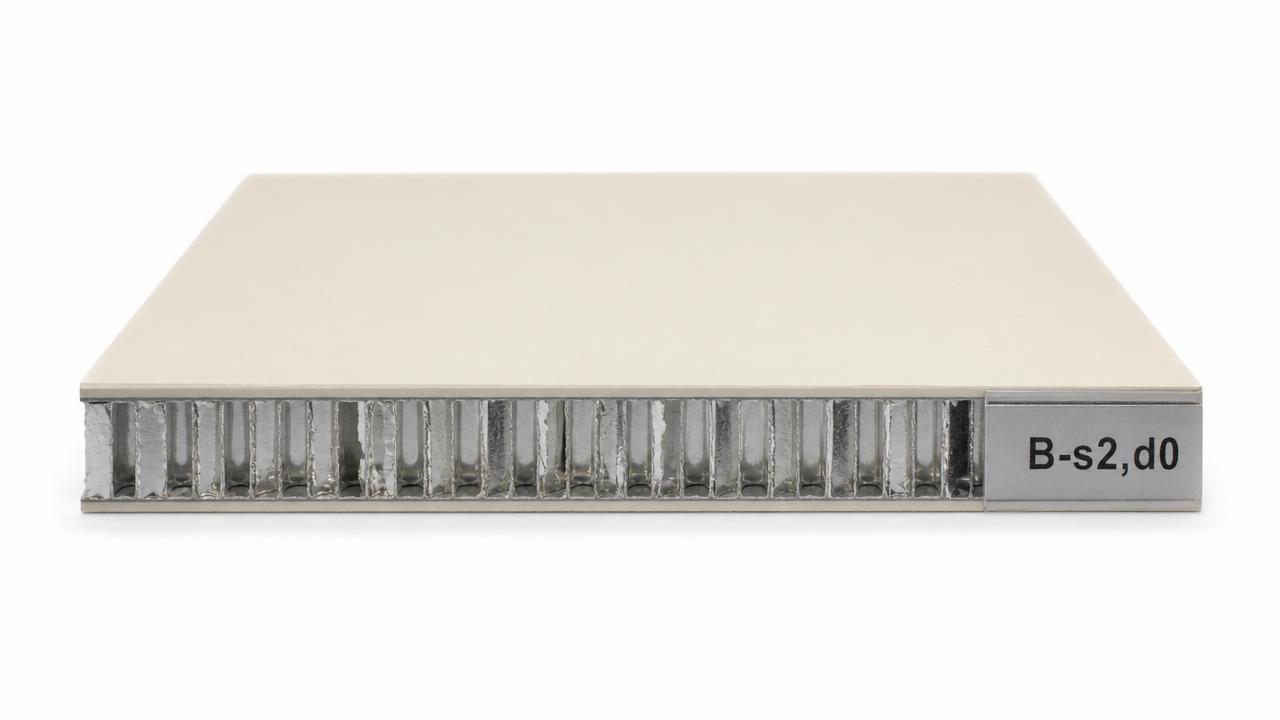
Indonesia’s Central Bureau of Statistics (BPS) revised its Harmonized System (HS) code classification rules effective May 15, 2026 — mandating that all composite panel imports into Indonesia must declare a two-character fire rating code (e.g., A2-s1,d0 or B-s2,d0) immediately following the HS code. The change directly affects over USD 210 million in annual Chinese exports of composite panels to Indonesia and introduces new compliance requirements across the supply chain.
Event Overview
On May 15, 2026, the Indonesian Central Bureau of Statistics (BPS) released the updated 2026 Import Commodity Classification and Regulatory Guidelines. Under the revision, all import declarations for composite panels must include a standardized two-digit fire performance code appended to the HS code. Declarations lacking this code — or containing incorrect codes — will trigger automatic customs inspection and result in clearance delays of 3–5 working days. No transitional period or grace period has been announced.
Industries Affected
Direct Trading Enterprises: Exporters and importers handling composite panels under HS codes 4418, 6810, 7610, or 6815 are now required to verify and declare fire classification codes prior to shipment. Non-compliance leads to operational friction at Indonesian ports — including detention, re-submission, and potential demurrage charges — increasing landed cost uncertainty and eroding margin predictability.
Raw Material Procurement Enterprises: Suppliers sourcing substrates (e.g., aluminum honeycomb cores, quartz slabs, MDF bases) for composite panel production must now ensure traceable fire test documentation aligned with EN 13501-1 or equivalent standards. Buyers increasingly require certified fire rating reports as part of purchase agreements — shifting procurement due diligence upstream.
Manufacturing Enterprises: Producers of fire-rated panels, aluminum honeycomb panels, and quartz composite countertops must align internal product labeling, technical datasheets, and quality control protocols with the new BPS nomenclature. Re-certification or re-testing may be needed where existing fire test reports do not map cleanly to the prescribed code format (e.g., mismatched smoke density or flaming droplet classifications).
Supply Chain Service Providers: Customs brokers, freight forwarders, and digital trade platforms supporting China–Indonesia composite panel trade must update declaration templates, integrate fire code validation logic into their systems, and train staff on interpreting EN 13501-1 derived classifications. Errors previously treated as administrative corrections now carry procedural consequences.
Key Focus Areas and Recommended Actions
Verify Product-Specific Fire Rating Alignment
Enterprises should cross-reference current fire test reports (e.g., from SGS, TÜV, or local accredited labs) against BPS’s published mapping table between EN 13501-1 classifications and required two-character codes. Where gaps exist, commission targeted re-testing before initiating new shipments.
Update Pre-Shipment Documentation Protocols
Commercial invoices, packing lists, and electronic customs declarations must explicitly display the fire rating code adjacent to the HS code — not in footnotes or attachments. Internal SOPs should mandate dual verification by both sales and logistics teams prior to e-filing.
Engage Indonesian Importers Early
Since the importer bears ultimate responsibility for accurate declaration under Indonesian customs law, exporters should proactively share updated fire classification data and supporting certificates with their Indonesian partners — ideally embedded in formal technical annexes to sales contracts.
Editorial Perspective / Industry Observation
Observably, this is not merely a documentation tweak but an early signal of Indonesia’s broader regulatory convergence with EU fire safety frameworks — particularly for construction-related imported materials. Analysis shows similar fire-code linkage requirements have already appeared in Vietnam’s 2025 Decree 15/2025/ND-CP and Thailand’s TISI draft amendment No. 224. From an industry perspective, the timing suggests growing regional coordination on building material safety, rather than isolated national action. Current more critical concern lies in inconsistent interpretation of fire test equivalency: some labs certify ‘B-s2,d0’ based on ASTM E84 while others require full EN 13501-1 testing — creating ambiguity that BPS has yet to clarify.
Conclusion
This regulatory update marks a structural shift in how fire performance is governed within Indonesia’s import regime — moving from voluntary technical specification to mandatory classification-linked compliance. For composite panel exporters, it reinforces that regulatory readiness is no longer ancillary to commercial planning but foundational to market access. A rational conclusion is that firms treating fire certification as a one-time product development task — rather than an ongoing, jurisdiction-specific compliance function — face disproportionate exposure.
Source Attribution
Official source: Indonesian Central Bureau of Statistics (BPS), 2026 Import Commodity Classification and Regulatory Guidelines, issued May 15, 2026 (Document No. BPS-IMP-GUIDE-2026-REV2).
Additional reference: Ministry of Trade Regulation No. 27/2025 on Technical Requirements for Building Materials Imports (pending full implementation notice).
Note: BPS has indicated that further guidance on fire test report acceptance criteria and third-country equivalency pathways is expected in Q3 2026 — subject to monitoring.
Industry Briefing
Get the top 5 industry headlines delivered to your inbox every morning.