
Moisture Resistant Residential Materials: Which Options Work Best for Kitchens and Bathrooms?
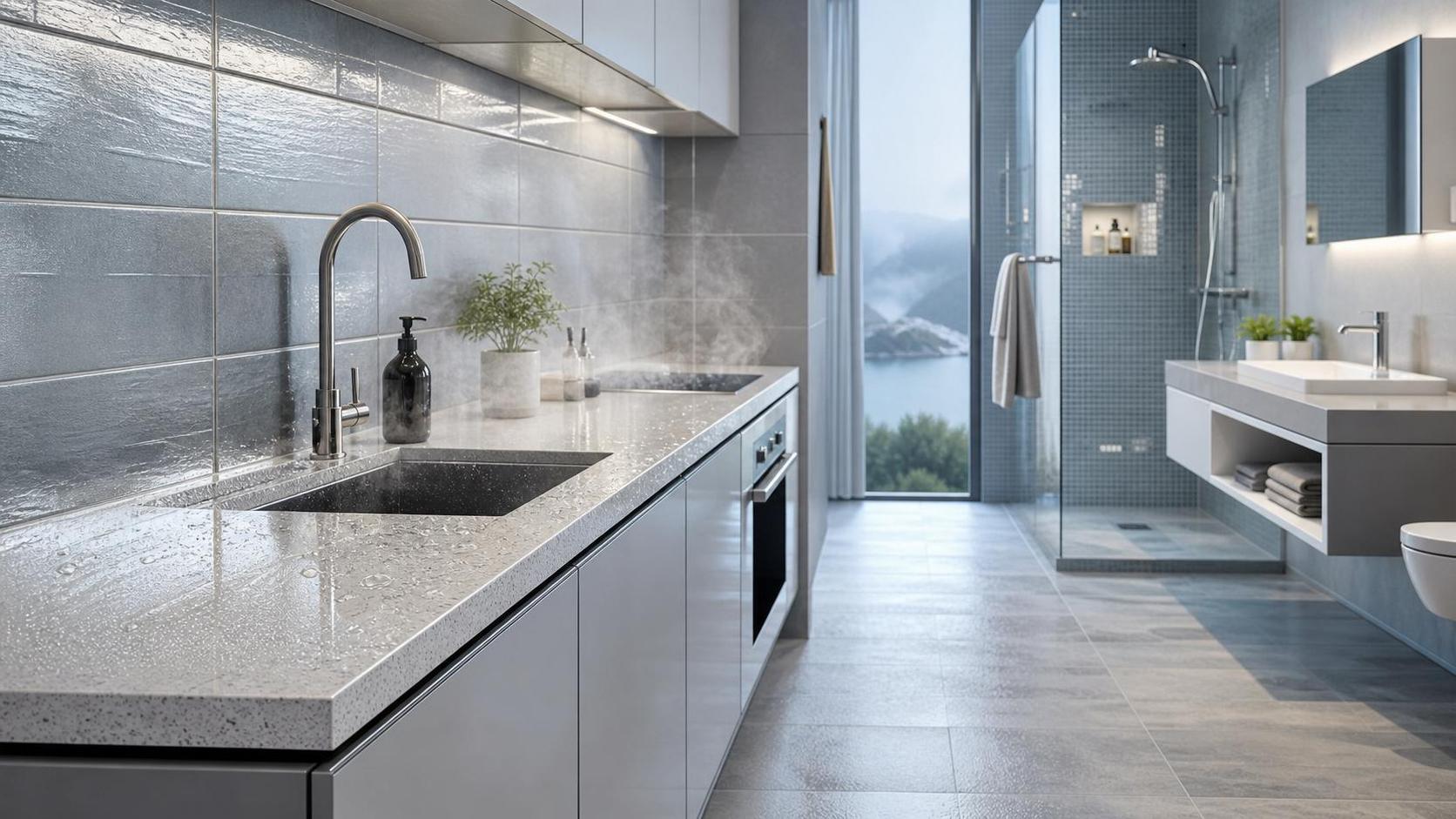
Kitchens and bathrooms ask more from surfaces than most other rooms. Steam, splashes, cleaning chemicals, and repeated temperature shifts can shorten the life of finishes quickly.
That is why moisture resistant residential materials matter beyond appearance. The right choice protects structure, supports hygiene, reduces maintenance, and keeps daily use predictable over time.
Across the wider building sector, this topic now sits at the intersection of material science, water efficiency, indoor health, and lifecycle value. GIAM tracks this shift closely because kitchens and bathrooms increasingly define how modern living standards are judged.
What moisture resistance really means in residential interiors
Not every durable material is truly moisture resistant. Some survive occasional splashes, while others can handle long-term humidity, direct water contact, and frequent cleaning without swelling, staining, or harboring mold.
In practical terms, moisture resistant residential materials should do four things well. They should limit water absorption, stay dimensionally stable, resist microbial growth, and remain serviceable when joints and edges are exposed.
This distinction matters because many failures begin at transitions rather than broad surfaces. Corners, seams, cutouts, backsplashes, vanity bases, and pipe penetrations often decide whether a material performs as expected.
Why kitchens and bathrooms receive more attention now
Current demand is shaped by tighter energy envelopes, smaller urban homes, and higher expectations for cleanable surfaces. More enclosed spaces can trap humidity, making material selection more critical than it was in older, draftier buildings.
There is also stronger interest in antibacterial finishes, water-saving fixtures, and integrated smart systems. These upgrades work best when the surrounding shell uses moisture resistant residential materials that support long service intervals.
From an industry intelligence perspective, material choice is no longer a narrow finish decision. It affects replacement cycles, cleaning protocols, occupant satisfaction, and the carbon footprint tied to early failure and rework.
Best-performing material options by surface type
Wall surfaces
Porcelain tile remains one of the most reliable choices. It has low water absorption, strong stain resistance, and broad design flexibility for both shower zones and cooking areas.
Ceramic tile also performs well in many settings, especially for backsplashes and dry-to-damp walls. Its success depends on proper grout selection and careful sealing around edges.
PVC and composite wall panels are gaining ground where quick installation and easy maintenance matter. Fewer grout lines can simplify cleaning, though heat exposure near cooktops must be checked carefully.
For painted walls outside direct splash zones, moisture-resistant gypsum board with high-quality kitchen and bath paint can work. It should not be confused with a full waterproof assembly.
Flooring
Porcelain tile again leads because it handles standing water, heavy cleaning, and foot traffic well. Slip resistance should be reviewed alongside water resistance, especially in bathroom floors.
Luxury vinyl tile and rigid core flooring are popular moisture resistant residential materials for renovation work. They offer decent comfort, easier installation, and good resistance to incidental water.
Still, vinyl systems depend heavily on seam quality and subfloor condition. If water reaches below the surface and remains trapped, odor and substrate damage can follow.
Natural stone can perform well, but its porosity and maintenance burden vary widely. It suits projects willing to manage sealing schedules and more specialized cleaning requirements.
Cabinetry and storage
Marine-grade plywood, high-density PVC boards, and well-finished stainless steel components hold up better than standard particleboard in wet environments. Sink bases benefit most from this upgrade.
Thermofoil and laminate-faced cabinets can work when substrate quality is high and edges are sealed well. Repeated leaks, however, still expose the weakness of lower-grade cores.
Solid wood remains attractive but requires realistic expectations. It tolerates some humidity when finished properly, yet it moves with moisture and can crack or cup in unstable conditions.
Countertops and work surfaces
Quartz is widely selected because it combines low porosity with consistent appearance and straightforward maintenance. It fits kitchens well and also supports bathroom vanity use.
Porcelain slabs are increasingly relevant in premium projects. They resist moisture, heat, and staining well, though fabrication quality becomes critical around cutouts and thin edges.
Compact laminate is another practical option for wet-area furniture and vanity tops. It delivers stable performance when detailing is correct and budgets do not support stone or engineered surfaces.
Where installations usually fail
Material labels alone do not guarantee good outcomes. Many kitchen and bathroom failures come from installation details that allow hidden water entry.
- Poor sealing around sinks, tubs, and countertop joints
- Inadequate waterproof membranes behind tile assemblies
- Low-quality grout that cracks or absorbs stains quickly
- Cabinet bases exposed to repeated plumbing leaks
- Weak subfloor preparation under vinyl or tile systems
- Ventilation that removes heat slowly but leaves humidity behind
In other words, moisture resistant residential materials work best as part of a system. Surface, substrate, adhesive, membrane, sealant, and airflow need to support one another.
A practical comparison for kitchens and bathrooms
The table below reflects common tradeoffs seen in everyday residential use.
How to judge the right option for a real project
The best material is usually the one that matches exposure level, maintenance capacity, and installation quality. A luxury finish can still underperform in a poorly detailed assembly.
Start by separating areas into dry, damp, and wet zones. Around showers, bath surrounds, sink splash areas, and cooktops, direct exposure should drive the specification.
Then assess maintenance reality. Some moisture resistant residential materials look excellent in a catalog but depend on sealing routines or cleaning discipline that may not hold over time.
It also helps to review compatibility with ventilation, underfloor heating, water-saving fixtures, and smart kitchen or bath systems. GIAM’s broader market view shows that integrated performance now matters more than isolated product claims.
Useful checkpoints before final selection
- Water absorption rate and dimensional stability
- Mold resistance and cleanability
- Joint treatment, trims, and edge protection
- Repairability after leaks or plumbing access
- Embodied carbon, replacement cycle, and waste implications
- Compliance with local building and hygiene standards
Looking ahead
The next wave of moisture resistant residential materials will likely combine durability with healthier chemistry, lower emissions, and better digital traceability across the supply chain.
For kitchens and bathrooms, that means selection should move beyond surface style alone. A stronger decision comes from comparing exposure zones, installation conditions, expected maintenance, and long-term replacement risk.
A useful next step is to build a short materials matrix for each room. Compare wall, floor, cabinetry, countertop, and sealant choices side by side, then test them against moisture load, cleaning routines, and lifecycle cost.
That approach makes moisture resistant residential materials easier to evaluate with clarity, and it leads to kitchens and bathrooms that stay safer, cleaner, and more resilient in daily use.
Industry Briefing
Get the top 5 industry headlines delivered to your inbox every morning.