
Vietnam Tightens Carbon Filing for Natural Stone Imports
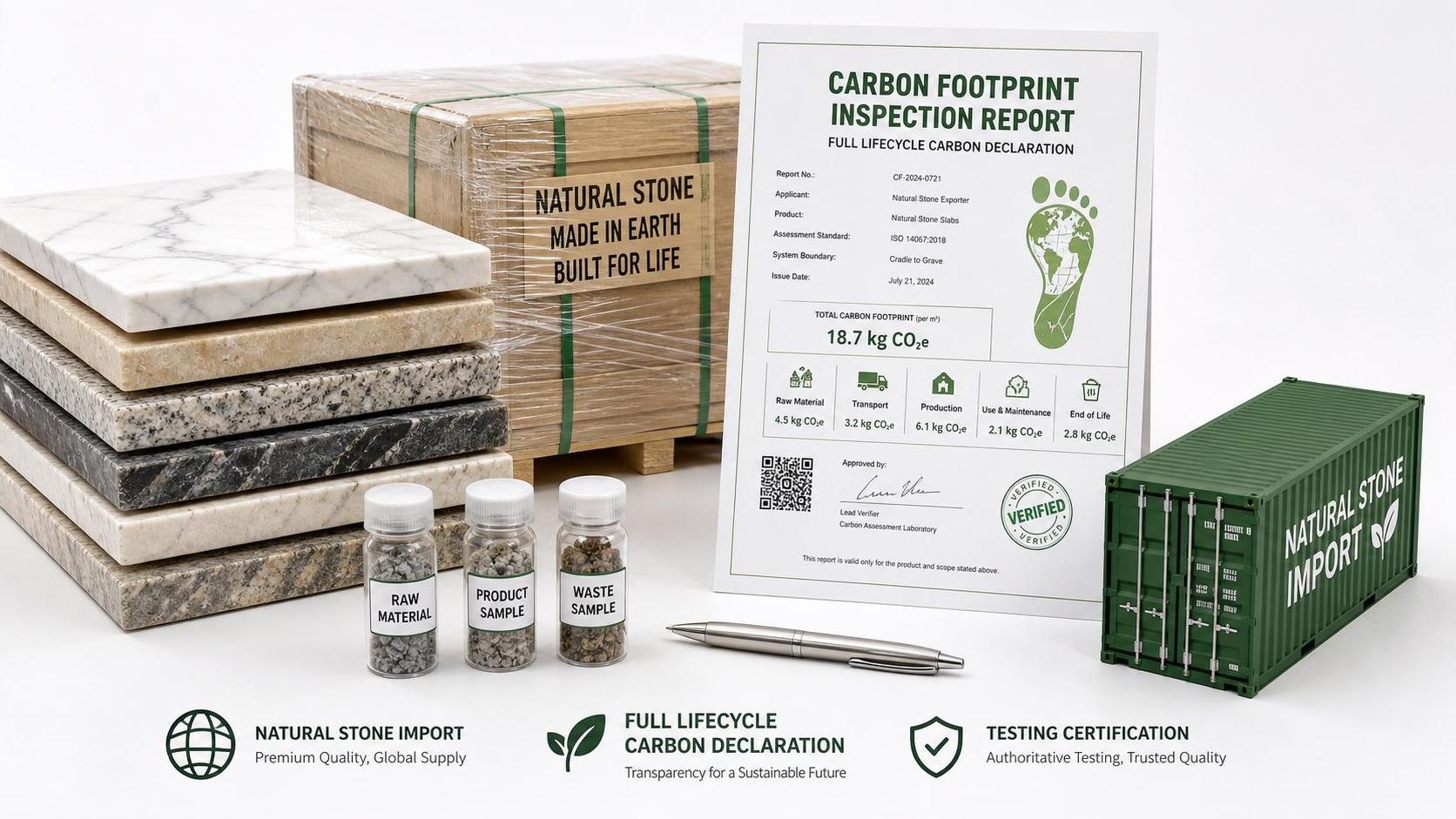
Effective August 15, 2026, Vietnam’s updated import rules for building materials place a new documentary requirement on imported natural stone: shipments must be accompanied by a full life-cycle carbon footprint declaration issued by a laboratory recognized by China’s CNCA. Because the declaration must cover mining, processing, and transport, the change is not just a paperwork update; it may affect exporters, importers, procurement teams, testing arrangements, and delivery planning. The rule also deserves attention because missing documentation will trigger a temporary environmental surcharge set at 15% of cargo value.
A documented compliance threshold takes effect on August 15
The confirmed facts are limited but clear. Vietnam’s Ministry of Industry and Trade (MOIT) updated Notice No. 22/2026/TT-BCT on June 24, 2026. Under that update, from August 15, 2026, all imported natural stone must be accompanied by a “full life-cycle carbon footprint declaration” issued by a laboratory recognized by China’s CNCA. The required declaration must include data covering three stages: mining, processing, and transportation. Where the declaration is not submitted, a temporary environmental surcharge of 15% of the cargo value will apply.
Why the change matters across the transaction chain
Export-facing stone suppliers may face a new pre-shipment checkpoint
Analysis shows that suppliers shipping natural stone into Vietnam are likely to feel the change first at the shipment preparation stage. The core issue is no longer only product availability or routine trade documentation, but whether the cargo file includes a compliant carbon footprint declaration from a CNCA-recognized laboratory. This may affect document readiness, pre-shipment coordination, and the timing of export release.
Importers and buyers may need to review procurement documents more closely
From an industry perspective, importers and procurement teams may need to check whether purchase terms, supplier documentation lists, and receiving procedures reflect the new requirement. The practical concern is straightforward: if the required declaration is missing, the shipment may carry an added cost burden through the temporary environmental surcharge. For buyers, this turns carbon-related documentation into a trade and cost control issue rather than a purely technical file.
Testing and certification coordination becomes part of delivery planning
Observably, the rule also draws laboratories and compliance service providers into the delivery chain. Because the declaration must come from a CNCA-recognized laboratory and include three life-cycle stages, companies involved in testing coordination, certification support, and trade compliance may need to pay closer attention to file completeness, document consistency, and timing between testing output and shipment schedules. The event summary does not provide further execution details, so the exact verification process still requires monitoring.
What companies should watch now
Check whether current cargo files match the new declaration requirement
Companies involved in natural stone trade with Vietnam should closely review whether their existing shipment documents already contain the required life-cycle carbon footprint declaration, and whether the document clearly covers mining, processing, and transportation. Where current files do not align, the gap may become a direct customs, cost, or delivery issue after the effective date.
Pay attention to laboratory recognition and document acceptance
What deserves closer attention is the practical interpretation of “CNCA-recognized laboratory” and how receiving authorities or counterparties will assess document sufficiency in actual transactions. The provided information confirms the requirement, but does not define a detailed acceptance workflow. For that reason, companies should treat laboratory qualification checks and declaration format review as a priority area for compliance follow-up.
Review contract, procurement, and delivery timing assumptions
Analysis shows that the rule may require changes in contract annexes, supplier checklists, and delivery scheduling assumptions. If the declaration becomes a prerequisite for smooth entry, procurement teams and sellers may need to confirm earlier in the transaction cycle who is responsible for arranging the document, how it is delivered with shipment files, and how non-compliance risk is allocated commercially.
Monitor whether execution language becomes more detailed
The current information establishes a clear rule change, but not a full operational manual. Companies should therefore continue watching for more precise wording, implementation signals, or market-side document practices that could affect bidding files, customs preparation, supplier qualification, and post-shipment compliance review.
This looks like an execution signal, but not the final word on practice
From an industry perspective, this development is more appropriately understood as a rule with immediate commercial relevance rather than a distant policy direction. The reason is the combination of a fixed effective date, a defined document type, specified data stages, and a stated surcharge for non-submission. At the same time, observably, the market still lacks detail in the provided information on how the declaration will be checked in practice, how documentation issues will be handled operationally, and whether counterparties will adopt stricter contract language in response. That is why the event should be read as both a landed compliance change and a signal to keep monitoring implementation behavior.
How this update is best understood for now
In practical terms, the update points to a more document-driven compliance threshold for natural stone entering Vietnam. It does not by itself confirm broader market outcomes, but it does indicate that carbon-related documentation is becoming a concrete trade condition in this product flow. A cautious reading is therefore the most appropriate: the rule is already meaningful for shipment planning and cost exposure, while its full operational impact will depend on how execution language, document review practice, and industry response develop after the effective date.
About the basis of this article
This article is generated from the user-provided news title, event date, and event summary. The analysis is based only on the supplied information: the MOIT update to Notice No. 22/2026/TT-BCT, the August 15, 2026 effective date, the requirement for a CNCA-recognized laboratory to issue a full life-cycle carbon footprint declaration for imported natural stone, the three required data stages, and the 15% temporary environmental surcharge for non-submission. No specific official source link was provided in the input, so the exact official publication link still requires verification. For follow-up coverage, it remains necessary to monitor official notices, regulatory releases, customs or trade authority information, standard or certification-related documents, procurement file changes, and market feedback on actual execution.
Industry Briefing
Get the top 5 industry headlines delivered to your inbox every morning.