
EN 1442:2026 Antimicrobial Ceramic Standard Enters Force on May 15, 2026
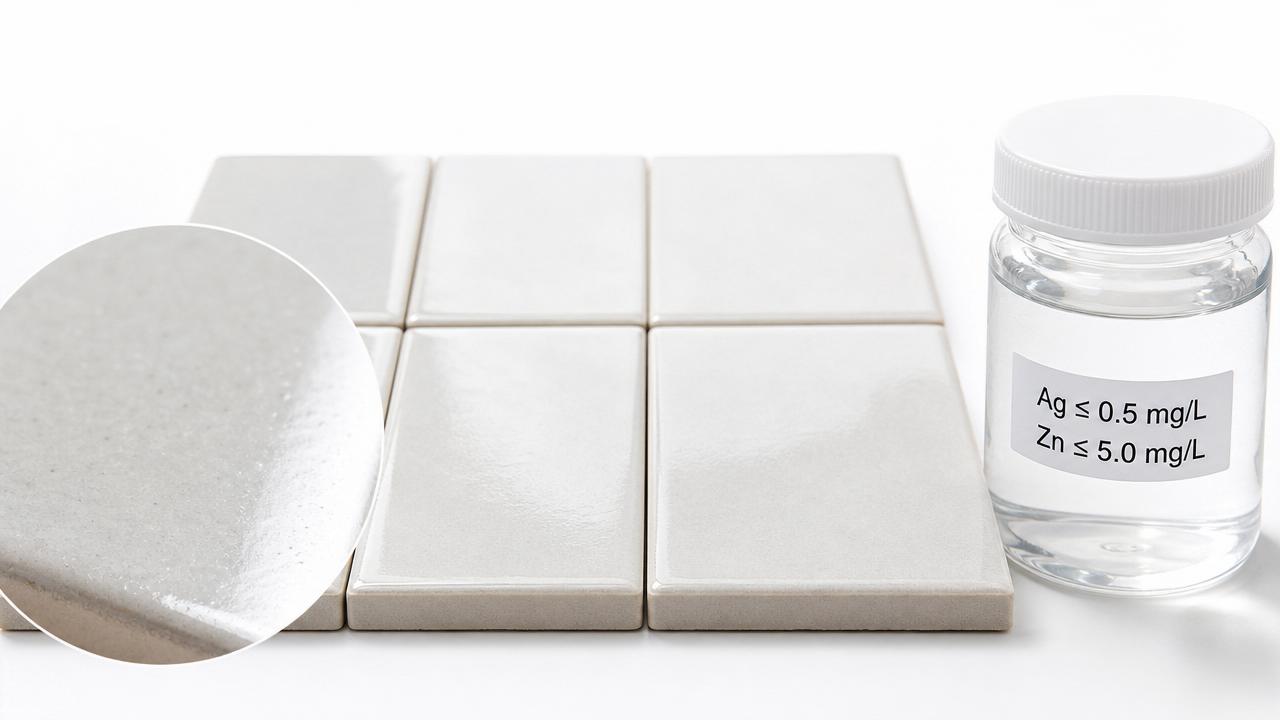
On May 15, 2026, the revised EU standard EN 1442:2026 for antimicrobial ceramics becomes mandatory across the European Union. This update directly affects manufacturers and exporters of glazed ceramic tiles incorporating silver- or zinc-based antimicrobial agents — particularly those supplying key markets including Germany, the Netherlands, and France. The new requirement introduces enforceable limits on metal ion leaching (Ag ≤ 0.5 mg/L; Zn ≤ 5.0 mg/L), mandating testing per ISO 10545-14:2024. Products lacking CE certification compliant with EN 1442:2026 will be barred from distribution in these markets.
Event Overview
The European standard EN 1442:2026 for antimicrobial ceramic products enters into mandatory application on May 15, 2026. It specifies maximum allowable leaching concentrations for silver (Ag) and zinc (Zn) ions from antimicrobial glazed tiles — set at 0.5 mg/L and 5.0 mg/L respectively. Testing must follow ISO 10545-14:2024 for aqueous extraction. Compliance is required for CE marking; non-compliant products may not be placed on the market in EU member states, including Germany, the Netherlands, and France. Leading Chinese tile exporters have initiated minor glaze formulation adjustments and pre-scheduled third-party leaching tests in response.
Industries Affected
Direct Exporters and Trading Companies
Exporters placing antimicrobial glazed tiles into the EU face immediate regulatory gatekeeping. Non-compliance means inability to affix CE marking under the new standard, resulting in customs rejection or withdrawal from distribution channels. Impact manifests in delayed shipments, retesting costs, and potential contract renegotiation with EU importers.
Glaze and Additive Suppliers
Suppliers of antimicrobial agents (e.g., Ag/Zn-doped frits, nano-silver suspensions) and functional glaze formulations must now ensure their inputs meet the solubility constraints defined in EN 1442:2026. Their technical data sheets and batch certifications may require revision to reflect leaching performance — not just antimicrobial efficacy — as a core specification.
Ceramic Tile Manufacturers
Manufacturers producing antimicrobial glazed tiles must adjust production protocols: reformulating glazes, validating firing schedules against leaching outcomes, and integrating ISO 10545-14:2024 testing into quality control. Batch-level leaching verification adds time and cost to release workflows, especially where legacy formulations exceed the new Ag or Zn thresholds.
Distribution and Import Agents in the EU
EU-based distributors and import agents are responsible for verifying CE documentation against EN 1442:2026 compliance before warehousing or resale. Absence of valid test reports referencing ISO 10545-14:2024 and the correct limit values may expose them to liability under EU Market Surveillance Regulation (EU) 2019/1020.
Key Focus Areas and Recommended Actions
Verify current CE certificates against EN 1442:2026 transition timelines
Confirm whether existing CE declarations reference EN 1442:2012 or earlier versions. Certificates issued before May 15, 2026, under outdated editions do not satisfy the mandatory requirement post–May 15, 2026 — even if technically valid for other purposes. New testing and certification are required for affected SKUs.
Prioritize leaching testing for high-volume export SKUs containing Ag or Zn
Focus initial ISO 10545-14:2024 testing on best-selling antimicrobial tile lines destined for Germany, the Netherlands, and France. Avoid broad-spectrum requalification; instead, use representative samples from recent production batches to assess real-world leaching behavior under standardized immersion conditions.
Document glaze composition changes and retain test records for at least 10 years
Any reformulation intended to reduce Ag/Zn leaching must be formally recorded — including raw material lot numbers, mixing ratios, and firing parameters. Per EU Regulation (EU) No 305/2011, technical documentation supporting CE marking must be kept for 10 years and made available to market surveillance authorities upon request.
Engage notified bodies early to align on interpretation of ‘antimicrobial function’ scope
EN 1442:2026 applies only to tiles explicitly marketed or labeled as antimicrobial. However, some decorative glazes containing trace Ag/Zn impurities — not added for biocidal function — may still trigger scrutiny. Clarify with your notified body whether incidental presence falls within the standard’s scope before initiating formal assessment.
Editorial Perspective / Industry Observation
Observably, EN 1442:2026 marks a shift from performance-based antimicrobial claims to safety-driven material release controls. Analysis shows this is less about restricting innovation and more about harmonizing environmental and health safeguards across the EU internal market — especially given increasing regulatory attention on nanomaterials and heavy metal migration in consumer-facing building products. From an industry perspective, the May 2026 date represents a firm implementation deadline, not a transitional guideline. It is better understood as an enforcement milestone than a signal for future discussion: market access hinges on demonstrable compliance, not intent or pending review. Continuous monitoring remains advisable, particularly for updates to ISO 10545-14 implementation guidance or national market surveillance alerts.
This development underscores how regional product safety standards increasingly govern global supply chains — not through volume restrictions, but through precise, testable technical thresholds embedded in conformity assessments. For ceramic exporters, it reinforces that CE marking is not static; it requires active maintenance aligned with evolving normative references.
Information Source: Official publication status of EN 1442:2026 via CEN (European Committee for Standardization); referenced test method ISO 10545-14:2024; public statements from leading Chinese tile exporters regarding preparatory actions. Ongoing verification of national enforcement practices in Germany, the Netherlands, and France remains advised.
Industry Briefing
Get the top 5 industry headlines delivered to your inbox every morning.