
EU Commission Launches EN 1442:2026 Enforcement for Antimicrobial Ceramics
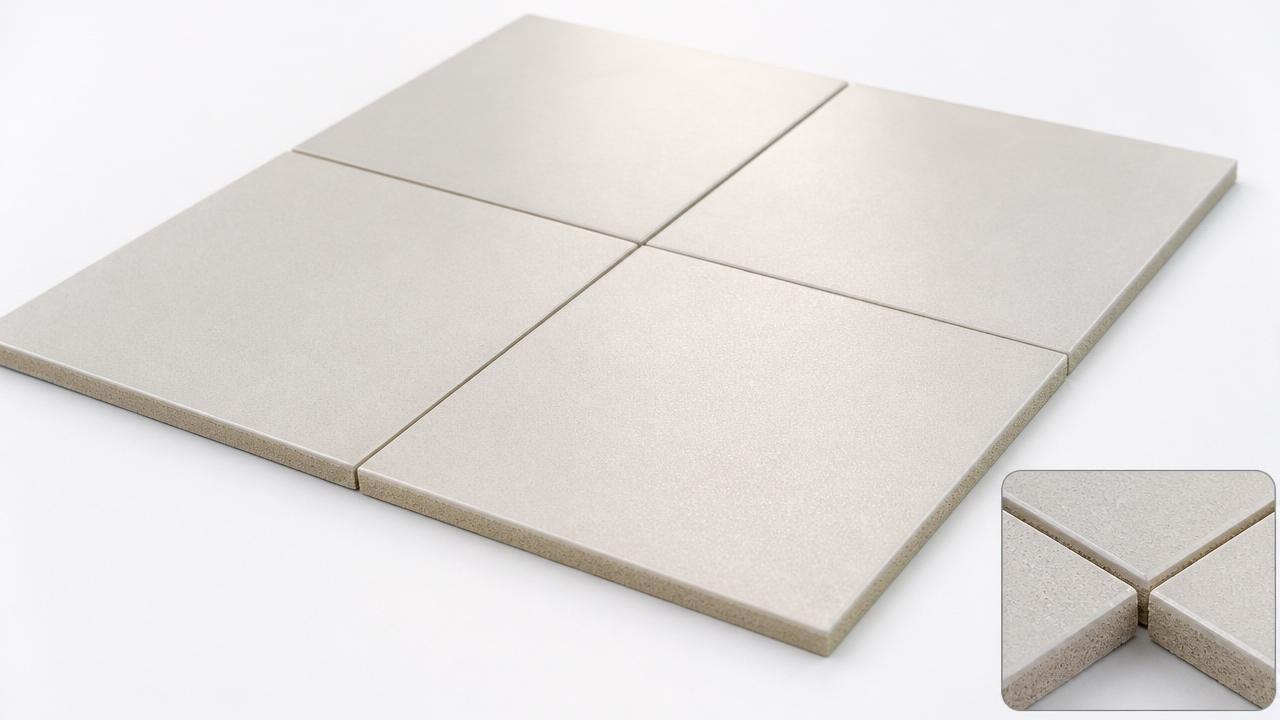
The European Commission initiated enforcement of EN 1442:2026 — the new harmonized standard for antimicrobial ceramic tiles — on 15 May 2026. This marks the first round of market surveillance targeting Tiles & Ceramics products across all 27 EU member states, with particular relevance for exporters and suppliers of glazed ceramic tiles incorporating silver or zinc-based antimicrobial agents. The action signals a material shift in compliance expectations for manufacturers and traders supplying to the EU construction and interior materials markets.
Event Overview
On 15 May 2026, the European Commission officially notified the launch of the first market surveillance campaign under EN 1442:2026. The campaign focuses on verifying whether silver (Ag⁺) and zinc (Zn²⁺) ion leaching from antimicrobial ceramic tiles — when exposed to simulated sweat and artificial saliva — exceeds specified thresholds: Ag⁺ ≤ 0.05 mg/L and Zn²⁺ ≤ 1.2 mg/L. The inspection covers EU-wide customs checkpoints and retail building material outlets. Multiple consignments of Chinese glazed tiles have already been detained at German and Dutch ports due to non-compliant metal ion solubility results.
Industries Affected
Direct Exporters and Importers
Companies exporting glazed ceramic tiles to the EU face immediate shipment risk. Non-compliance with EN 1442:2026’s solubility requirements may result in customs detention, retesting delays, or rejection — particularly in Germany and the Netherlands, where enforcement has already begun. Product certification status alone is no longer sufficient; post-manufacturing leaching performance must be verified under standardized conditions.
Tile Manufacturers and Finishers
Manufacturers applying silver- or zinc-doped glazes or surface treatments must now validate not only antimicrobial efficacy but also controlled ion release behavior. The standard introduces a functional requirement beyond biocidal activity: stability of antimicrobial agents under physiological simulants. Production batches previously certified under older standards (e.g., EN ISO 22196) may not meet EN 1442:2026’s solubility limits without reformulation or process adjustment.
Raw Material and Additive Suppliers
Suppliers of antimicrobial additives — especially silver nanoparticles, zinc oxide variants, or proprietary ceramic-compatible biocidal compounds — are indirectly impacted. Buyers are increasingly requesting documentation demonstrating additive compatibility with EN 1442:2026 leaching protocols. Formulations optimized for durability or efficacy alone may fail solubility screening, prompting demand for new technical data packages focused on ion release kinetics.
Distributors and Retail Building Material Channels
EU-based distributors and large-format retailers handling imported glazed tiles must verify supplier compliance documentation before shelf placement. Market surveillance includes physical sampling at point-of-sale locations. Absence of test reports covering both simulated sweat and artificial saliva leaching may trigger withdrawal requests or liability exposure under national consumer protection laws.
Key Focus Areas and Recommended Actions
Monitor official updates from EU Member State Market Surveillance Authorities
EN 1442:2026 is now referenced in the EU Construction Products Regulation (CPR) framework. National authorities — notably Germany’s BAuA and the Netherlands’ NVWA — are publishing detailed guidance on acceptable test methods (e.g., ISO 10993-12 adaptations) and documentation formats. Companies should track these national-level interpretations, as enforcement rigor and accepted test labs vary.
Prioritize testing for high-risk product categories and entry points
Glazed tiles marketed with explicit ‘antibacterial’, ‘antiviral’, or ‘hygienic surface’ claims are subject to heightened scrutiny. Testing should prioritize shipments destined for Germany and the Netherlands, where initial detentions occurred. Pre-shipment verification using EN 1442:2026-compliant leaching protocols — rather than generic migration tests — is strongly advised.
Distinguish between regulatory signal and operational implementation
While the 15 May 2026 date marks formal enforcement initiation, full rollout across all 27 member states will occur progressively. Not all national authorities have yet published test lab accreditation lists or updated import declaration fields. Companies should treat this as an active compliance transition — not a binary go/no-go deadline — and align internal quality controls with the new standard ahead of mandatory CPR declarations.
Review and update technical documentation and supply chain communication
Certification bodies and notified bodies are revising audit checklists to include EN 1442:2026 leaching verification. Suppliers should ensure test reports explicitly reference EN 1442:2026, specify test media (simulated sweat/artificial saliva), and report measured ion concentrations against the stated limits. Internal procurement specifications for antimicrobial glazes should now require leaching data — not just microbiological reduction claims.
Editorial Perspective / Industry Observation
Observably, this enforcement action is less about introducing a wholly new regulatory concept and more about tightening the functional safety criteria applied to antimicrobial ceramics. EN 1442:2026 does not ban silver or zinc use; rather, it imposes a measurable constraint on their bioavailability in contact scenarios. Analysis shows that the threshold values (Ag⁺ ≤ 0.05 mg/L; Zn²⁺ ≤ 1.2 mg/L) align closely with existing EU chemical safety references for dermal and oral exposure — suggesting this is a convergence of biocidal product regulation and materials safety logic. From an industry perspective, the current phase represents a policy signal with near-term operational consequences: it confirms that antimicrobial functionality in ceramics is now treated as a dual-purpose property — efficacy plus controlled release — and that market access hinges on demonstrable performance under physiologically relevant conditions.
This development is better understood as a maturation of regulatory oversight rather than a sudden disruption. It reflects growing emphasis on real-world interaction safety — especially for surfaces in healthcare, education, and public infrastructure — and signals that future revisions of related standards (e.g., EN 1097-12 for leaching of construction products) may adopt similar physiological simulation approaches.
Current enforcement is still in its early, targeted phase. Broader application — including routine checks at non-border retail locations or inclusion in CE marking assessments — remains subject to further national implementation timelines and notified body readiness. Continued observation of test method harmonization and lab accreditation progress across EU states is warranted.
In summary, EN 1442:2026 enforcement signifies a step toward functionally grounded safety requirements for antimicrobial ceramics. It is neither a blanket restriction nor a temporary measure, but rather a calibrated alignment of product performance standards with human exposure science. For affected stakeholders, the priority is not reactive compliance, but proactive integration of leaching verification into R&D, quality assurance, and supply chain management workflows.
Source: European Commission Official Notification (Ref: SANTE/2026/8742), EN 1442:2026 Harmonized Standard (CEN, 2026), Public detention records issued by German Federal Institute for Occupational Safety and Health (BAuA) and Dutch Food and Consumer Product Safety Authority (NVWA), May 2026.
Note: Implementation timelines and test method acceptance across all 27 EU Member States remain under observation. Updates from national market surveillance authorities are expected through Q3 2026.
Industry Briefing
Get the top 5 industry headlines delivered to your inbox every morning.