
EU EPD Carbon Declaration Rules Take Effect May 16, 2026
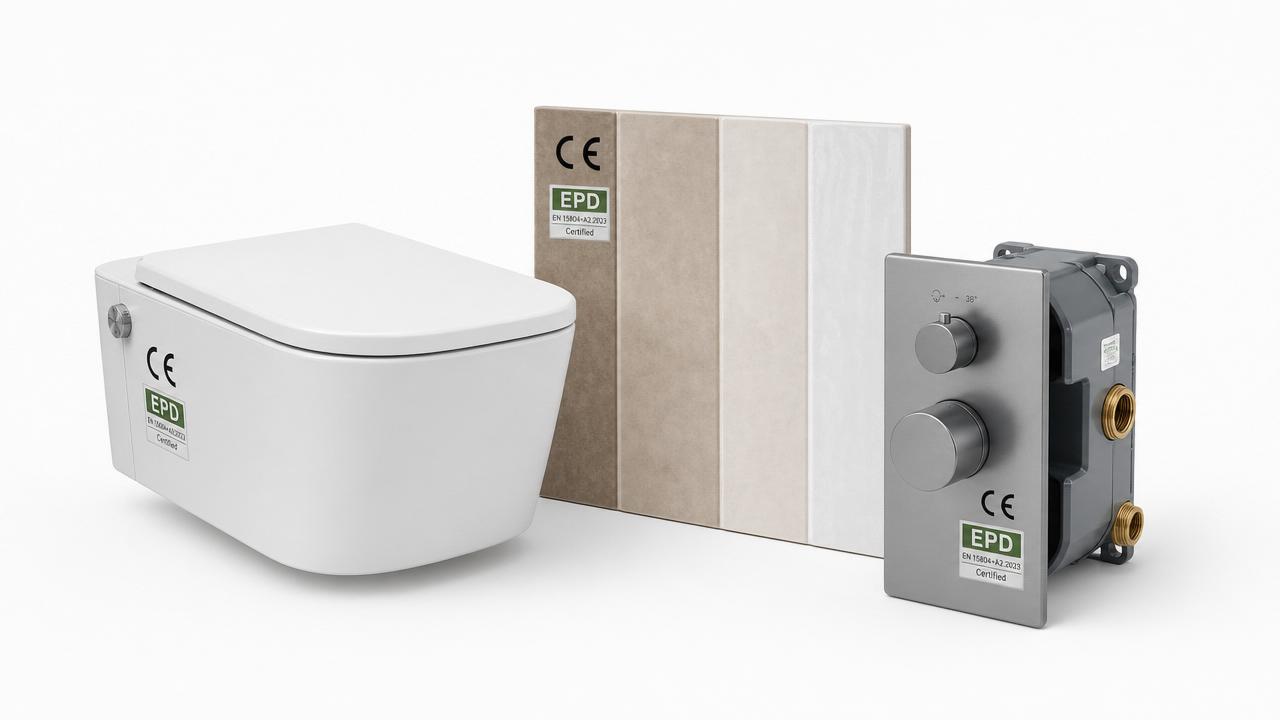
On May 16, 2026, the European Union’s revised Construction Products Regulation (CPR) and mandatory Environmental Product Declaration (EPD) implementation guidance enter into force. This requirement directly affects exporters of architectural ceramics, smart toilets, thermostatic shower systems, and other building-related sanitary ware from China and other third countries—mandating EN 15804+A2:2023-compliant EPDs and logical data linkage with the EU’s Carbon Border Adjustment Mechanism (CBAM) reporting system. The change impacts customs clearance compliance and eligibility for public procurement tenders in the EU market.
Event Overview
The revised CPR and EPD enforcement guidelines, published under EU regulatory framework, take effect on May 16, 2026. As confirmed in official EU documentation, all construction products falling under CPR scope—including ceramic tiles, porcelain sanitary ware, smart toilets, and thermostatic mixing valves—must, in addition to CE marking, submit an EPD verified to EN 15804+A2:2023. Furthermore, the EPD data must be logically associated with the CBAM declaration system during import or project submission. No transitional period or phased rollout is indicated in the publicly available texts.
Industries Affected by Sector
Direct Exporters of Building Products
Exporters placing ceramic tiles, smart toilets, or thermostatic shower systems on the EU market will face immediate compliance obligations. Failure to provide a valid, EN 15804+A2:2023–certified EPD linked to CBAM may result in customs delays, rejection of declarations, or disqualification from public infrastructure tenders.
Manufacturers of Ceramic and Smart Sanitary Ware
Production facilities supplying these products must generate or commission EPDs aligned with EN 15804+A2:2023—a standard requiring full life-cycle assessment (LCA) modeling, including upstream raw material extraction, energy use in firing, transport, and end-of-life assumptions. This introduces new technical and verification requirements beyond existing CE conformity assessments.
Supply Chain Service Providers (LCA Consultants, EPD Program Operators)
Entities offering EPD development, LCA modeling, or verification services will experience increased demand—but only those accredited under EN 15804+A2:2023 and recognized by EU-authorized EPD program operators (e.g., IBU, EPD International) can support compliant submissions. Non-accredited providers cannot fulfill the regulatory requirement.
Importers and Authorized Representatives in the EU
EU-based importers and authorized representatives assuming CPR responsibility must validate both EPD validity and its CBAM linkage prior to placing products on the market. Their liability now extends to environmental data integrity—not just safety and performance conformity.
What Relevant Enterprises or Practitioners Should Monitor and Do Now
Confirm EPD Program Operator Recognition Status
Verify whether your chosen EPD program operator (e.g., Institut Bauen und Umwelt e.V. [IBU], EPD International AB) is officially listed in the EU’s CPR Annex IV database of recognized bodies—and whether their EPD templates comply with EN 15804+A2:2023’s updated modules (e.g., inclusion of biogenic carbon, updated GWP factors, mandatory CBAM-relevant data fields).
Map Product Lines Against CPR Scope and CBAM Coverage
Not all ceramic or sanitary ware falls under CPR—or CBAM. Cross-reference product CN codes (e.g., HS 6910 for ceramic tiles, 6911 for ceramic sanitary ware) with the latest EU CPR Annexes and CBAM sectoral scope documents. Smart toilets incorporating electronics may trigger additional WEEE or RoHS considerations, but only the structural and material components covered under CPR require EPD linkage.
Initiate LCA Data Collection for High-Volume SKUs
EN 15804+A2:2023 requires primary data for energy inputs, raw material sourcing, and manufacturing emissions. Begin gathering facility-level electricity/gas consumption, clay and glaze supplier emission factors, and logistics fuel data for top 20 export SKUs—especially those destined for EU public projects where EPD submission is already required pre-tender.
Distinguish Between Policy Signal and Operational Deadline
While the May 16, 2026, date is binding for market placement, CBAM’s full reporting obligations for goods covered under CPR are not yet active under the CBAM Transitional Phase (which ends December 31, 2025). The CPR-EPD–CBAM linkage requirement is a separate legal obligation introduced via CPR revision—not a CBAM expansion. Enterprises should treat it as a standalone CPR compliance step, not a CBAM reporting extension.
Editorial Perspective / Industry Observation
Observably, this requirement represents a procedural tightening within the existing CPR framework—not a new policy domain. It formalizes the integration of environmental data into construction product conformity, shifting EPD from voluntary transparency tool to mandatory technical file component. Analysis shows that the linkage to CBAM does not mean CBAM tariffs apply to these products yet; rather, it establishes data interoperability for future alignment. From an industry perspective, this signals the EU’s intent to embed carbon accounting into core product regulation—even for sectors outside current CBAM coverage. It is less a near-term cost driver and more a structural signal about data readiness expectations for regulated building products.
Consequently, the measure is best understood as a compliance milestone rather than an immediate market access barrier—provided enterprises treat EPD generation as a technical documentation task, not a sustainability branding exercise. Continued monitoring is warranted for updates to the EU’s CPR ‘Delegated Act’ on EPD verification criteria, expected before Q4 2025.
Conclusion: This update underscores the growing interdependence between product conformity, environmental data integrity, and digital traceability in EU construction markets. For affected exporters and manufacturers, the priority is not speculation about carbon pricing, but verification-readiness: confirming EPD program accreditation, aligning LCA scopes with EN 15804+A2:2023, and establishing internal data governance for declared environmental performance. At present, it is more accurately interpreted as a documentation and data architecture requirement than a direct trade restriction.
Source Disclosure:
Primary source: Official text of Regulation (EU) 2023/XXX amending Regulation (EU) No 305/2011 (CPR), published in the Official Journal of the European Union; accompanying Commission Guidance Document on EPD Implementation under CPR (2025/C 123/01).
Note: The specific delegated act detailing EPD verification procedures under the revised CPR remains pending and is subject to ongoing consultation. Its final form and timing are under observation.
Industry Briefing
Get the top 5 industry headlines delivered to your inbox every morning.