
GIAM Tile Export Price Index Rises 4.2% in Early June
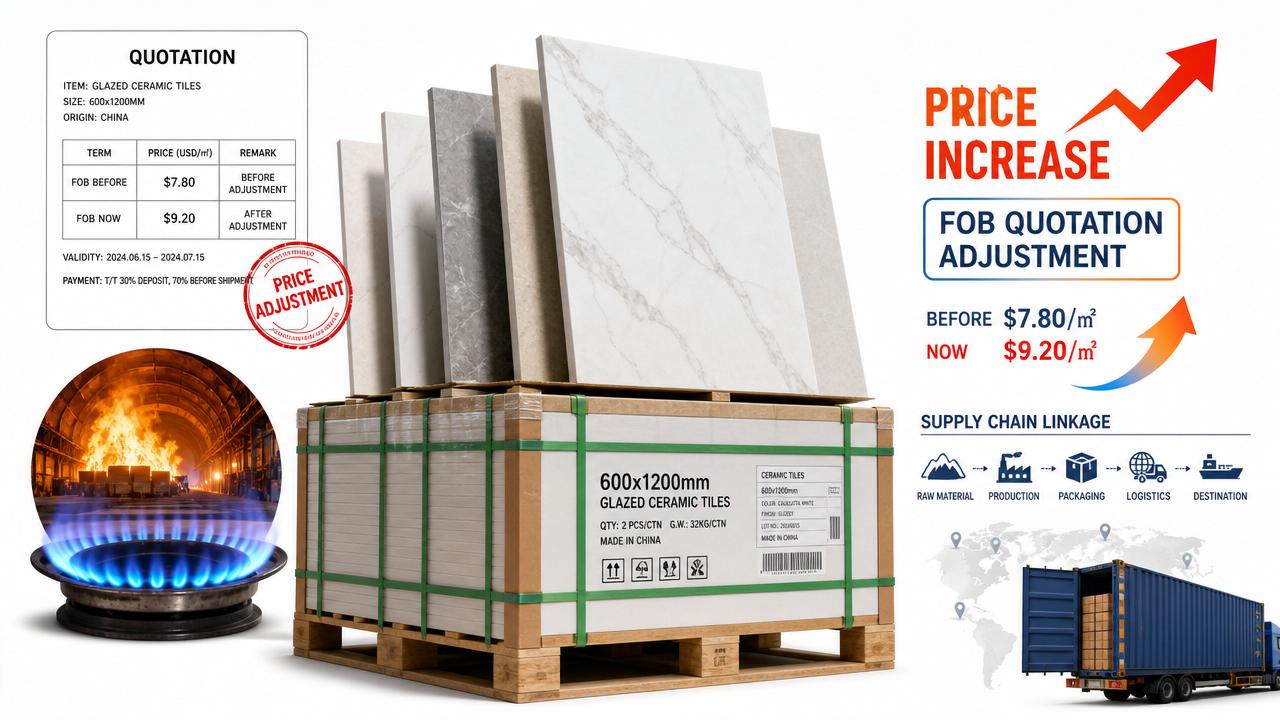
On June 1, 2026, market attention turned to a sharp move in ceramic tile pricing as the GIAM-CPI for the first week of June rose 4.2% from the previous period, reaching its highest level so far this year. The update matters not only for tile exporters, but also for buyers, manufacturers, distributors, and supply chain service providers, because the increase has already appeared in FOB quotations and directly affects pricing discussions, order timing, and delivery planning.
What the latest index move confirms
According to the GIAM global building materials price monitoring system, the global ceramic tile export price index increased by 4.2% in the first week of June 2026 compared with the prior period, marking a year-to-date high. The reported drivers were a rebound in natural gas prices in Europe, which raised kiln firing costs, together with concentrated seasonal purchasing demand in markets including Turkey and Indonesia. The price increase has already been transmitted to the FOB end, with the average quotation for mainstream 600×1200mm glazed tiles rising by $0.85–1.20 per square meter.
Where the pressure is likely to be felt first
Export transactions face faster quote adjustments
From an industry perspective, direct trading companies and export sales teams are likely to feel the immediate effect because the change has already reached FOB quotations. The main pressure point is not only price itself, but also how long quotes can remain valid and how quickly ongoing negotiations may need to be updated.
Manufacturing operations need closer cost tracking
Analysis shows that manufacturers are likely to focus on the link between energy costs and firing economics. Since the reported trigger includes higher European natural gas prices, production-side businesses may need to watch whether cost changes remain limited to a short pricing window or continue to influence export offer levels.
Buyers and sourcing teams may revisit timing
Observably, buyers and procurement teams may be affected through budgeting, sourcing rhythm, and product selection, especially in mainstream specifications such as 600×1200mm glazed tiles. What deserves closer attention is whether current purchasing plans were built on earlier price assumptions that no longer match the latest FOB level.
Logistics and supply chain service providers may see planning changes
For supply chain service providers, the issue is less about the index itself and more about the operational consequences of concentrated buying activity. If order releases cluster around the same period, shipment scheduling, booking coordination, and document preparation may require closer alignment with customers and suppliers.
What companies should monitor now
Quote validity and contract communication
Companies should pay close attention to how quotation validity periods are being handled in current negotiations. Since the increase has already been reflected in FOB offers, clear communication on effective dates, applicable specifications, and adjustment terms becomes more important in avoiding disputes later in the transaction cycle.
Mainstream product exposure
The reported increase in average prices for 600×1200mm glazed tiles makes this specification a practical focus point. Businesses with significant exposure to this product category may need to review margin assumptions, customer acceptance thresholds, and the pace of new order conversion.
Energy-linked cost transmission
Analysis shows that companies should distinguish between a cost increase at the production stage and a fully stabilized market repricing. The current signal confirms transmission into FOB quotations, but businesses still need to monitor whether the pass-through remains consistent across deals and across the next rounds of offers.
Procurement and delivery coordination
Where purchasing activity is concentrated, companies may need tighter coordination on order locking, supplier confirmation, and delivery scheduling. What deserves closer attention is whether pricing movement and procurement timing begin to reinforce each other, creating additional pressure on execution rather than on price alone.
How this development is best interpreted
Observably, this update should be read first as a live market signal rather than as a complete long-term pricing conclusion. The combination of higher kiln-related energy costs and concentrated buying demand suggests that both cost-side and demand-side factors are active at the same time. Analysis shows that this makes the development more meaningful than a routine weekly fluctuation, but it is still more appropriate to understand it as a situation that requires continued observation rather than a settled directional trend.
Why continued monitoring matters
At this stage, the industry significance lies in the fact that the price rise is no longer only an index movement; it has already reached executable export quotations. That makes the development relevant for commercial decision-making now. A neutral reading is that the market has entered a period of heightened pricing sensitivity, especially around mainstream export products, but the durability and breadth of the move still need to be tracked through subsequent updates.
Basis of this article
This article is based on the user-provided news title, event date, and event summary regarding the 4.2% rise in the GIAM ceramic tile export price index in the first week of June 2026. For this type of industry update, commonly relevant source categories may include official announcements, company statements, industry association releases, authoritative media reporting, and standards or trade-related documents. A specific official source link was not provided in the input, so further verification remains necessary. Continued attention should be paid to subsequent index updates, pricing changes in FOB offers, and whether the reported cost and purchasing factors remain in place.
Industry Briefing
Get the top 5 industry headlines delivered to your inbox every morning.