
Tile Export Prices Rise on Green Tariffs, Freight Surcharges
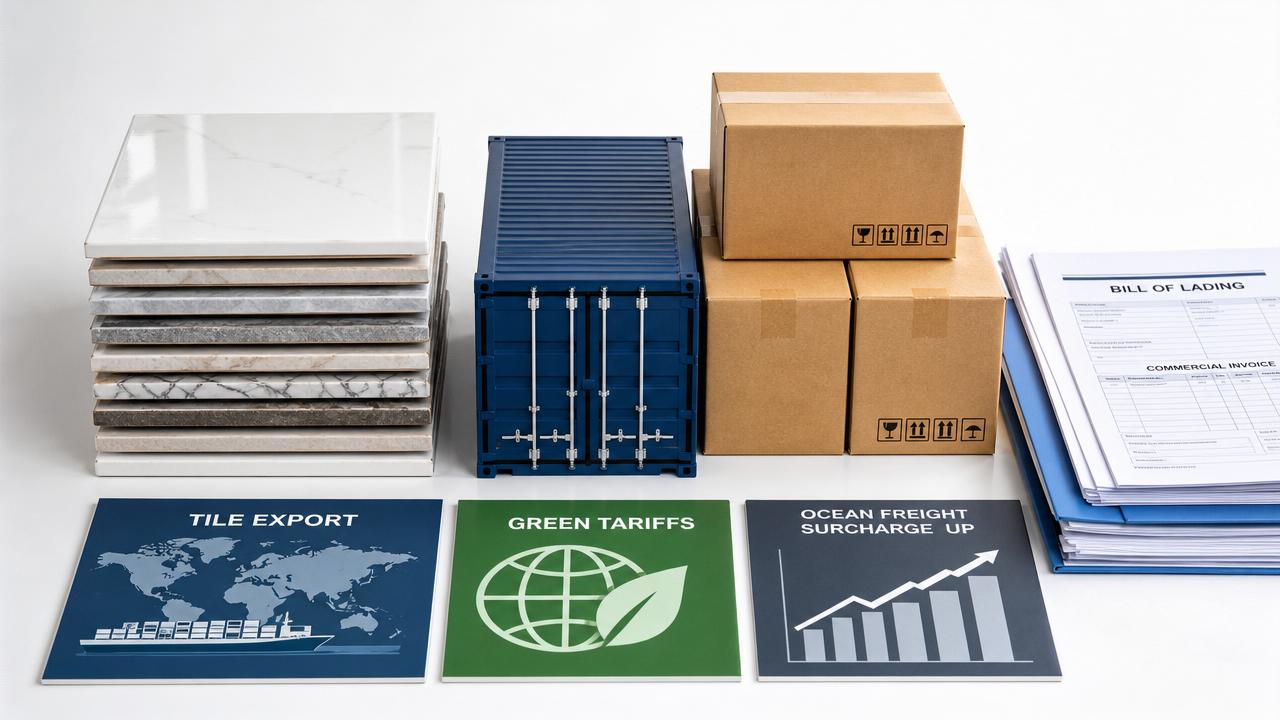
Between 2026-06-03 and 2026-06-09, the GIAM-CPI signal for Chinese ceramic tile exports pointed to a rules-and-cost shift that the industry cannot treat as a routine price move. The first-week increase in export pricing reflected the combined effect of green tariff implementation in three Southeast Asian markets and higher ocean shipping surcharges on the U.S. West Coast route, making this relevant not only for exporters but also for buyers, logistics providers, compliance teams, and contract managers watching quotation, documentation, delivery, and procurement execution.
What the latest pricing signal confirms
According to monitoring by the GIAM Global Building Materials Price Index Center, the FOB average price of Chinese ceramic tile exports reached USD 5.64 per square meter in the first week of June 2026, up 4.2% from the previous period.
The reported increase was mainly linked to two confirmed factors. One was the implementation of green tariffs in three Southeast Asian countries, which raised the compliance premium attached to exports. The other was a rise in shipping costs on the U.S. West Coast route, where the GRI increased by 18% and the BAF rose by another USD 280 per TEU.
The pricing signal has already been reflected in inquiry behavior from emerging buyers such as those in the Philippines and Saudi Arabia.
Where the pressure is likely to appear first
Export quotations are no longer only a sales issue
From an industry perspective, exporters are likely to feel the impact first because the price change is tied to both compliance-related costs and freight-related adjustments. What deserves closer attention is whether quotation models, validity periods, trade terms, and internal approval processes are updated fast enough to reflect tariff-linked compliance premiums and shipping surcharge volatility.
Procurement decisions may shift toward documentation readiness
For buyers and sourcing teams, the signal matters because higher export pricing linked to green tariff implementation may place greater weight on document preparation, specification matching, and supplier readiness before orders are confirmed. Analysis shows that procurement behavior may become more cautious where compliance costs are being passed through and where delivery budgeting depends on changing freight charges.
Logistics and delivery planning face a narrower buffer
Supply chain service providers and contract execution teams are also likely to be affected because GRI and BAF adjustments can compress delivery buffers and alter total landed-cost calculations. Observably, the issue is not only the headline rate increase but also how quickly freight changes are transmitted into booking, shipment timing, and customer communication.
What companies should watch in current execution
Recheck compliance assumptions behind current offers
Analysis shows that companies should closely review whether current export offers already reflect the compliance premium associated with the newly implemented green tariffs. If internal costing still relies on earlier assumptions, the risk is less about headline pricing and more about margin gaps, bid mismatches, or renegotiation pressure.
Track freight clauses and surcharge pass-through terms
What deserves closer attention is the treatment of GRI and BAF in existing contracts, quotations, and shipment planning. Where freight-related clauses are not clearly defined, exporters and buyers may need to examine how surcharge changes are allocated in practice, especially when delivery commitments were priced before the latest adjustment.
Pay attention to inquiry changes in emerging markets
The shift in inquiry behavior from buyers in the Philippines and Saudi Arabia should be watched as a market response signal rather than a confirmed trend. It is more appropriate to understand this as an early indication that purchasers are reacting to rule-linked and logistics-linked cost changes in real time.
Prepare records that support price and delivery discussions
From an operational perspective, companies should pay close attention to the completeness of trade documents, product files, testing-related materials where applicable, and communication records tied to quotation and shipment revisions. The input does not provide detailed execution requirements, so this remains a practical watchpoint rather than a confirmed new obligation.
Why this looks like an execution signal, not just a price move
Analysis shows that this development is more meaningful as an execution signal than as a standalone weekly index fluctuation. The combination of green tariff implementation and freight surcharge increases suggests that rule changes and transport cost adjustments are being reflected together in export pricing, which can influence how the market evaluates supplier competitiveness and procurement timing.
Observably, the market still needs further verification on how consistently these pressures will be applied across transactions, how buyers will absorb or negotiate them, and whether documentation, certification expectations, or tender language will adjust in response. For that reason, the current development should not be overstated as a settled long-term trend.
How the market should read this week’s move
The main industry meaning of this event lies in the fact that policy-linked compliance costs and shipping surcharges are now showing up together in ceramic tile export pricing. It is more appropriate to understand this as a landed execution signal with direct relevance to quotations, procurement review, freight planning, and delivery coordination, while the full market response still requires continued observation.
Basis of this article and what still needs verification
This article is generated based on the user-provided news title, event period, and event summary. For events of this type, relevant source categories commonly include official notices, regulator publications, customs or trade authority information, industry association releases, standard-setting documents, and reporting by authoritative media. No specific official source link was provided in the input, so the underlying official references still need to be continuously verified. Follow-up attention should remain on policy detail, certification and compliance interpretation, tender document changes, industry feedback, and how companies implement these changes in actual export execution.
Industry Briefing
Get the top 5 industry headlines delivered to your inbox every morning.