
Vietnam Extends China Ceramic Tariff Exemption to Dec 2026, Adds Green Label Mandate
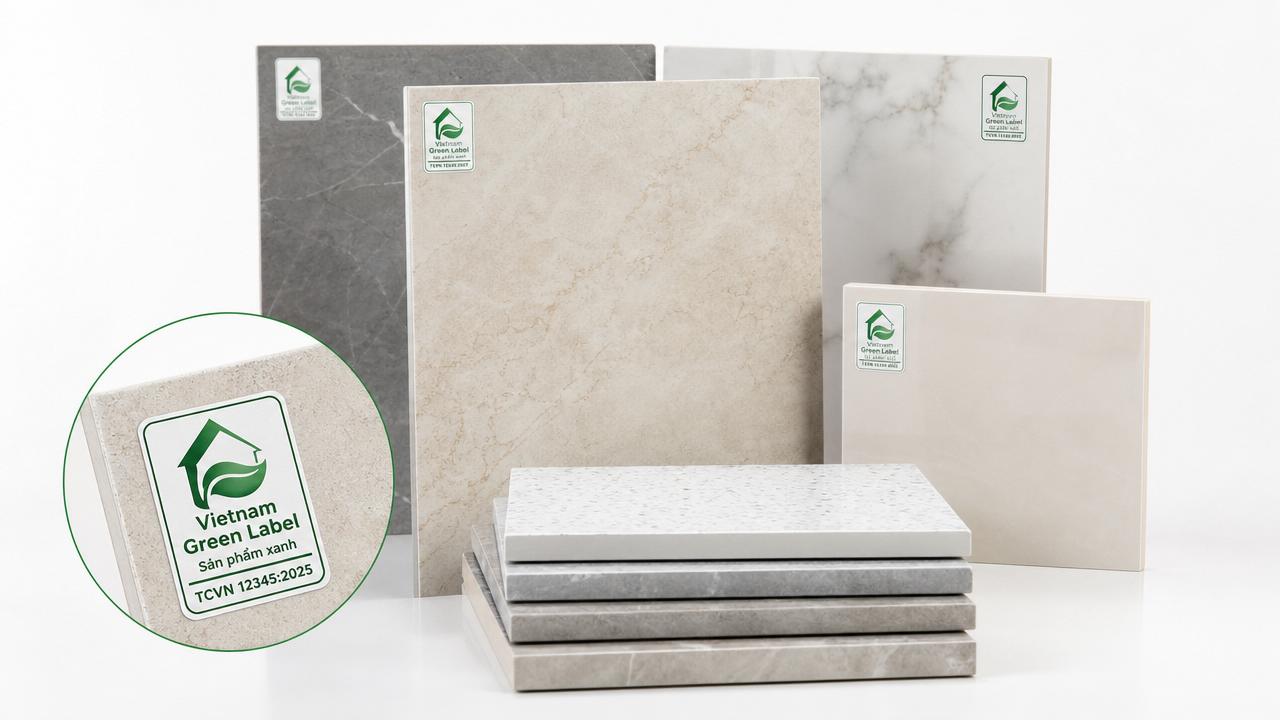
Vietnam’s Ministry of Industry and Trade announced on May 13, 2026, the extension of tariff exemption for imported Chinese tiles and ceramics until December 31, 2026 — originally set to expire on June 30, 2026. Concurrently, a new mandatory green labeling requirement, aligned with national standard TCVN 12345:2025, takes effect July 1, 2026. This development directly affects ceramic exporters, importers, distributors, and compliance service providers operating across the Vietnam–China building materials trade corridor.
Event Overview
On May 13, 2026, Vietnam’s Ministry of Industry and Trade confirmed the extension of the tariff exemption for imported Chinese tiles and ceramics from June 30, 2026, to December 31, 2026. Simultaneously, it issued a regulatory update mandating that, effective July 1, 2026, all imported ceramic tiles must carry Vietnam’s official Green Building Materials Label (Green Label). Certification requires testing against TCVN 12345:2025 — covering radioactivity, VOC emissions, and recycled material content — and verification via physical sampling and testing conducted by designated Vietnamese authorities. Third-party test reports issued outside Vietnam, including those from accredited Chinese laboratories, are not accepted for direct label issuance.
Industries Affected
Direct Exporters & Importers of Chinese Ceramics
These entities face dual operational shifts: extended market access under tariff relief, but immediate compliance pressure starting July 1, 2026. The requirement for in-country sampling and verification means lead times for customs clearance will increase, and pre-shipment coordination with Vietnamese certifiers becomes essential — especially for time-sensitive orders or just-in-time inventory models.
Manufacturers & OEM Producers in China
Producers supplying tiles to Vietnam must now align production batches with TCVN 12345:2025 specifications. This includes verifying raw material sourcing (e.g., recycled content traceability), adjusting glaze formulations to meet VOC limits, and ensuring kiln processing controls minimize radionuclide retention. Unlike voluntary eco-labels, this is a mandatory market access condition — non-compliant shipments risk rejection at Vietnamese ports.
Distributors & Brand Owners in Vietnam
Local distributors holding existing inventory must assess whether pre-July 1 stock qualifies for sale without relabeling. Under current guidance, only products cleared through customs before July 1, 2026, are exempt from the Green Label requirement — but no grace period applies to unsold stock already in domestic warehouses. Re-labeling post-import is not permitted; compliance must be confirmed prior to customs release.
Supply Chain & Compliance Service Providers
Logistics firms, testing coordinators, and certification consultants serving cross-border ceramic trade must now integrate Vietnamese on-site sampling protocols into their service offerings. The exclusion of foreign third-party reports means local presence or formal partnership with a Vietnamese-accredited verification body is necessary to support clients’ market entry timelines.
What Enterprises Should Monitor and Do Now
Track official implementation guidelines from Vietnam’s National Institute of Standards and Quality (STAMEQ)
The Ministry has delegated enforcement to STAMEQ and affiliated provincial inspection units. Final procedural details — such as sampling frequency, fee structure, certificate validity duration, and appeal mechanisms — remain pending formal circulars expected before July 1, 2026.
Prioritize July–December 2026 shipment planning around the July 1 compliance cutoff
Shipments scheduled for arrival in Vietnam on or after July 1, 2026, require full Green Label certification before customs declaration. Exporters should initiate engagement with Vietnamese certifiers no later than mid-June 2026 to secure sampling slots and avoid clearance delays.
Distinguish between policy signal and enforceable obligation
The tariff extension signals continued openness to Chinese ceramic imports, but the Green Label mandate reflects a hardening of environmental and health-related market access criteria. It is not a pilot or recommendation — it is a binding technical regulation with legal force under Vietnam’s Law on Product Quality.
Review and document upstream material declarations and process controls
TCVN 12345:2025 requires verifiable evidence — not self-declarations — for recycled content percentage and VOC emission test results. Manufacturers should audit internal records and supplier documentation now to ensure traceability back to raw material lots and firing parameters.
Editorial Observation / Industry Insight
Observably, this measure marks a structural shift in Vietnam’s approach to imported construction materials: tariff policy and sustainability regulation are now decoupled. The extension confirms continued reliance on Chinese supply for volume and affordability, while the Green Label requirement signals Vietnam’s intent to raise baseline environmental performance standards — independent of origin. Analysis shows this is less about trade protectionism and more about domestic regulatory harmonization with ASEAN-wide green building initiatives. From an industry perspective, it is best understood not as a temporary adjustment but as the first phase of a broader technical barrier rollout likely to expand to other product categories (e.g., sanitary ware, wall panels) in subsequent years. Continuous monitoring of STAMEQ’s published lists of approved testing labs and certified products will therefore be critical beyond 2026.
This update underscores how regulatory convergence — rather than tariffs alone — increasingly defines market access in Southeast Asia’s building materials sector. For stakeholders, the core implication is clear: commercial continuity depends not only on price and logistics efficiency but also on demonstrable, locally verified environmental compliance. The current situation is better understood as a calibrated recalibration — maintaining trade flow while tightening technical gateways — rather than a sudden restriction or concession.
Source: Vietnam Ministry of Industry and Trade (MOIT), Official Announcement No. 123/MOIT-CT, dated May 13, 2026. Implementation details, including list of designated verification bodies and fee schedule, remain pending publication by the National Institute of Standards and Quality (STAMEQ) and are subject to ongoing observation.
Industry Briefing
Get the top 5 industry headlines delivered to your inbox every morning.