
Vietnam Extends China Ceramic Tariff Exemption to Dec 2026, Adds TCVN 12345:2025 Green Label Requirement
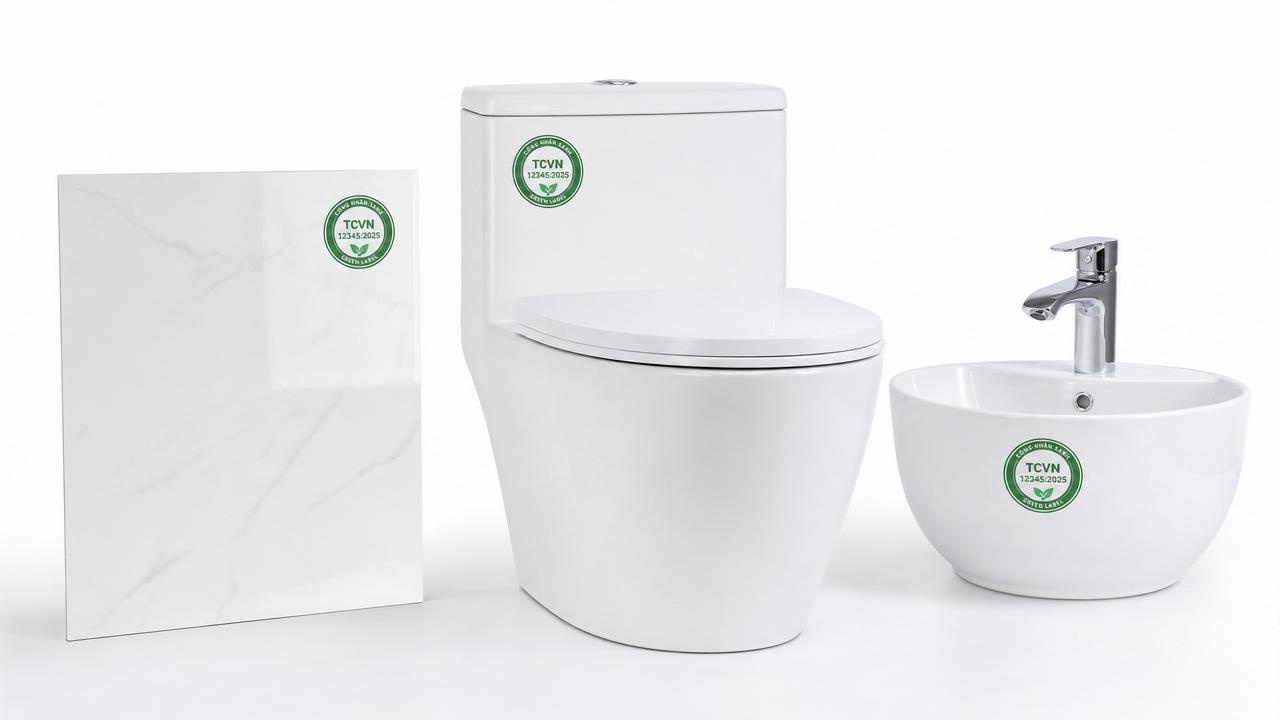
Vietnam’s Ministry of Industry and Trade announced on May 18, 2026, the extension of tariff exemption for imported ceramic tiles and sanitary ware from China—originally set to expire on June 30, 2026—to December 31, 2026. Simultaneously, mandatory application of the TCVN 12345:2025 green labeling standard was introduced for all imported ceramic products. This development directly affects exporters, importers, distributors, and compliance service providers operating in the Vietnam–China ceramic trade corridor.
Event Overview
On May 18, 2026, Vietnam’s Ministry of Industry and Trade confirmed the extension of the tariff exemption for Chinese-origin ceramic tiles and sanitary ceramics until December 31, 2026. The exemption had been scheduled to end on June 30, 2026. Concurrently, the ministry mandated that all imported ceramic products must bear the TCVN 12345:2025 green label, certified by the Vietnam Standards and Metrology Institute (STAMEQ). The standard introduces three new technical requirements: limits on lead and cadmium leaching, restrictions on radioactive nuclides, and a minimum threshold for recycled raw material content.
Which Subsectors Are Affected
Direct Exporters and Importers
Exporters based in China supplying ceramic tiles or sanitary ware to Vietnam—and Vietnamese importers receiving such goods—are directly affected. The tariff exemption extension provides temporary cost relief, but the new labeling requirement adds certification, testing, and labeling costs. Compliance must be verified prior to customs clearance, potentially delaying shipments if documentation is incomplete or non-conforming.
Manufacturing and Processing Enterprises
Chinese manufacturers producing for the Vietnamese market must adapt production controls and quality assurance protocols to meet the three new parameters under TCVN 12345:2025. Facilities without existing testing capacity for leaching or radioactivity may need third-party lab support. Adjustments to glaze formulations or raw material sourcing (e.g., to meet recycled content thresholds) could affect unit cost and lead time.
Distribution and Channel Operators
Wholesalers, distributors, and retail channel partners handling ceramic inventory in Vietnam must verify label compliance before resale. Stock already imported but unlabeled—or labeled under prior standards—may face restrictions on further distribution unless retroactively certified. Shelf-ready packaging and labeling systems may require revision to accommodate the new green label format and placement rules.
Supply Chain and Compliance Service Providers
Testing laboratories accredited by STAMEQ, customs brokers specializing in ceramic imports, and certification consultants now face increased demand for TCVN 12345:2025-related services. However, current public information does not specify whether STAMEQ has published implementation guidelines, fee structures, or processing timelines—creating uncertainty for service planning.
What Relevant Enterprises or Practitioners Should Focus On and How to Respond
Monitor Official Implementation Guidance from STAMEQ
While the mandate is effective as of May 18, 2026, STAMEQ has not yet published detailed enforcement procedures—including transition periods, grandfathering clauses for pre-2026 stock, or accepted test methods. Enterprises should track official notices via STAMEQ’s website and Vietnam’s National Agency for Technical Regulations.
Verify Applicability Across Product Categories
The announcement specifies “ceramic tiles and sanitary ceramics” for tariff exemption, but TCVN 12345:2025 applies to “all imported ceramic products.” It remains unclear whether structural ceramics, refractory items, or technical ceramics fall under the labeling scope. Companies exporting niche ceramic categories should seek written clarification from Vietnamese customs or STAMEQ before shipment.
Distinguish Between Policy Signal and Operational Readiness
The extension signals continued bilateral trade facilitation, but the green label requirement reflects tightening environmental and health regulation—not merely administrative formality. Certification cannot be treated as a one-time paperwork step; it entails ongoing process control, batch-level testing, and traceable raw material records. Enterprises should treat this as a medium-term compliance infrastructure upgrade, not a short-term filing task.
Prepare Documentation and Testing Capacity Ahead of Q3 2026
Given typical STAMEQ certification lead times and lab backlogs observed in similar regulatory rollouts, companies should initiate sample testing and documentation preparation no later than July 2026. Priority should be given to best-selling SKUs and high-volume export lines to avoid clearance bottlenecks after September 2026.
Editorial Perspective / Industry Observation
Observably, this dual-action measure—extending tariff relief while introducing stricter environmental labeling—reflects Vietnam’s calibrated approach to balancing trade openness with domestic regulatory modernization. Analysis shows the timing aligns with Vietnam’s broader push toward green standards across construction materials, consistent with its commitments under the ASEAN Agreement on Environmental Protection. From an industry perspective, the policy is better understood as a transitional signal rather than a finalized regulatory endpoint: the TCVN 12345:2025 standard itself is newly issued, and enforcement mechanisms remain undefined. Its significance lies less in immediate operational disruption and more in signaling a structural shift toward lifecycle-based compliance in Vietnam’s imported building materials sector.
This update underscores that tariff conditions and technical barriers are increasingly decoupled in Vietnam’s import regime. While duty rates may remain favorable, market access now hinges on verifiable sustainability performance—not just origin or price. Industry stakeholders should therefore prioritize traceability systems and standardized environmental data reporting, even beyond current TCVN 12345:2025 requirements.
Current more appropriate understanding is that this is a staged regulatory evolution—not a sudden barrier—but one requiring proactive alignment with Vietnam’s emerging green product framework. The extension offers breathing room; the labeling mandate sets the direction.
Information Source: Official notice issued by Vietnam’s Ministry of Industry and Trade on May 18, 2026. STAMEQ’s implementation guidance, including testing protocols, validity period of certifications, and applicability to subcategories of ceramic products, remains pending and is subject to ongoing observation.
Industry Briefing
Get the top 5 industry headlines delivered to your inbox every morning.