
Vietnam Extends China Ceramic Tariff Exemption to Dec 2026, Enforces Green Labeling
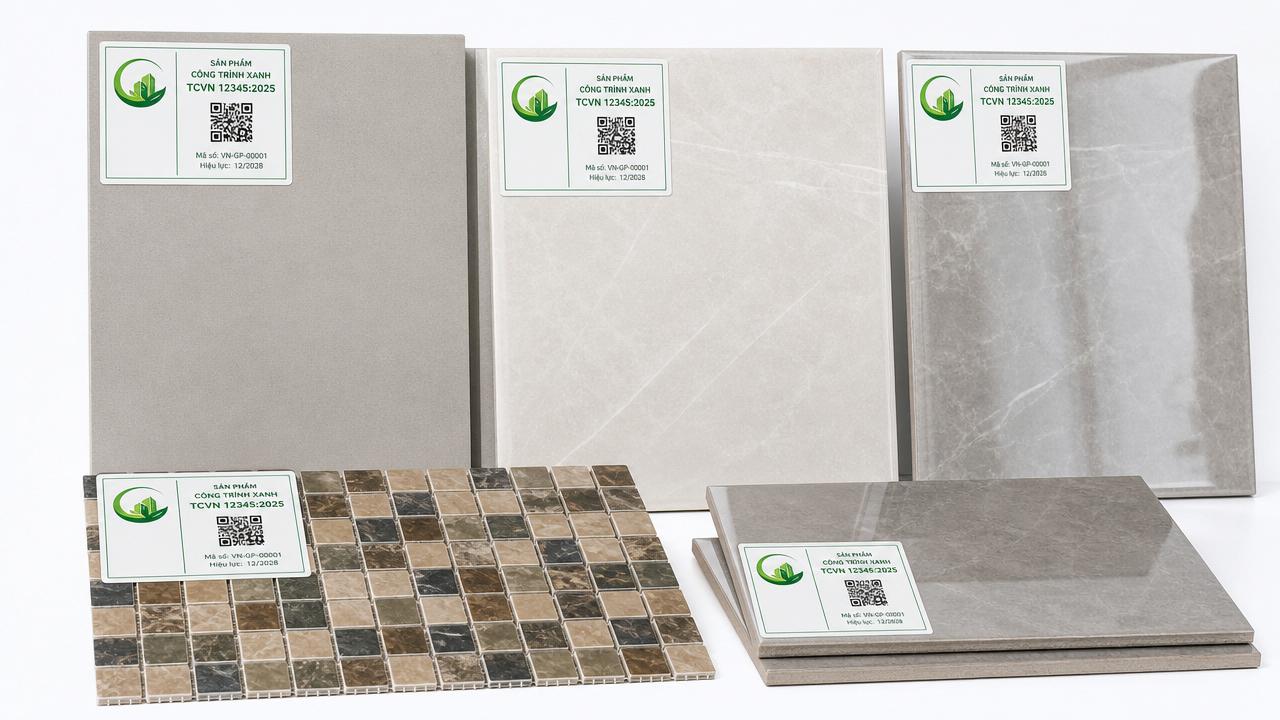
Vietnam’s Ministry of Industry and Trade issued Notice No. 22/2026/TT-BCT on May 16, 2026, extending tariff exemption for imported Chinese ceramic tiles, glazed tiles, and mosaics through December 31, 2026—while simultaneously mandating compliance with TCVN 12345:2025, Vietnam’s new technical specification for green building material labeling. This dual-policy shift directly affects ceramic importers, distributors, manufacturers sourcing from China, and sustainability-compliance service providers operating in or exporting to the Vietnamese market.
Event Overview
On May 16, 2026, Vietnam’s Ministry of Industry and Trade signed and published Circular No. 22/2026/TT-BCT. The circular confirms the continuation of import tariff exemption for Chinese-origin architectural ceramics—including ceramic tiles, glazed tiles, and mosaics—until December 31, 2026. Concurrently, it enforces mandatory application of TCVN 12345:2025, titled Technical Specification for Green Building Material Labelling. Under this standard, all imported ceramic products must bear a Vietnamese-language green label containing a QR code; scanning the code must display verified data on low-carbon raw material share, kiln energy efficiency rating, and proportion of recycled content used.
Industries Affected
Direct Importers and Exporters of Chinese Ceramics
These enterprises face immediate operational adjustments: tariff relief remains beneficial, but compliance with TCVN 12345:2025 is now a non-negotiable entry requirement. Failure to affix the certified green label—or providing inaccurate or unverifiable QR-linked data—may result in customs clearance delays, product rejection, or penalties.
Downstream Distributors and Retailers in Vietnam
Distributors handling Chinese ceramic inventory must verify label compliance before warehousing or resale. Stock without valid TCVN 12345:2025 labeling cannot legally enter the Vietnamese distribution chain after the enforcement date. Inventory planning, labeling logistics, and documentation traceability become critical control points.
Ceramic Manufacturers Sourcing Raw Materials or Semi-Finished Goods from China
Even if final assembly or finishing occurs outside China, products classified as ‘imported ceramics’ under Vietnamese customs nomenclature fall under the labeling mandate. Manufacturers must ensure upstream suppliers provide auditable data (e.g., raw material carbon intensity, energy consumption per ton fired) to support QR code content generation and verification.
Supply Chain and Compliance Service Providers
Third-party testing labs, certification bodies, and labeling solution vendors accredited for TCVN 12345:2025 implementation are now essential partners. Demand is rising for services including kiln energy audit support, low-carbon material verification, QR label design aligned with Vietnamese language and regulatory formatting, and bilingual technical documentation preparation.
What Enterprises and Practitioners Should Monitor and Do Now
Track official guidance on TCVN 12345:2025 implementation timelines and verification procedures
The circular mandates labeling but does not specify transitional periods, third-party accreditation requirements, or dispute resolution mechanisms for QR data validation. Enterprises should monitor updates from Vietnam’s Standardization Administration (TCVN Secretariat) and General Department of Vietnam Customs for procedural clarity.
Verify product classification and labeling scope for specific SKUs
Not all ceramic items may fall under the defined scope of ‘architectural ceramics’ in the notice. Companies should cross-check HS codes (e.g., 6907–6908) and physical specifications against the circular’s annexes—and confirm whether decorative, industrial, or technical ceramics are included in the mandate.
Distinguish between tariff policy continuity and green compliance as separate operational tracks
The tariff extension signals short-term trade stability, but TCVN 12345:2025 introduces a new layer of technical regulation. Businesses should avoid conflating the two: tariff exemption does not reduce labeling obligations, nor does labeling compliance guarantee tariff eligibility. Each requires independent documentation and verification workflows.
Initiate internal readiness for data collection, label production, and supplier coordination
Preparing compliant labels requires verifiable input data—not just declarations. Companies should begin aligning with suppliers on kiln energy metrics, raw material origin declarations, and recycled content certification. Internal teams responsible for logistics, quality assurance, and regulatory affairs should jointly map labeling responsibilities ahead of enforcement deadlines.
Editorial Perspective / Industry Observation
Observably, this policy reflects Vietnam’s broader regulatory pivot toward embedding environmental performance criteria into market access rules—not just for domestic producers, but for imports. Analysis shows the tariff extension serves trade continuity, while the green labeling mandate functions as a de facto technical barrier calibrated to incentivize low-carbon sourcing and transparent manufacturing practices. From an industry perspective, the move is better understood as a signal of tightening sustainability-linked trade governance, rather than a one-off compliance event. It signals that future Vietnamese import regulations—especially for construction materials—will increasingly couple economic measures (e.g., tariffs, quotas) with verifiable environmental metrics. Continuous monitoring of TCVN updates and alignment with Vietnam’s National Green Growth Strategy will be necessary beyond 2026.
This notice marks a structural shift: tariff policy and sustainability compliance are now co-enforced entry conditions for a key building materials category. It is not merely an update to customs duty schedules, but the formal integration of environmental accountability into Vietnam’s import control framework for ceramics. Current interpretation should emphasize operational preparedness over strategic reassessment—since the tariff relief remains in place, but green labeling is now mandatory and enforceable.
Source: Vietnam Ministry of Industry and Trade – Circular No. 22/2026/TT-BCT, effective May 16, 2026. Note: Implementation details for TCVN 12345:2025 verification protocols, accredited bodies, and enforcement start dates remain subject to further official announcement and require ongoing observation.
Industry Briefing
Get the top 5 industry headlines delivered to your inbox every morning.