
EU Enforces ENF-Level Formaldehyde Certification for Imported Wood-Based Panels from 1 June 2026
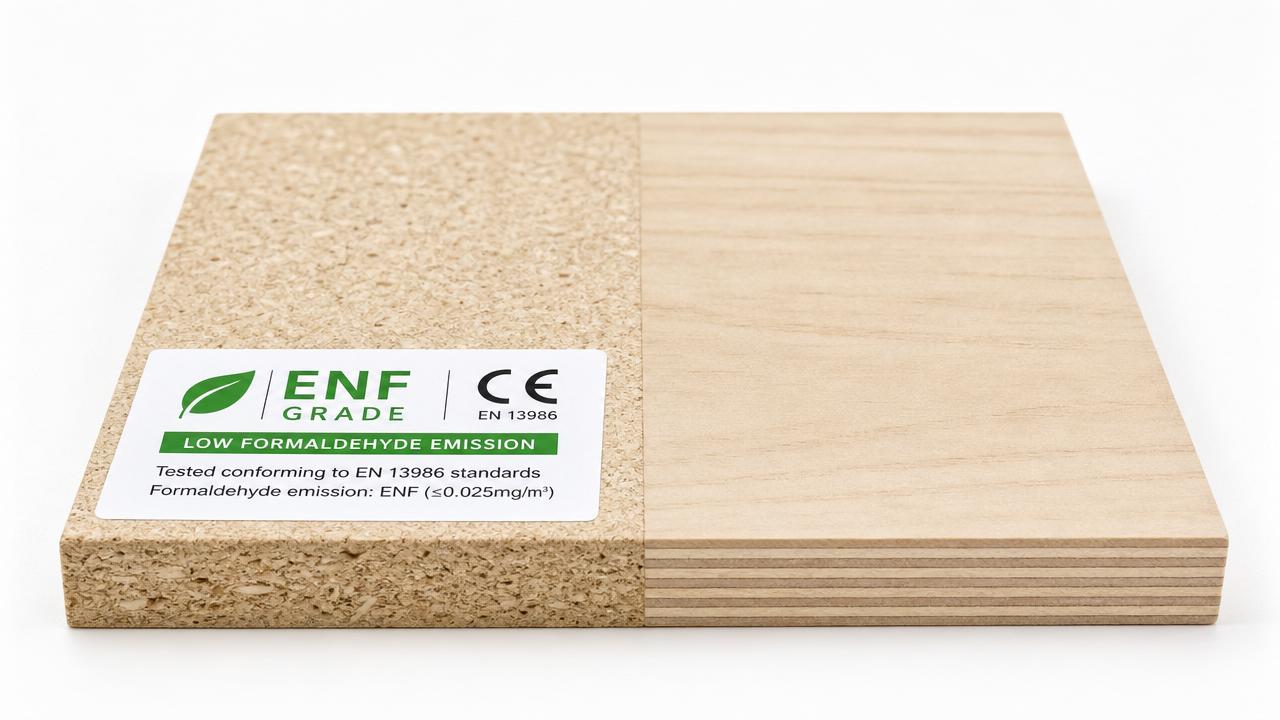
Starting 1 June 2026, the European Union will enforce new import requirements for wood-based composite panels—including particleboard and plywood—mandating ENF-level formaldehyde emission certification and third-party test reports under the revised Construction Products Regulation (CPR). This regulatory shift directly affects exporters in China and other non-EU countries supplying to the EU market, introducing new compliance thresholds for customs clearance and product safety accountability.
Regulatory Requirements Take Effect on 1 June 2026
From 1 June 2026, all imported wood-based composite panels placed on the EU market must be accompanied by verified ENF-grade formaldehyde release certification and accredited third-party test reports. The requirement stems from the updated Construction Products Regulation (CPR) amendment. Products failing to meet this condition will be denied customs clearance or subject to RAPEX notification. The scope explicitly covers particleboard and plywood. No transitional period or grandfathering provisions are indicated in the available summary.
Impact Across the Supply Chain
Export Trading Companies
These firms face immediate operational risk: shipments without valid ENF documentation will be rejected at EU borders. Compliance verification must now precede shipment scheduling—not after arrival—and becomes a prerequisite for contract fulfilment and payment terms.
Raw Material Procurement Entities
Purchasers sourcing panels for downstream assembly (e.g., furniture or prefabricated interior systems) must now validate supplier ENF test credentials *before* placing orders. Batch-level traceability—linking each shipment to its certified test report—is now essential for audit readiness.
Manufacturing Enterprises
Producers relying on imported panels as components must update their technical documentation and conformity assessments to reflect ENF compliance. Internal quality control procedures must incorporate formaldehyde test report review as a mandatory step in incoming goods inspection.
Supply Chain Service Providers
Logistics, customs brokerage, and certification support providers need to adjust service offerings—adding pre-clearance ENF document validation, test report authenticity checks, and CPR declaration alignment assistance to their standard workflows.
Key Actions for Affected Businesses
Verify ENF Certification Validity and Scope
Confirm that suppliers hold current ENF certification issued by an EU-recognized notified body; ensure the certificate explicitly covers the exact panel type, thickness, and resin system used in production.
Implement Batch-Level Traceability Systems
Establish documented links between production batches, test reports, and shipping documents—enabling rapid response to EU market surveillance inquiries or RAPEX follow-up requests.
Review and Update Technical Documentation
Revise Declaration of Performance (DoP), CE marking files, and technical files to integrate ENF test evidence and align with CPR Annex III requirements for formaldehyde emission classification.
Assess Export Timeline Implications
Factor in additional lead time for third-party testing, certification issuance, and documentation preparation—especially where retesting is needed due to formulation or process changes.
Industry Perspective: Beyond Compliance, a Shift in Market Gatekeeping
Analysis shows this change reflects a broader tightening of environmental performance thresholds within the EU’s construction product framework—not merely a procedural update. From an industry perspective, the ENF mandate effectively raises the baseline for chemical safety in interior building materials, moving beyond formaldehyde limits toward full lifecycle traceability. What deserves closer attention is the de facto extension of CPR obligations to upstream suppliers: manufacturers outside the EU are now expected to maintain certification continuity, batch records, and test report accessibility comparable to EU-based producers. Observably, the six-month window before enforcement may prove insufficient for many small- and medium-sized exporters to complete full certification cycles and system upgrades.
Strategic Implication for Global Suppliers
This regulation signals a structural evolution in how the EU regulates imported construction products: compliance is no longer defined solely by conformity assessment pathways, but increasingly by verifiable, auditable, and granular evidence of environmental performance per production batch. For global suppliers, achieving sustainable market access requires integrating certification management into core operational planning—not treating it as a one-off export requirement.
Source Information and Verification Notes
This article is based exclusively on the user-provided title, event date (2026-06-01), and event summary. Specific official source links were not provided in the input and should be verified continuously. Stakeholders are advised to monitor updates from the European Commission’s Directorate-General for Internal Market, Industry, Entrepreneurship and SMEs (DG GROW), the CPR Notified Bodies list, and national market surveillance authorities for implementation guidance, interpretation clarifications, and any adjustments to testing protocols or documentation expectations.
Industry Briefing
Get the top 5 industry headlines delivered to your inbox every morning.