
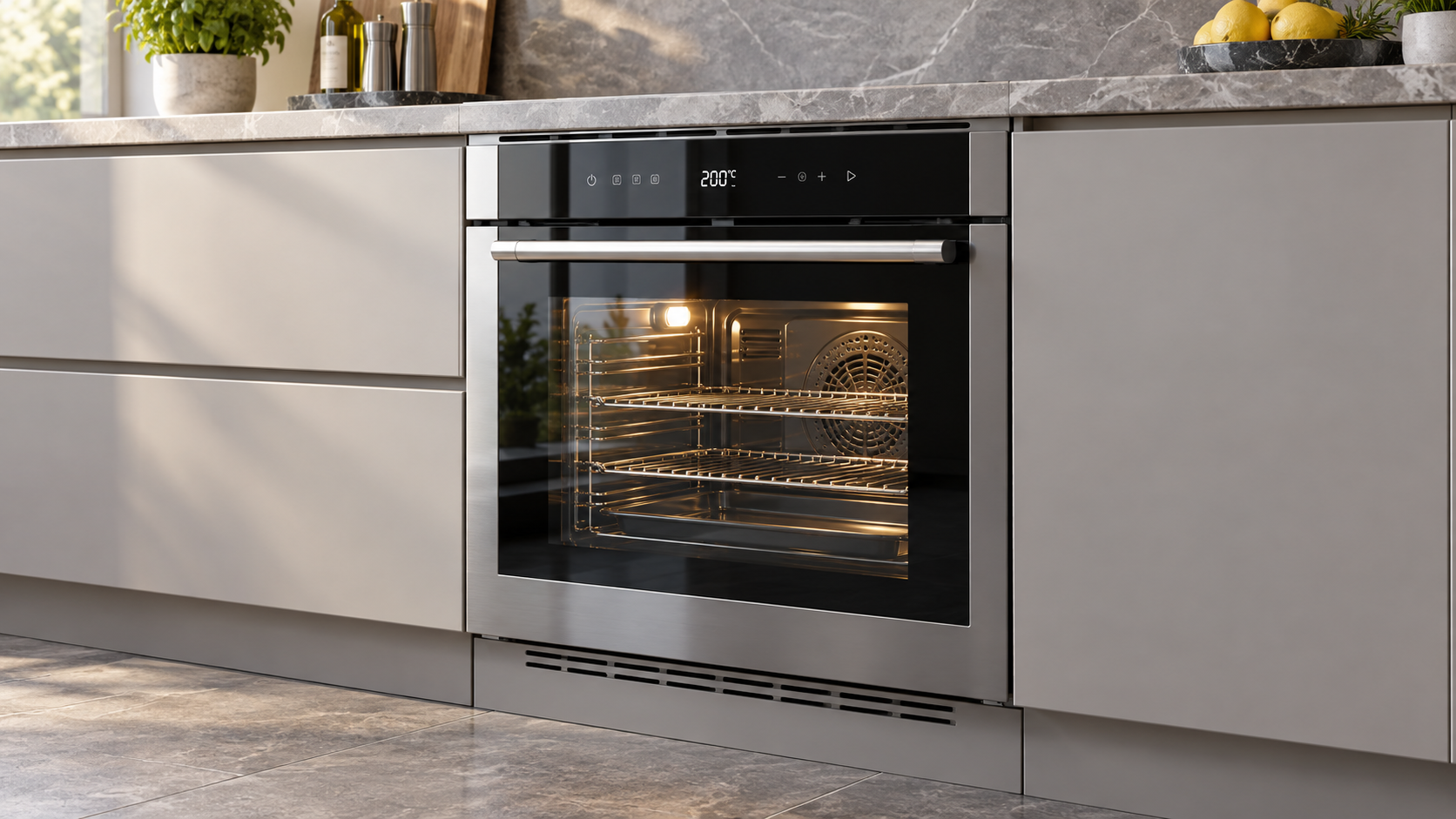
How do smart kitchen appliances meet EU safety requirements? Smart built-in ovens must combine safe heating and electrical design with secure connectivity and correct installation.
Compliance depends on the complete appliance, including its software, wireless functions, installation instructions, and supporting documentation. A CE symbol alone does not establish that evidence.
For manufacturers, importers, kitchen brands, and project specifiers, the practical question is whether documented conformity covers the exact oven model and its intended operating conditions.
This guide explains which EU requirements matter, how manufacturers address key hazards, and what buyers should verify before specifying connected ovens for residential kitchens.
Which EU Rules Apply to a Connected Built-in Oven?
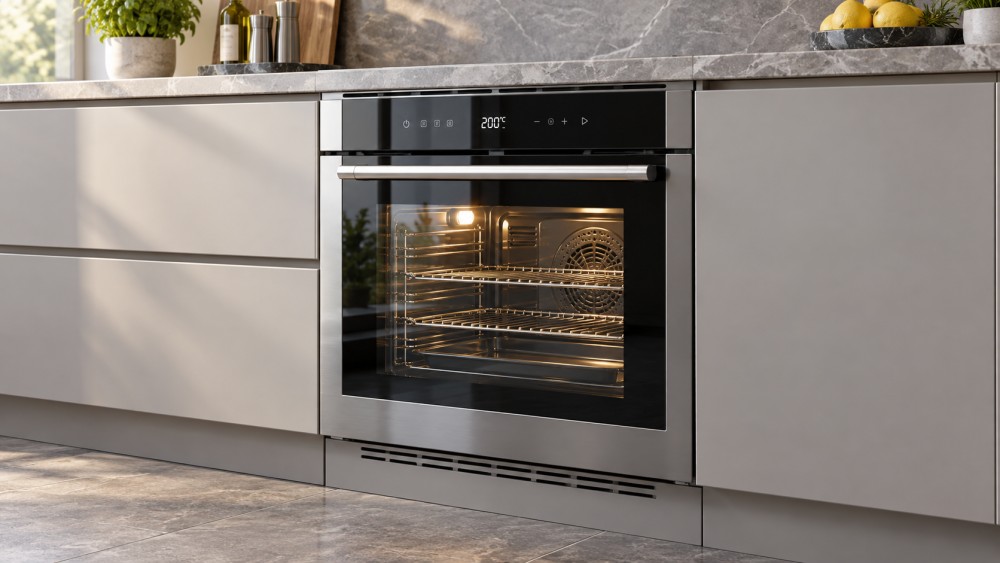
A smart oven does not follow one universal approval route. Applicable legislation depends on its radio equipment, electrical characteristics, functions, and intended household use.
For an oven incorporating Wi-Fi or Bluetooth, the Radio Equipment Directive, or RED, generally provides the central framework for safety, electromagnetic compatibility, and radio performance.
RED incorporates the safety objectives of the Low Voltage Directive without its voltage limits. Its electromagnetic compatibility requirements also apply to the finished radio appliance.
Manufacturers should therefore explain their legislative assessment clearly. Buyers should not assume that every connected oven must separately declare conformity with both those directives.
For a non-radio oven, the Low Voltage Directive and Electromagnetic Compatibility Directive generally form the corresponding electrical safety and interference framework, subject to product scope.
These requirements serve different purposes. Energy efficiency, restricted substances, electrical protection, and radio security each need appropriate evidence; success in one area cannot substitute for another.
Commercial kitchens require additional care because professional equipment may fall under different product standards or regulatory provisions. Confirm intended use before adopting household oven specifications.
How Must the Oven Control Heat, Electricity, and Fire Risks?
The central safety challenge remains controlled heat inside a confined cabinet. Connected features add functionality, but insulation, protective construction, and reliable temperature control remain fundamental.
Manufacturers assess hazards including electric shock, overheating, fire, mechanical injury, and foreseeable misuse. Testing should reflect the appliance’s installation instructions and relevant operating modes.
Common safeguards include protective earthing where required, adequate insulation, suitable electrical clearances, and components selected for the temperatures and electrical loads they will experience.
Temperature regulation also needs appropriate protection against abnormal conditions. Depending on the design, independent thermal limiters or protective devices can interrupt dangerous overheating scenarios.
Door glazing, handles, controls, and nearby surfaces require assessment under applicable test conditions. Permitted temperature rises depend on the surface, material, accessibility, and relevant standard.
Pyrolytic cleaning deserves particular attention because it creates substantially higher internal temperatures. Door locking, cooling arrangements, and abnormal-operation protection must support safe cleaning cycles.
Ask suppliers how safety behaves after a sensor failure, cooling-fan fault, or interrupted power supply. A feature list rarely explains these critical operating conditions.
For steam-assisted models, water systems introduce further questions about leakage, hot steam, condensation, and electrical separation. Evidence should cover the supplied configuration and accessories.
Which Standards and Documents Make CE Marking Credible?
Standards translate legal safety objectives into practical assessment methods. For household ovens, the EN 60335 series commonly provides an important foundation for electrical safety evaluation.
EN 60335-1 covers general requirements, while EN 60335-2-6 addresses particular requirements for stationary cooking ranges, hobs, ovens, and similar appliances within its stated scope.
The precise edition matters. A standard’s publication does not automatically establish harmonised status or a presumption of conformity under every relevant EU legal instrument.
Manufacturers should check the applicable Official Journal references, amendments, restrictions, and transition dates. A test report citing an outdated edition may require further technical justification.
CE marking is normally based on the manufacturer’s conformity assessment and declaration. It does not universally mean an EU authority independently approved the appliance.
Under RED, whether a notified body is needed depends on the applicable requirements, standards used, and conformity assessment route. Independent certification is not automatically mandatory.
The EU Declaration of Conformity should identify the product, responsible manufacturer, applicable legislation, and relevant standards or technical specifications, with an authorised signature and date.
Technical documentation should support that declaration through design information, risk assessment, test evidence, and production controls. Authorities may request it; buyers can request relevant supporting evidence.
Check model numbers carefully when reviewing reports. Shared platforms can support multiple variants, but differences in heating power, radio modules, or controls need justified coverage.
Can Remote Control and Software Updates Create Safety Gaps?
Remote connectivity changes how an oven receives commands and communicates status. Safety assessment must consider foreseeable situations involving delayed messages, lost connections, and conflicting inputs.
Depending on the design and applicable standards, remote operation may require deliberate local enabling or other safeguards. Avoid assuming every oven permits unrestricted remote starting.
Buyers should establish which functions remain available without internet access. Essential protective functions must remain effective when the app, router, or cloud service becomes unavailable.
That does not mean every oven must continue every cooking programme offline. The required outcome is a safe response consistent with its assessed design.
Software updates can affect temperature control, remote commands, or protective behaviour. Manufacturers need change assessment and validation proportionate to the functions and risks affected.
Useful procurement evidence includes update authenticity controls, recovery arrangements after interrupted installation, and a clear explanation of which safety functions rely on software-controlled components.
For connected radio equipment within scope, RED cybersecurity requirements introduced through Delegated Regulation (EU) 2022/30 have applied since 1 August 2025, subject to its provisions.
These requirements address network protection and, where applicable, personal data, privacy, and fraud protection. Their applicability depends on the equipment’s capabilities and intended functions.
The EN 18031 series can support relevant assessments, but Official Journal restrictions matter. A supplier should explain the applicable requirements and the conformity route used.
The Cyber Resilience Act also introduces phased obligations: reporting provisions apply from 11 September 2026, while its main product requirements apply from 11 December 2027.
Procurement contracts should therefore address security maintenance and product support timelines. GDPR obligations also require separate consideration where apps or associated services process personal data.
Why Does Cabinet Installation Affect Product Safety?
A compliant oven can still create hazards when installed outside its specified conditions. Cabinet dimensions, ventilation openings, surrounding materials, and electrical connections affect actual performance.
Installation instructions should state required clearances, ventilation arrangements, mounting methods, and supply requirements. Specifiers should obtain these details before finalising joinery or electrical layouts.
Do not replace model-specific instructions with generic clearance rules. Two ovens with similar external dimensions can have different airflow paths and cabinet integration requirements.
Blocked ventilation can increase temperatures around electronic controls and adjacent cabinetry. Decorative panels, storage modifications, or nearby appliances may alter the intended cooling arrangement.
Electrical installation must also follow the appliance instructions and applicable national rules. Connection method, circuit capacity, protective measures, and isolation arrangements depend on the installation.
For project delivery, record the installed model, electrical connection, ventilation provisions, and commissioning checks. This creates traceable evidence when resolving defects or maintenance questions.
Provide occupants with accessible operating and safety instructions, including remote-control limitations and cleaning precautions. Installation quality and understandable handover information support the appliance’s protective design.
What Should Buyers Request Before Approving a Supplier?
Start with documents tied to the proposed model and target market. A general corporate certificate offers limited assurance about a particular oven’s tested configuration.
The strongest procurement review connects each important claim with evidence. Focus first on thermal protection, conformity documentation, cabinet requirements, and the support arrangements for connected functions.
- Model identification: Match the oven, rating plate, declaration, installation manual, and relevant report references, including variants and radio configurations.
- Conformity evidence: Request the EU Declaration of Conformity and a clear explanation of applicable legislation, standards, and assessment routes.
- Safety substantiation: Review relevant test summaries or reports covering normal operation, abnormal conditions, accessible temperatures, and cleaning modes.
- Installation package: Obtain cabinet drawings, ventilation requirements, electrical specifications, and instructions in the languages required by the destination market.
- Connected-product support: Confirm update processes, vulnerability reporting contacts, support periods, and expected behaviour if cloud services end.
- Market traceability: Verify manufacturer and importer identification where applicable, product identifiers, and arrangements for complaints and corrective action.
A laboratory’s accreditation can strengthen confidence when its scope covers the relevant testing. Nevertheless, accreditation alone does not establish that every regulatory obligation has been met.
For covered energy-labelled ovens, verify the energy label, product information, and applicable EPREL registration. These support efficiency comparisons but do not replace safety assessment.
Importers and distributors also have legal responsibilities under applicable EU legislation. Establish who checks documentation, maintains traceability, and coordinates action if a product presents risks.
For larger projects, make documentation acceptance a procurement milestone before shipment or installation. Resolving missing evidence early usually costs less than replacing installed equipment.
What Does a Well-Supported Compliance Decision Look Like?
A smart built-in oven meets EU safety requirements through appropriate design, applicable conformity assessment, reliable production controls, and installation within the conditions its manufacturer specifies.
The strongest evidence connects legal requirements to the exact product: its heating system, protective functions, wireless capabilities, software behaviour, and intended cabinet installation conditions.
For buyers, approval should follow verified documentation and clear answers about abnormal operation, security support, and installation. Attractive connectivity features cannot resolve gaps in those fundamentals.
That approach supports GIAM’s focus on safer, smarter spaces: specify appliances whose documented protection and ongoing support match the realities of modern kitchen use.