
How Hotels Choose Smart Kitchen Appliances for Breakfast, Room Service, and Banquet Operations
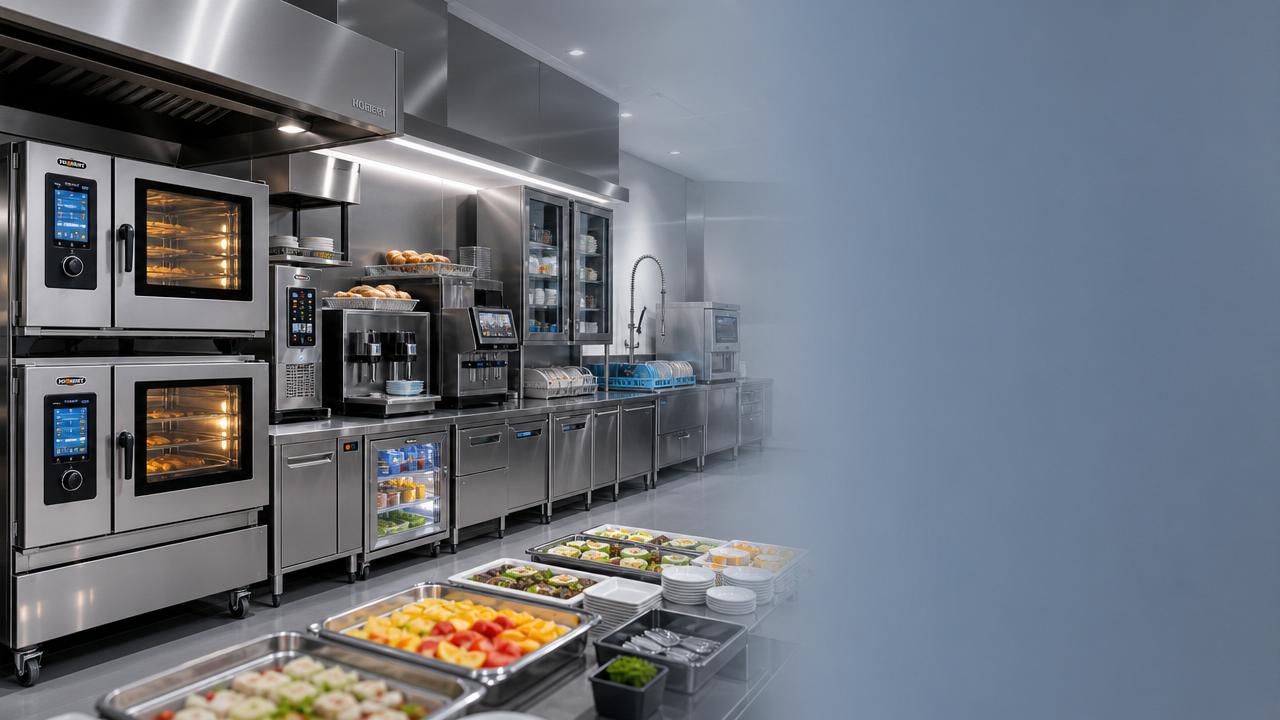
Why smart kitchen appliances for hotels now shape operating results
Selecting smart kitchen appliances for hotels is no longer a routine equipment purchase. It now affects labor use, service speed, food consistency, and utility costs.
That shift is especially visible in breakfast, room service, and banquet operations. Each setting has different peak times, output patterns, and space limits.
For hotel projects, the challenge is not choosing the most advanced machine. It is choosing equipment that performs reliably across real operating pressure.
In practice, smart kitchen appliances for hotels must support both guest experience and engineering control. That means better data, easier maintenance, and lower lifecycle risk.
This is also where GIAM adds value. Its intelligence lens connects material performance, commercial demand, and smart system adoption across hospitality and built environments.
Start with the three service scenarios, not the catalog
A common buying mistake is evaluating appliances by feature lists alone. Hotels get better results when selection begins with operating scenarios.
Breakfast needs speed and repeatable output
Breakfast service usually runs on a short, intense demand window. Equipment must recover fast, hold temperature well, and simplify repetitive tasks.
Combi ovens, intelligent warming systems, and programmable beverage stations often matter more than highly specialized cooking units.
Room service needs compact flexibility
Room service works differently. Orders are scattered, menus are mixed, and service expectations are personal and time-sensitive.
Here, smart kitchen appliances for hotels should support small-batch production, quick reheating, and easy coordination with order management.
Banquets need scale and timing control
Banquet operations create the toughest stress test. Volume rises quickly, timing becomes critical, and food quality must remain stable across large batches.
In this setting, connected ovens, blast chillers, holding cabinets, and dishwashing systems become part of one production flow.
What decision makers should evaluate first
The best procurement decisions are usually simple at the core. They compare expected output, operational fit, and long-term ownership cost.
- Peak capacity: Can the unit handle breakfast rush, banquet spikes, and menu variation without creating bottlenecks?
- Footprint efficiency: Does it fit circulation paths, loading zones, storage areas, and cleaning access?
- Control simplicity: Can staff learn the interface quickly and repeat settings with minimal error?
- Utility compatibility: Does it align with available power, ventilation, drainage, and water conditions?
- Maintenance access: Are service points reachable, and are spare parts available in the target market?
From recent market shifts, one trend stands out clearly. Buyers are no longer paying only for hardware; they are paying for operational predictability.
The most useful smart features are practical, not flashy
Not every digital feature creates value. The strongest smart kitchen appliances for hotels solve daily friction instead of adding complexity.
Remote monitoring reduces downtime risk
Remote alerts help engineering teams spot temperature drift, water issues, or abnormal energy use before service breaks down.
Recipe programming supports consistency
Pre-set cooking programs matter when staffing levels change. They reduce training pressure and help deliver similar results across shifts.
Energy dashboards improve cost visibility
Energy reporting is increasingly useful for hotels under carbon and cost pressure. It supports utility benchmarking and more accurate equipment planning.
Predictive maintenance protects service windows
A maintenance alert sent before a banquet day is far more valuable than a fault code during live service.
That is why smart kitchen appliances for hotels should be assessed by operational usefulness, not by the number of digital claims.
How to compare costs beyond the purchase price
Upfront price still matters, but it rarely tells the whole story. Procurement teams need a lifecycle cost view.
This broader view often changes supplier rankings. A cheaper unit can become the more expensive option after two years of heavy use.
Space planning and infrastructure can make or break the investment
Even strong equipment performs badly in the wrong layout. That is why smart kitchen appliances for hotels should be reviewed alongside kitchen flow.
Breakfast lines need fast replenishment and low congestion. Room service kitchens need compact prep, holding, and dispatch coordination.
Banquet kitchens need disciplined zoning for production, chilling, plating, staging, and cleaning. Appliances should support that sequence, not interrupt it.
- Check ventilation loads before selecting high-output thermal equipment.
- Confirm water quality where steam or warewashing systems are planned.
- Review door swings, trolley routes, and cleaning access early.
- Match appliance height and interface placement to safe daily use.
In real projects, layout discipline often delivers more value than adding one more premium appliance.
Questions to ask suppliers before approval
Supplier evaluation should test operational truth, not sales presentation quality. A few sharp questions can reveal most hidden risks.
- What output data comes from hotel projects with similar service volumes?
- How quickly can local service teams respond during peak occupancy periods?
- Which components fail most often, and what is the average replacement time?
- Can software, diagnostics, and user settings be managed across multiple properties?
- What training is included for operators, engineering teams, and opening support?
The more concrete the answers, the safer the procurement path. This matters even more for smart kitchen appliances for hotels with connected functions.
A practical procurement path for hotel projects
A workable process keeps teams aligned and avoids late-stage redesign. It also reduces the risk of buying equipment that looks good on paper only.
- Map service demand by scenario, daypart, and peak output.
- List utility limits, ventilation conditions, and maintenance constraints.
- Shortlist smart kitchen appliances for hotels based on workflow fit.
- Compare lifecycle cost, not just acquisition price.
- Verify supplier support, commissioning quality, and training depth.
- Standardize where possible, but keep flexibility for property-specific needs.
That final point is important. Standardization helps procurement efficiency, but hospitality operations still depend on local menu style and building conditions.
Final takeaway
The right smart kitchen appliances for hotels should make service faster, quality steadier, and operations easier to control.
For breakfast, that means speed and repeatability. For room service, it means compact flexibility. For banquets, it means scale with timing discipline.
The strongest purchasing decisions connect equipment performance, kitchen layout, utility planning, and lifecycle cost from the start.
When hotels evaluate smart kitchen appliances for hotels through that wider lens, procurement becomes less reactive and far more strategic.
If the goal is durable value, start with real service scenarios, verify infrastructure fit, and choose partners that can support performance long after installation.
Industry Briefing
Get the top 5 industry headlines delivered to your inbox every morning.