
How to Choose Smart Kitchen Appliances for Hotels by Kitchen Size, Menu, and Energy Use
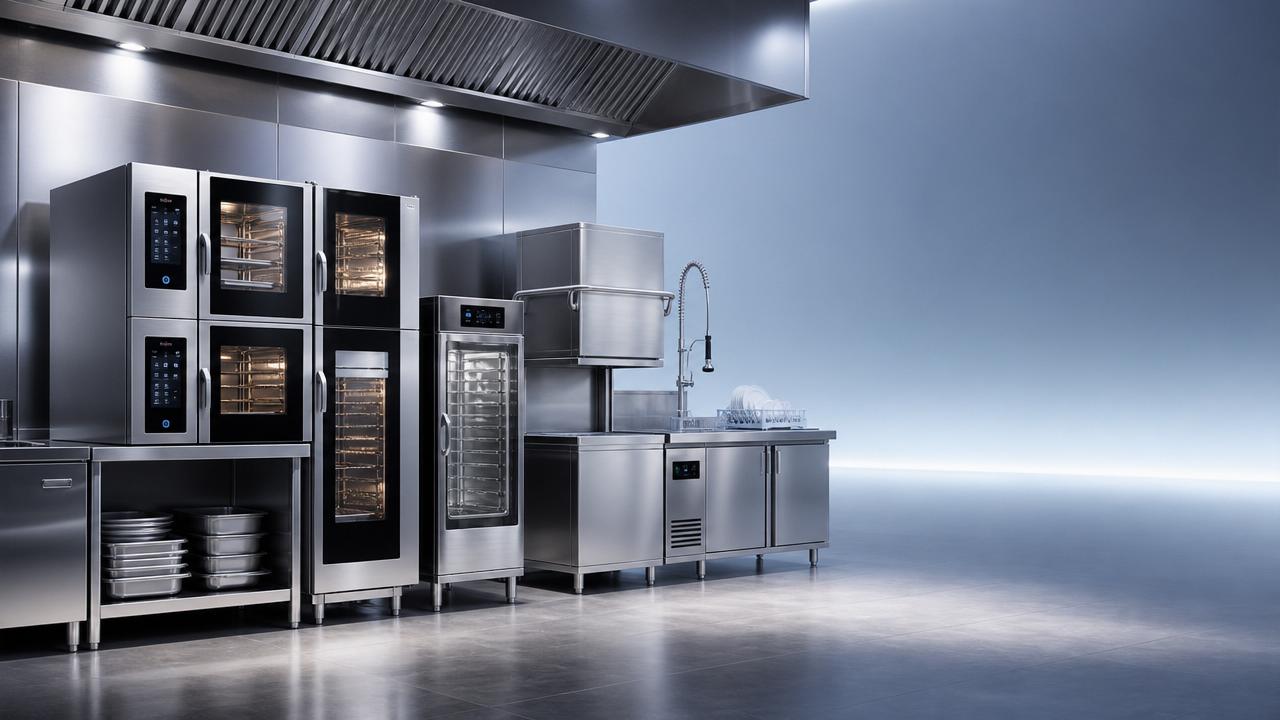
Choosing smart kitchen appliances for hotels is not just about adding more technology. It is really about fit. Kitchen size, menu structure, and energy use all shape whether an appliance improves service or creates friction.
In hotel operations, every equipment decision affects labor flow, food consistency, maintenance planning, and utility bills. That is why smart kitchen appliances for hotels should be evaluated as part of a wider commercial space strategy, not as isolated products.
GIAM follows this category through its Strategic Intelligence Center, where building standards, energy policy shifts, and smart space trends are tracked together. That broader view matters, because kitchen equipment now sits at the intersection of hospitality, construction efficiency, and carbon reduction goals.
The most reliable buying decisions usually come from a simple question: will this unit match the real production environment every day, not only look impressive during a demo?
Start with the kitchen footprint, not the product catalog
When comparing smart kitchen appliances for hotels, floor space should come first. A compact back-of-house needs different equipment logic than a banquet kitchen or an all-day dining operation.
A smart combi oven may look efficient on paper, but if loading doors block prep aisles or service routes, workflow slows immediately. Capacity is useful only when movement stays smooth.
What to confirm before shortlisting
- Measure clear working space, not just wall dimensions. Include door swing, ventilation gaps, trolley routes, and cleaning access before choosing smart kitchen appliances for hotels.
- Check whether one multifunction unit can replace two single-task machines. This often saves space, wiring complexity, and maintenance time in medium or smaller hotel kitchens.
- Review delivery access and installation limits early. Some appliances fit the kitchen plan but fail at elevator size, corridor turning radius, or utility connection points.
- Confirm heat rejection and airflow needs. Tight kitchens can lose efficiency fast when smart equipment adds more thermal load than HVAC systems can handle.
A quick reality check by kitchen type
In a limited-service property, compact and stacked units usually work better than oversized premium systems. The goal is speed, predictable output, and low operator error.
In a resort or convention property, production peaks are less predictable. There, smart kitchen appliances for hotels should support batch cooking, remote monitoring, and quick recovery between service windows.
Match the appliance mix to the menu, not the brand story
Menu complexity decides the level of smart functionality worth paying for. If the menu is narrow, advanced programming features may be underused. If the menu changes often, flexible controls become far more valuable.
This is where many buying teams overspend. They choose a machine built for culinary variety when the actual operation needs repeatable breakfast, room service, and banquet output.
Menu-based selection points
- For repetitive menus, prioritize programmable cycles, auto shutoff, and easy recipe locking. These features improve consistency more than highly advanced customization tools.
- For mixed dining formats, choose smart kitchen appliances for hotels that switch quickly between steaming, baking, holding, and reheating without long recalibration periods.
- For banquet-heavy properties, confirm recovery speed after each batch. Slow temperature recovery can disrupt service timing even when stated capacity looks sufficient.
- For premium or wellness menus, verify support for precise humidity, low-temperature cooking, and food-safety logging if menu quality claims depend on those controls.
Where hidden mismatch usually appears
A common issue appears in breakfast-focused hotels. Equipment is often chosen for occasional evening service, while the true operational pressure comes from a very short breakfast rush.
In that case, the best smart kitchen appliances for hotels are the ones that reduce queue pressure, simplify staging, and keep output uniform under time stress.
Treat energy performance as an operating cost decision
Energy efficiency should never be reduced to a label on a brochure. For hotels, it affects utility costs, sustainability reporting, and long-term competitiveness, especially where building standards are tightening.
GIAM regularly tracks global energy-saving standards and trade shifts because these factors influence lifecycle value. A lower purchase price can become the more expensive option over three to five years.
- Ask for annualized energy estimates based on real hotel operating hours. Standard test figures alone rarely reflect breakfast peaks, banquets, or extended holding periods.
- Compare cleaning cycles carefully. Some smart kitchen appliances for hotels save labor but use more water, detergent, or electricity than expected.
- Check whether energy dashboards are actionable. Data is useful only if the system clearly shows abnormal consumption, idle waste, or maintenance-related inefficiency.
Look beyond features to integration and service support
Smart functions matter only when the hotel can actually use them. Connectivity, software updates, diagnostics, and parts availability should be reviewed as seriously as cooking performance.
This is especially important in commercial interiors where kitchen systems must align with broader building operations. A disconnected appliance can become a premium-cost manual machine.
Operational checks worth making early
- Confirm whether remote alerts, HACCP logging, and usage reports are included or require additional subscriptions after installation.
- Verify local service response times and spare part stock. The smartest appliance loses value quickly when downtime extends through a busy weekend.
- Check user interface simplicity with real staff scenarios. Overcomplicated controls often lead to bypassing smart features instead of using them.
- Review cybersecurity and network compatibility if appliances connect to building systems or central monitoring platforms.
A practical risk that gets overlooked
Some properties buy smart kitchen appliances for hotels expecting labor savings, but they skip structured onboarding. As a result, teams use only basic functions, and the promised efficiency never shows up.
A short training plan, recipe preset setup, and one-month usage review often deliver more value than adding another high-end feature.
Use a simple decision path before final approval
A clear comparison process helps avoid being pulled toward whichever product has the strongest sales presentation. The better approach is to score fit, not just features.
- Rank each option by space fit, menu fit, energy profile, training needs, and service support before reviewing final price.
- Request a live workflow demonstration using hotel-style production tasks, not generic showroom cooking examples that hide operational bottlenecks.
- Estimate total cost over several years, including utilities, consumables, maintenance, software fees, and downtime exposure.
- Keep a shortlist narrow. Too many similar options make comparison slower without improving the final decision quality.
For many projects, the best smart kitchen appliances for hotels are not the most advanced models. They are the ones that fit the kitchen plan, support the menu, control energy use, and stay reliable under daily pressure.
That is also where GIAM adds value. By connecting smart kitchen systems with material innovation, commercial space evolution, and global building efficiency trends, it becomes easier to evaluate equipment as part of a long-term hospitality investment.
If the next step is a real shortlist, start with three questions: how much space is truly usable, which menu tasks create the most pressure, and where energy waste is already visible. Those answers usually point to the right decision faster than any catalog can.
Industry Briefing
Get the top 5 industry headlines delivered to your inbox every morning.