
IEC 60335-2-103:2026 for Built-in Steam-Ovens Enters Force on May 13
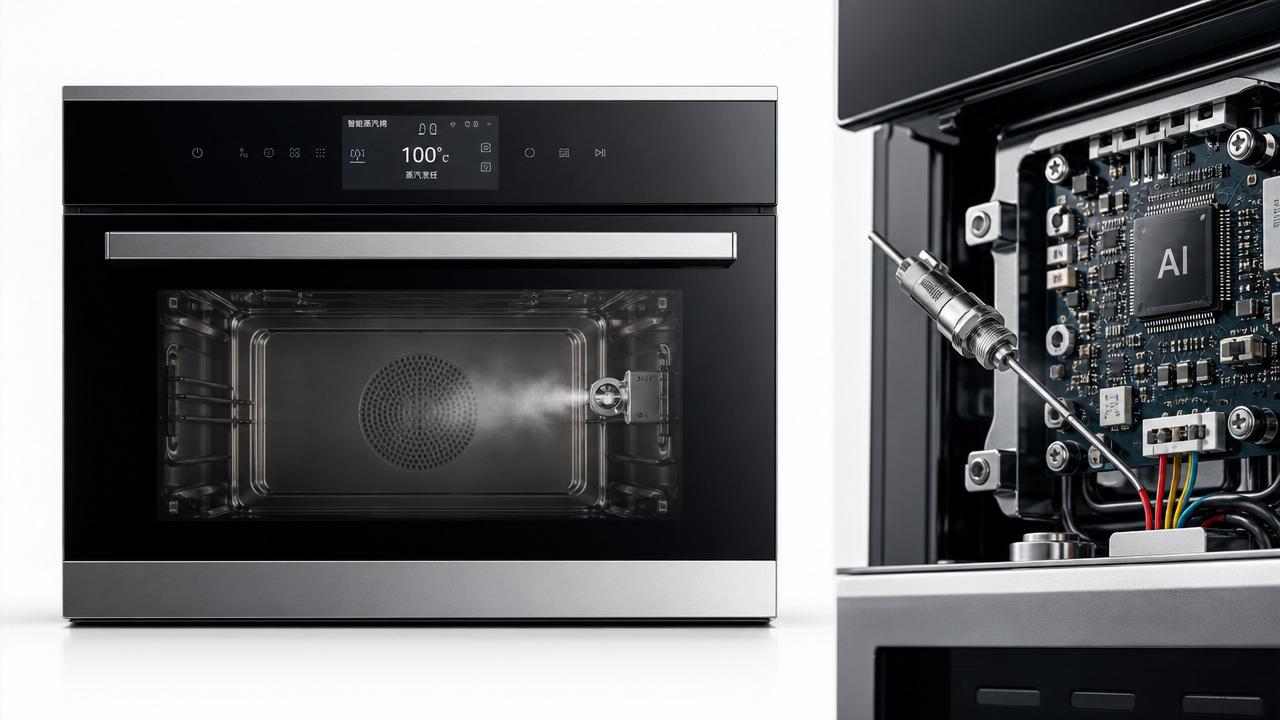
International Electrotechnical Commission (IEC) has finalized IEC 60335-2-103:2026, the safety standard for built-in steam-ovens with AI-enabled temperature control. Effective globally on May 13, 2026, the standard introduces mandatory AI robustness verification for export-bound units — making it a critical compliance milestone for manufacturers, testing labs, and exporters in the home appliance sector.
Event Overview
On May 8, 2026, the IEC hosted a global online briefing for manufacturers to clarify newly added requirements in IEC 60335-2-103:2026. The session detailed three specific AI-related failure-mode test scenarios: (1) deep learning algorithm failure, (2) sensor drift-induced erroneous heating, and (3) multimodal instruction conflict. The standard becomes mandatory for all new production of built-in ovens intended for international markets as of May 13, 2026. Whole-unit AI robustness validation must be completed prior to出厂 (factory shipment). Major Chinese testing institutions have announced expedited verification services in response.
Industries Affected by Segment
Appliance Exporters & OEM/ODM Manufacturers
Exporters of built-in steam-ovens face immediate compliance obligations: products shipped after May 13, 2026 must carry certification against the new clause. Impact manifests in delayed shipments, retesting costs, and potential redesign cycles if AI control logic lacks documented fault tolerance under the specified scenarios.
Testing & Certification Service Providers
Third-party laboratories — particularly those accredited for IEC 60335 series — are required to implement the new test procedures and update their scope of accreditation. Demand for AI-specific test capacity is rising, prompting urgent calibration of test protocols and staff training on failure-mode simulation.
Electronics Component Suppliers (e.g., AI SoCs, Thermal Sensors)
Suppliers of embedded AI modules or precision temperature sensors may see revised qualification requirements from OEMs. Component-level specifications now need traceable evidence of stability under sensor drift or inference degradation — shifting supplier documentation expectations from basic performance specs to failure-behavior reporting.
Supply Chain & Logistics Operators
Logistics providers handling pre-shipment batches must verify that certification documentation (including AI robustness reports) accompanies each consignment post–May 13. Customs clearance delays may occur where documentation lacks explicit reference to IEC 60335-2-103:2026 compliance.
What Enterprises and Practitioners Should Focus On Now
Confirm alignment with official IEC documentation
Verify that internal compliance checklists and technical files explicitly reference the May 8, 2026 briefing outcomes and the final published version of IEC 60335-2-103:2026 — not draft versions or national adoptions (e.g., GB or EN variants), which may lag or differ.
Prioritize whole-unit AI robustness validation for current production lines
Do not assume software-only updates suffice. The standard mandates system-level validation under defined physical stress conditions (e.g., simulated sensor drift). Manufacturers should initiate testing at accredited labs immediately — especially given reported capacity constraints and lead times for expedited service.
Distinguish between regulatory signal and enforceable requirement
The May 13 date marks formal entry into force, but enforcement timelines may vary by market (e.g., EU Notified Bodies vs. ASEAN regulators). However, major importers and retailers are already requiring pre-emptive compliance — treat this as an operational deadline, not a policy horizon.
Update technical documentation and supplier agreements
Revise design transfer packages, BOM notes, and component procurement contracts to include AI failure-mode resilience clauses. Where AI modules are sourced externally, require suppliers to provide test logs replicating the three IEC-defined scenarios.
Editorial Perspective / Industry Observation
Observably, IEC 60335-2-103:2026 represents one of the first internationally harmonized safety standards to mandate verification of AI behavior under physical degradation — not just functional correctness. Analysis shows this is less a ‘one-time compliance event’ and more a structural shift: future IEC standards for smart appliances will likely extend similar AI robustness logic to other subsystems (e.g., door-lock AI, steam-pressure prediction). From an industry perspective, the May 13 effective date functions primarily as a hard deadline for product release — not a starting point for gradual implementation. Current preparation levels across mid-tier manufacturers suggest significant variance in readiness, indicating uneven impact across supply tiers.
This development signals growing regulatory attention to the intersection of embedded AI and physical safety — a trend that extends beyond cooking appliances into HVAC, medical devices, and industrial controls. It is better understood not as an isolated update, but as an early benchmark for how international standards bodies interpret AI accountability in safety-critical hardware.
Conclusion: IEC 60335-2-103:2026 establishes a concrete, non-negotiable compliance threshold for AI-integrated built-in ovens entering global markets after May 13, 2026. Its significance lies not in novelty alone, but in its enforceability and specificity: it defines measurable failure modes, prescribes test conditions, and requires system-level evidence. For affected stakeholders, this is best interpreted as an operational inflection point — where AI development workflows must formally integrate safety validation, not merely software validation.
Source: International Electrotechnical Commission (IEC) official briefing notice dated May 8, 2026; public announcements from China’s National Institute of Metrology (NIM) and China Quality Certification Centre (CQC) regarding expedited verification services. Note: National transpositions (e.g., EN or GB versions) and enforcement guidance from regional authorities remain under observation.
Industry Briefing
Get the top 5 industry headlines delivered to your inbox every morning.