
Indonesia Built-in Oven Imports Rise as Energy Label Rules Near Consultation
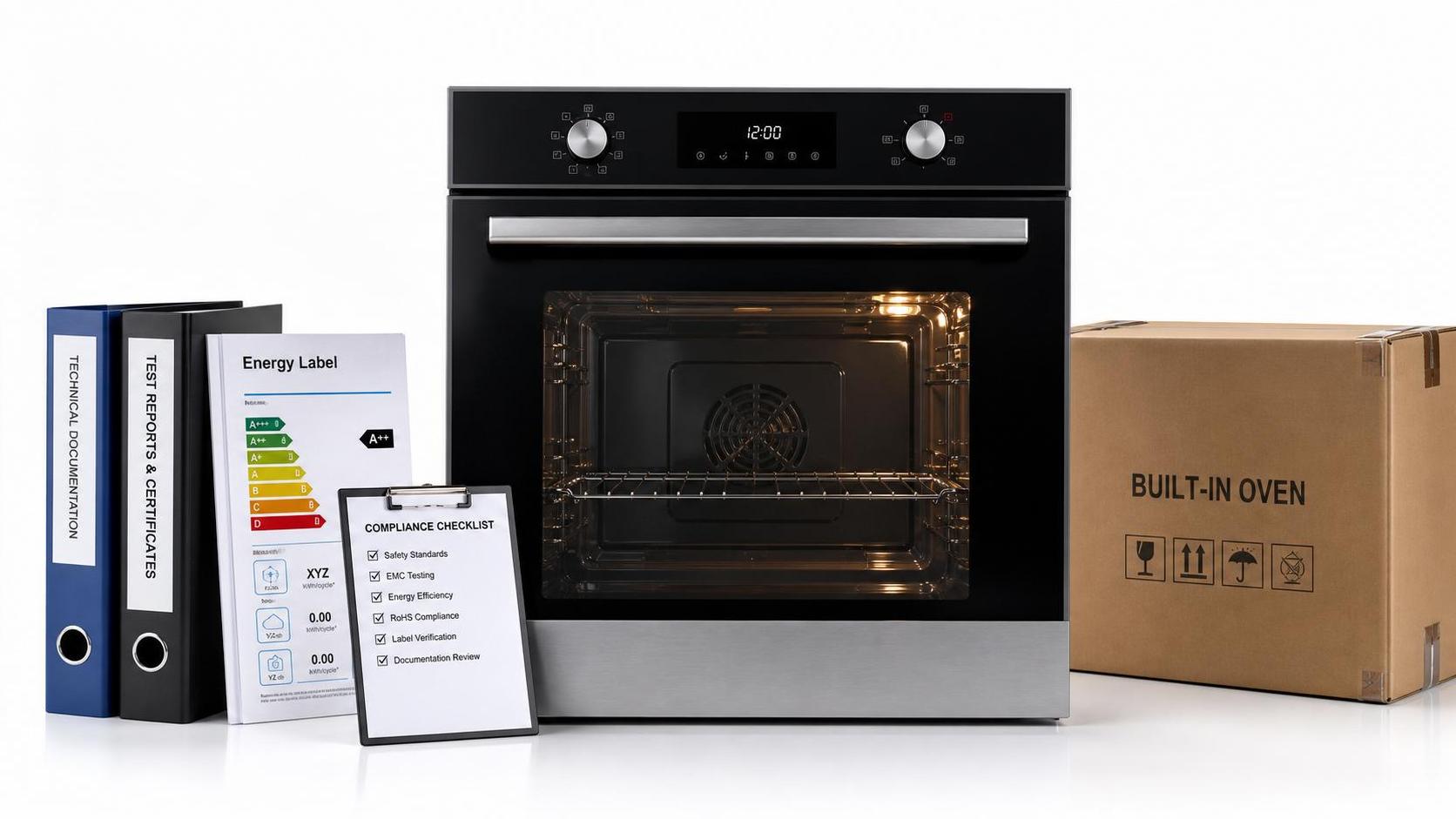
On July 5, 2026, Indonesia’s latest import data and a parallel policy signal on household appliance energy labeling put the built-in oven segment into closer regulatory focus. The combination of stronger Q2 import growth and an upcoming public consultation on a proposed mandatory energy label framework matters not only for exporters and importers, but also for certification teams, procurement planners, distributors, and after-sales operators that may need to adjust compliance preparation, product positioning, and delivery planning before any new labeling requirements are finalized.
What the July 5 update confirms
According to import statistics released by Indonesia’s Central Statistics Agency (BPS) on July 5, 2026, built-in oven imports reached $187M in the second quarter of 2026, up 29% year on year. The main supplying countries identified in the data were China with a 64% share, Germany with 12%, and Italy with 9%.
In the same period, Indonesia’s energy efficiency office (DOE) indicated that it plans to open a public consultation in August 2026 on a proposed Mandatory Energy Labeling Regulation for Household Built-in Appliances. The proposal would set level 3 energy efficiency as the starting requirement, level 2 as recommended, and level 1 as incentivized.
Why different market participants are likely to pay attention
Importers and exporters may face a compliance planning shift
From an industry perspective, the immediate issue is not a confirmed final rule, but a policy direction that could affect market access conditions for built-in ovens if the proposed labeling framework advances. Importers and exporting manufacturers may therefore need to review whether existing product specifications, technical files, and labeling readiness are aligned with a possible threshold-based efficiency structure. The trade impact is likely to be felt first in product selection, model registration preparation, and shipment planning for products intended for the Indonesian market.
Procurement and channel teams may need to reassess model mix
Analysis shows that when import growth and a pending efficiency rule appear at the same time, procurement teams and distributors usually need to look more closely at which models remain commercially practical under a new compliance baseline. In this case, the proposed level 3 starting point, together with level 2 as recommended and level 1 as incentivized, may influence future purchasing preferences, portfolio segmentation, and listing priorities. What deserves closer attention is whether buyers begin to favor models that can more easily support future label claims, even before the consultation produces a final outcome.
Testing, certification, and document-control functions may see earlier demand
For certification-related businesses and internal compliance teams, the August consultation signal matters because it may trigger earlier requests for technical review, performance validation, and document preparation. The likely pressure points are product data consistency, test-report readiness, label content control, and supporting technical documentation used in import, bidding, or channel onboarding processes. Since the consultation has only been announced and no final execution detail has been provided in the input, these should be treated as preparation areas rather than confirmed mandatory steps.
After-sales and traceability teams could be drawn into compliance workflows
Observably, a labeling regime for household built-in appliances can affect more than border entry or sales documentation. Service teams, warranty handlers, and traceability functions may also need to track model-level efficiency classifications more carefully if market claims, product records, or replacement decisions later need to match official labeling language. At this stage, that remains an operational consideration rather than an established rule change.
What companies should watch before the consultation opens
Review technical files against the proposed efficiency ladder
Analysis shows that companies active in this segment should begin by mapping their current built-in oven models against the proposed three-tier structure described in the policy preview. Even without final implementation detail, firms can identify where model specifications, efficiency declarations, and existing technical documents may require closer review if the proposal moves forward.
Track the official wording that follows the August consultation notice
What deserves closer attention is the exact language that will be used once the consultation starts. For market participants, differences in terminology around mandatory scope, entry requirement, recommendation status, and incentive treatment could materially affect compliance interpretation, procurement choices, and sales claims. Because the input only confirms that consultation is planned, companies should avoid treating the current proposal as a settled enforcement rule.
Check tender, distributor, and importer-facing documentation early
From a practical standpoint, exporters, local importers, and channel partners may want to review product sheets, declarations, test-related materials, and bid documents that refer to efficiency performance. If downstream buyers or intermediaries begin asking for clearer evidence of expected label readiness, document consistency may become a near-term commercial issue even before any formal enforcement date exists.
Factor compliance uncertainty into delivery and sourcing decisions
Observably, the Q2 import increase indicates active market movement, while the pending consultation introduces a policy variable into that flow. Companies managing supply schedules, supplier approvals, or market-entry planning may therefore need to build in more flexibility around model allocation and shipment timing. This is not because a new rule has already taken effect, but because the consultation could influence future acceptance standards and buyer expectations.
How this signal is best understood for now
As an editorial observation, this development is better understood as a combined market-and-regulatory signal rather than as a completed rule change. The import data confirms that Indonesia’s built-in oven trade flow was strong in the second quarter, while the DOE notice points to possible tightening or formalization of energy-label expectations for this product category.
Analysis shows that the most important issue for the industry is the interaction between volume growth and upcoming compliance consultation. A fast-moving import segment can draw more attention to how efficiency claims are structured, checked, and communicated. Even so, the current stage still requires caution: the proposed label framework has been previewed for consultation, not confirmed as final binding text in the information provided here.
A measured takeaway for the market
The July 5 update matters because it links a clear trade movement in built-in ovens with an emerging regulatory direction on energy labeling in Indonesia. For manufacturers, traders, and service providers, the practical issue is not simply higher imports, but the possibility that future market participation may depend more visibly on how product efficiency is classified and documented.
It is more appropriate to understand this as an early execution signal that warrants preparation and continued monitoring, rather than as a fully landed compliance change. Until consultation language, implementation details, and market responses become clearer, the prudent reading is that companies should prepare documents, review product positioning, and watch for further official clarification.
Source basis and points that still need verification
This article is based on the user-provided news title, event date, and event summary. For developments of this kind, commonly relevant source types may include official government announcements, regulatory agency releases, customs or trade authority information, industry association updates, standards documents, and reporting by established business media.
No specific official source link was provided in the input, so the underlying official publication link still needs to be verified on an ongoing basis. Further observation is also needed on the detailed policy text, certification interpretation, implementation approach, tender-document changes, industry feedback, and how companies actually respond once the August 2026 consultation begins.
Industry Briefing
Get the top 5 industry headlines delivered to your inbox every morning.