
Smart Kitchen Technology Buying Guide: Features That Matter for Daily Cooking
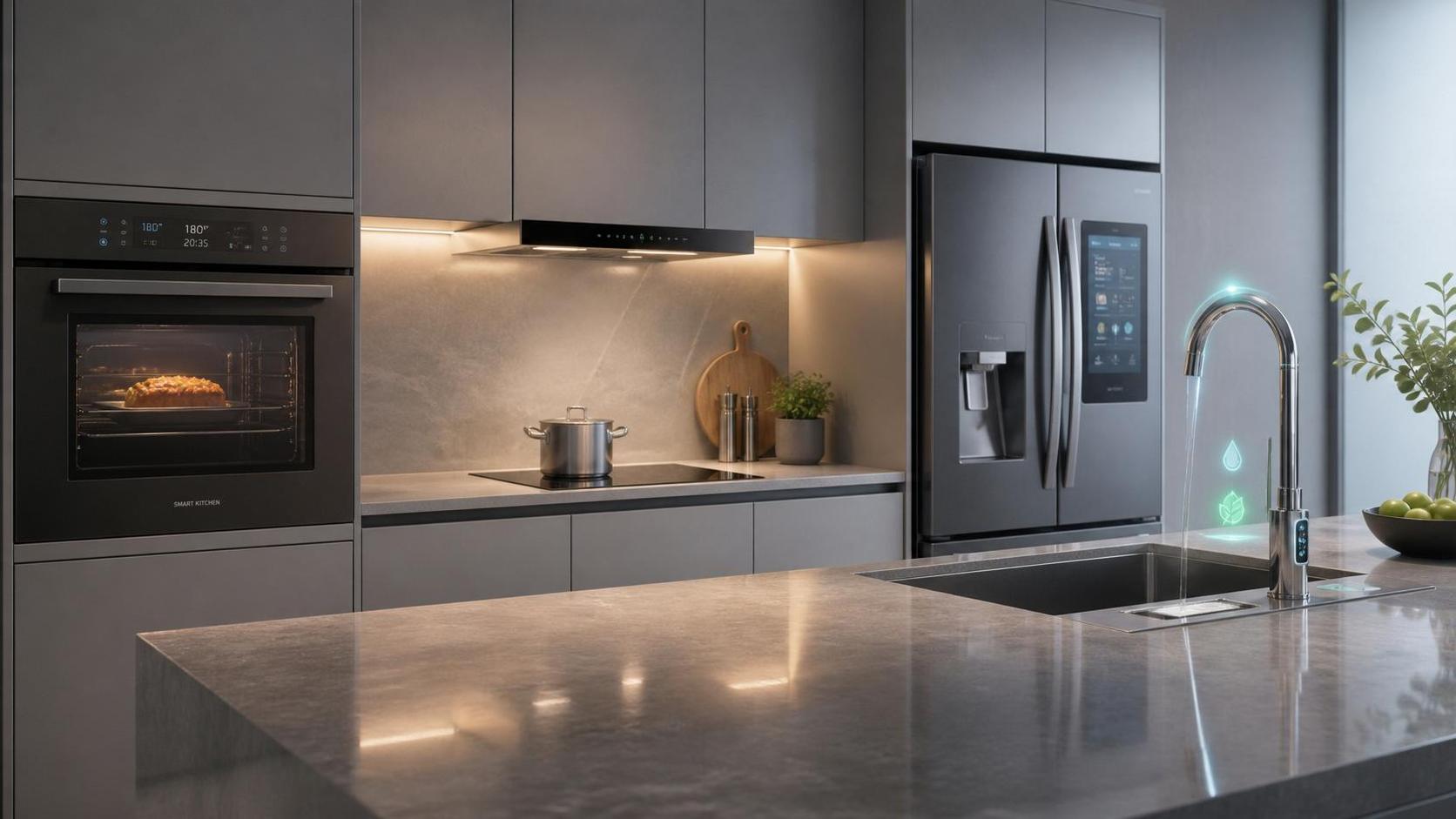
Choosing smart kitchen technology is no longer only about novelty. For daily cooking, the real question is which features improve routine tasks, save energy, support safety, and remain useful after the excitement of setup fades.
That matters even more now because kitchens sit at the intersection of design, appliances, water use, hygiene, and connected living. From GIAM’s broader view of spatial intelligence, smart kitchen technology reflects a larger shift toward healthier, more efficient residential environments.
A good buying decision starts with daily habits, not marketing claims. Whether replacing one appliance or planning a coordinated upgrade, practical performance should lead the shortlist.
What smart kitchen technology really includes
Smart kitchen technology covers connected appliances, sensor-based functions, app controls, energy monitoring, and adaptive safety tools. It can include ovens, cooktops, refrigerators, dishwashers, faucets, ventilation systems, and compact countertop devices.
The “smart” part is not the screen alone. It is the ability to respond to real use, provide useful feedback, reduce manual guesswork, and fit into a broader home ecosystem.
In practical terms, one connected oven with reliable temperature presets may deliver more value than a full suite of devices with weak software. Daily cooking benefits from consistency, not feature inflation.
Why the category deserves closer attention
Interest in smart kitchen technology is tied to several industry signals. Energy standards are tightening, hygiene expectations are rising, and urban homes often need appliances that work harder within smaller footprints.
There is also a materials and infrastructure dimension. GIAM’s focus on building materials, sanitary systems, and intelligent living highlights how kitchens are becoming coordinated environments rather than isolated appliance zones.
That means buying choices should consider more than cooking speed. Ventilation efficiency, water-saving performance, antibacterial surfaces, and compatibility with future upgrades now shape long-term value.
The features that matter most in daily cooking
Not every connected function improves life in the kitchen. The most worthwhile features are the ones that reduce friction during preparation, cooking, serving, and cleanup.
Controls should be intuitive from day one
Touch panels, voice control, and app access sound attractive, but usability matters more than novelty. Clear menus, responsive buttons, and readable displays make a bigger difference during rushed weekday meals.
If a cooktop or oven requires too many steps for simple actions, the intelligence becomes a barrier. Smart kitchen technology should shorten decisions, not add another layer of them.
Precision cooking has real household value
Temperature accuracy, humidity control, sensor cooking, and automatic timing support better results with less monitoring. These features help with roasting, baking, reheating, and meal prep in noticeable ways.
This is where smart kitchen technology often proves itself. Better cooking outcomes are easier to appreciate than abstract connectivity claims.
Energy and water efficiency should be visible
Efficient operation matters for both utility costs and sustainability goals. Look for appliances that display energy use, optimize cycles automatically, or reduce standby consumption.
For dishwashers and smart faucets, water management is equally important. Sensors that prevent waste are more useful than decorative digital extras.
Safety features should work quietly in the background
Auto shutoff, overheating alerts, leak detection, child lock systems, and remote status checks are meaningful features. They support confidence without changing the basic cooking routine.
In a broader intelligent home context, these functions align with the same safety logic seen in smart locks, water controls, and other connected residential systems.
Cleaning ease often decides long-term satisfaction
Self-cleaning cycles, fingerprint-resistant finishes, removable filters, anti-bacterial surfaces, and easy-access interiors are easy to underestimate at purchase time.
Yet they shape everyday ownership more than entertainment-style features. Smart kitchen technology should simplify maintenance as much as cooking.
How different kitchen products deliver value
The value of smart kitchen technology changes by appliance type. Some categories benefit from connectivity more than others.
Usually, cooking appliances justify smart upgrades more easily than display-heavy refrigeration products. The best choice depends on where friction appears most often in the current kitchen routine.
What buyers often overlook before purchase
Many disappointing experiences come from details that are less visible in showroom demos. These deserve as much attention as headline features.
- Software support length affects whether smart kitchen technology stays useful after a few years.
- App stability matters more than the number of app functions.
- Wi-Fi dependence can be frustrating if core tasks become difficult offline.
- Replacement parts and service access influence ownership cost.
- Noise levels are important for open-plan kitchens.
- Material quality still matters, especially for handles, seals, hinges, and internal surfaces.
This is where a broader built-environment perspective helps. GIAM’s attention to material science and sanitary performance is relevant because smart functions cannot compensate for weak construction quality.
How to judge fit in real cooking scenarios
A useful way to compare smart kitchen technology is to match features to actual meal patterns. Frequency, household rhythm, space constraints, and cleanup habits all shape the right choice.
For fast weekday cooking
Prioritize quick-start controls, dependable presets, remote preheat, and surfaces that clean easily. Time-saving only counts when it works with little attention.
For frequent batch cooking
Look for larger capacity, stable temperatures, storage zoning, and dishwashers with flexible racks and efficient heavy cycles. Precision becomes more valuable as cooking volume increases.
For compact urban kitchens
Space efficiency, multifunctionality, and low-noise operation become central. In smaller homes, every device should justify its footprint as well as its price.
For households focused on hygiene and sustainability
Water-saving systems, anti-bacterial materials, easy-clean surfaces, and accurate energy reporting carry more weight. These concerns increasingly shape purchase decisions across the wider interiors market.
A practical checklist before deciding
Before comparing brands, it helps to build a simple filter. This keeps smart kitchen technology aligned with daily value rather than impulse upgrades.
- List the three most repetitive kitchen frustrations.
- Separate essential functions from attractive extras.
- Check energy, water, and maintenance requirements together.
- Confirm that manual operation remains easy without the app.
- Review warranty terms, update policies, and service coverage.
- Compare how the appliance fits the broader kitchen layout and future renovation plans.
In many cases, the strongest investment is not the most advanced model. It is the one that balances performance, maintenance, safety, and compatibility with the space as a whole.
Where to focus next
Smart kitchen technology is most valuable when it supports better cooking without demanding constant attention. The best systems feel quiet, reliable, and proportionate to real needs.
A sensible next step is to compare options through a small framework: cooking precision, ease of cleaning, energy and water efficiency, safety, and software dependability. That approach usually reveals which features are worth paying for.
For anyone planning a wider kitchen refresh, it is also worth viewing appliances as part of an integrated spatial system. Materials, sanitation, utility performance, and connected functions increasingly work best when assessed together.
Industry Briefing
Get the top 5 industry headlines delivered to your inbox every morning.