
Smart kitchen appliances that look useful but disappoint fast
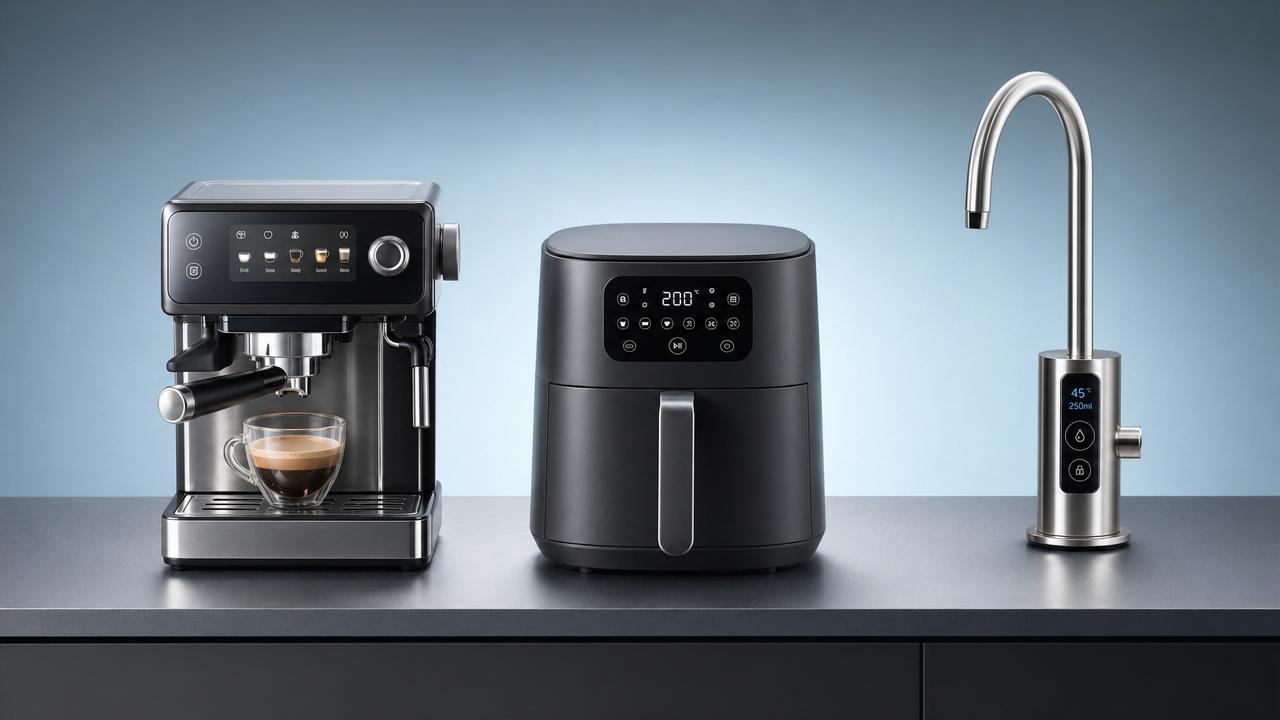
Many smart kitchen appliances promise convenience, speed, and sleek design, yet disappoint users soon after purchase with limited functions, app issues, or poor durability. Before investing in smart kitchen appliances, operators and everyday users need a clear view of which products truly improve workflow and which only add cost and frustration. This guide helps you spot the difference.
Why scenario differences matter more than marketing claims
Not all smart kitchen appliances fail for the same reason. A connected coffee maker that feels acceptable in a low-use home may become a daily bottleneck in a shared apartment, a staff pantry, or a light commercial hospitality setting. In practice, disappointment often appears within the first 30 to 90 days, when users move beyond setup and start judging real output, cleaning time, app reliability, and consistency under repeated use.
For operators and users in the broader built-environment ecosystem, the real question is not whether smart kitchen appliances are modern, but whether they fit the usage pattern of a specific space. GIAM’s long view on smart kitchen and bath systems shows that appliance value is closely linked to installation context, water and power conditions, maintenance access, and user turnover. A product that looks impressive in a showroom can underperform quickly if the surrounding space does not support it.
This is especially relevant in residential projects, serviced apartments, premium rental units, display homes, and compact urban kitchens where every appliance must justify its footprint. In many cases, the most common frustration is not outright failure but feature mismatch: too many app-only controls, too few manual overrides, or too much dependence on cloud updates for functions that should work offline in under 3 seconds.
Where disappointment usually begins
Users often buy smart kitchen appliances for one of four reasons: to save time, reduce effort, improve consistency, or create a more premium kitchen experience. Problems appear when those goals are not translated into measurable performance. If a smart air fryer saves only 2 to 4 minutes compared with a standard unit but adds 10 extra taps in the app, the user experience becomes worse, not better.
- High setup effort for low daily benefit, especially when Wi-Fi pairing takes more than 10 minutes.
- Weak durability of sensors, touch panels, seals, or dispensing components after 6 to 12 months of regular use.
- Limited manual operation when the app, router, or firmware update causes interruption.
- Cleaning complexity that adds 15 to 20 minutes per week with no clear gain in output quality.
In scenario-based evaluation, smart kitchen appliances should be judged less by novelty and more by repeatability, ease of use, and system resilience. That shift helps users avoid products that perform well in demonstrations but become irritating during everyday operation.
Three common scenarios where smart kitchen appliances are often misjudged
The same product can be useful in one setting and disappointing in another. The table below compares three typical scenarios that frequently appear in residential and semi-commercial spaces, showing why a single buying rule does not work across all environments.
This comparison highlights a common mistake: buyers often focus on the smartest feature instead of the most demanding use condition. In GIAM-observed project logic, the right question is not “What can this appliance do?” but “How will it behave after 200, 500, or 1,000 real interactions?” That is where weak design choices show up.
Scenario 1: Compact home kitchens
In compact kitchens, smart kitchen appliances often look more useful online than they feel in daily life. A connected multicooker, smart toaster oven, or voice-controlled dispenser may promise to replace 2 or 3 tools, yet still require enough counter depth, lid clearance, and side ventilation to disrupt the working triangle. In kitchens below roughly 8 to 12 square meters, that spatial penalty matters more than marketing images suggest.
The biggest risk in this scenario is functional overlap. If the user already owns a reliable kettle, microwave, and rice cooker, a new smart appliance must remove steps, not duplicate them. When setup requires frequent phone interaction, recipe syncing, or firmware checks, the product may add friction to short meal cycles that normally take 10 to 25 minutes.
What to verify first
- Can the appliance complete core tasks with no app after first setup?
- Does it reduce actual prep or cooking time by at least 15% in common recipes?
- Can surfaces, trays, and filters be cleaned in under 5 minutes per use cycle?
If the answer is no to two or more of these checks, the appliance may be smart in appearance but weak in practical fit. For small homes, simpler smart kitchen appliances with clear presets and strong manual control usually age better than highly connected models with complex ecosystems.
Scenario 2: Shared-use kitchens
In a shared apartment, family kitchen, or co-living environment, smart kitchen appliances often disappoint because they assume a single primary user. Voice profiles, saved preferences, app ownership, and maintenance reminders can become confusing when 3 to 6 people use the same device. What feels personalized in a single-user setting may feel chaotic in a shared one.
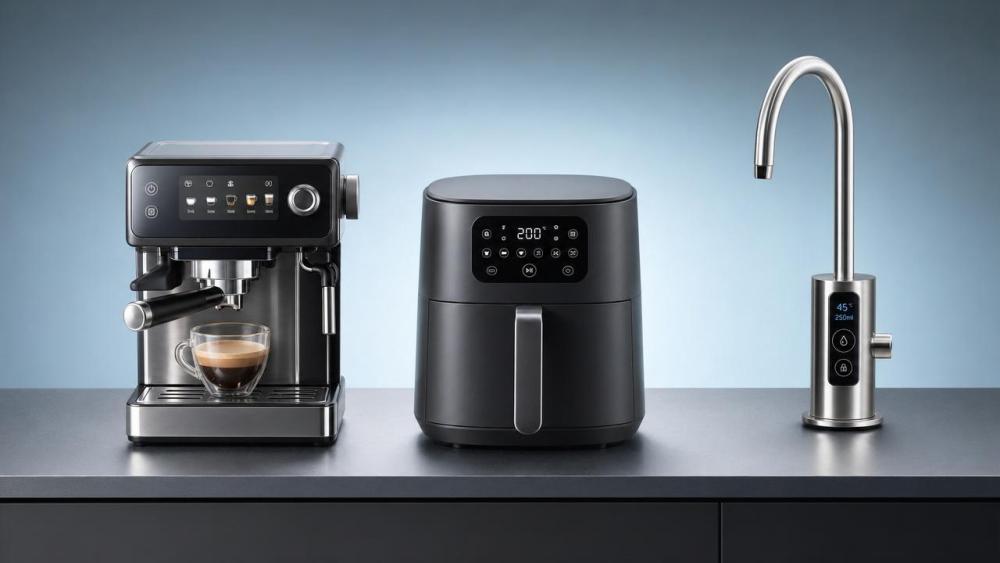
A smart coffee machine is a common example. It may support custom recipes and remote brewing, but if users must navigate several layers of settings just to make a standard cup, queue time rises during busy morning windows. When more than two users need quick access between 7:00 and 9:00 a.m., simplicity usually beats personalization.
In this scenario, the strongest smart kitchen appliances are not the most advanced ones. They are the ones that preserve consistent output, recover from user error quickly, and allow reset or guest access in less than 30 seconds. Shared-use spaces also benefit from durable interfaces that survive wet hands, repeated pressing, and routine wiping.
Scenario 3: Staff pantry and light hospitality zones
In office pantries, showroom hospitality corners, serviced apartments, and boutique guest settings, smart kitchen appliances are often selected for aesthetic value and perceived innovation. However, repeated use changes the equation quickly. A consumer-grade smart ice maker, beverage dispenser, or compact oven may function well at 3 to 5 cycles per day but become unreliable when demand rises to 20 or more cycles.
The disappointment here usually comes from serviceability. Users are less tolerant of downtime in semi-commercial environments because the appliance supports guest experience or staff efficiency. If replacement filters, seals, or drip components are hard to access, even a minor fault can interrupt operation for days instead of hours.
For these spaces, operators should treat smart kitchen appliances as part of a micro-system that includes cleaning workflow, water quality, electrical stability, and spare-part planning. A unit that looks premium but lacks straightforward maintenance support may increase operating cost over a 12-month period, even if the initial price seems attractive.
Which smart kitchen appliances disappoint most often, and why
Not every category carries the same risk. Some smart kitchen appliances fail because they depend too heavily on software for simple tasks. Others disappoint because their cleaning burden, noise level, or consumable cost was underestimated at purchase. The following table helps users rank common problem patterns before choosing a product.
The pattern is clear: the more often a smart function interferes with a basic kitchen action, the faster disappointment appears. Products tied to water, heat, steam, grease, or food residue also face tougher reliability conditions than many buyers expect. In kitchens, convenience must survive moisture, repeated wiping, and thermal cycling, not just initial setup.
Red flags that should lower confidence
Users should be cautious when a product description highlights dozens of app features but says little about cleaning cycles, replacement parts, manual operation, or material durability. In GIAM-aligned spatial evaluation, those “unseen” factors often decide whether smart kitchen appliances remain helpful beyond the first season of use.
- No clear operating mode during network interruption.
- Unclear maintenance interval for filters, seals, cartridges, or sensor surfaces.
- Heavy reliance on one touch panel with few physical controls.
- Insufficient guidance on ventilation clearance, water quality range, or load capacity.
As a practical rule, if a smart kitchen appliance adds software complexity to a task that takes less than 60 seconds manually, the benefit must be very clear. Otherwise, the product is likely solving the wrong problem.
How to judge fit before buying: a scenario-based checklist
Before selecting smart kitchen appliances, users and operators should confirm a short list of conditions that directly affect satisfaction. This process is especially useful in project kitchens, rental fit-outs, hospitality corners, and premium home upgrades where appearance and function must stay aligned over time.
Five questions that prevent fast disappointment
- How many daily use cycles are realistic: under 5, between 5 and 20, or above 20?
- Will the appliance be used by one person, a family group, or rotating guests and staff?
- Can the core function continue if the app fails, the password changes, or the network is unstable?
- How often will cleaning, descaling, emptying, or filter replacement be required over 30 days?
- Does the appliance reduce labor, improve consistency, or save space enough to justify its footprint and price?
These questions sound simple, but they separate useful smart kitchen appliances from products that create hidden operating friction. In many cases, a mid-level model with fewer connected features outperforms a premium model because it is easier to use, easier to train, and easier to maintain.
Basic fit thresholds
A practical threshold for home use is that setup should be completed within 15 minutes, core tasks should not require the app after installation, and regular cleaning should stay below 10 minutes per week for low-residue appliances or below 15 minutes per week for coffee, steam, or grease-related units. Above those thresholds, user fatigue tends to rise.
For shared or light hospitality spaces, operators should also confirm replacement lead times, expected service intervals, and tolerance to power or water fluctuations. Even simple questions such as whether the unit works acceptably with moderate mineral content or whether firmware updates can be delayed safely can prevent expensive mismatches.
Common buying mistakes that make smart kitchen appliances feel worse over time
Many disappointing purchases start with good intentions but weak evaluation logic. Buyers often assume that more automation always means higher convenience. In reality, convenience depends on how well the appliance fits the rhythm of the space, the skill level of the user, and the service conditions around it.
Mistake 1: Buying for showroom effect
A sleek display, touch interface, or connected dashboard can strongly influence purchase decisions in premium kitchens. But appliances that look advanced may still be poor daily tools. If the unit is selected mainly to support a visual concept rather than a repeatable workflow, dissatisfaction often appears within the first 8 to 12 weeks.
Mistake 2: Ignoring maintenance environment
Water quality, ventilation, grease exposure, and cleaning discipline all affect performance. Smart kitchen appliances that include sensors, valves, pumps, and heated surfaces are especially sensitive to these factors. In spaces without regular maintenance habits, simpler products generally hold value longer.
Mistake 3: Overvaluing app ecosystems
Apps can be useful for status checks, reminders, or repeat programming. They become a liability when they interrupt basic kitchen operations. Users should be careful when smart kitchen appliances require account linking, frequent updates, or cloud interaction for everyday actions such as dispensing, heating, or timer adjustment.
The strongest long-term buying mindset is simple: prioritize reliable manual performance first, then add smart functions only when they save measurable time, improve hygiene control, or support a clear operational need.
Why choose us for smarter kitchen product decisions
GIAM connects building materials intelligence, sanitary systems insight, and smart kitchen and bath evaluation into one decision framework. That matters because smart kitchen appliances do not operate in isolation. Their long-term value depends on spatial planning, user density, water conditions, installation logic, and maintenance practicality across residential and commercial environments.
If you are reviewing smart kitchen appliances for a home upgrade, rental project, serviced apartment, hospitality corner, or premium fit-out, we can help you compare scenario fit rather than simply compare product claims. This approach is especially useful when you need to reduce mismatch risk before procurement or specification is finalized.
What you can contact us about
- Parameter confirmation for power, water connection, ventilation, and usage cycle expectations.
- Product selection support for compact homes, shared kitchens, light hospitality, and premium residential projects.
- Delivery cycle discussion for phased procurement or model replacement planning.
- Custom solution advice for smart kitchen and bath integration within broader interior system requirements.
- Certification and compliance direction based on common international project expectations.
- Sample support and quotation communication for structured comparison before commitment.
The right smart kitchen appliances should support real workflow, not just create digital complexity. If you want a clearer path on suitability, selection priorities, or project-specific application, contact us to discuss your use scenario, expected operating conditions, and next-step specification needs.
Industry Briefing
Get the top 5 industry headlines delivered to your inbox every morning.