
UL 60730-1:2026 Mandates AI Safety for Built-in Kitchen Controllers
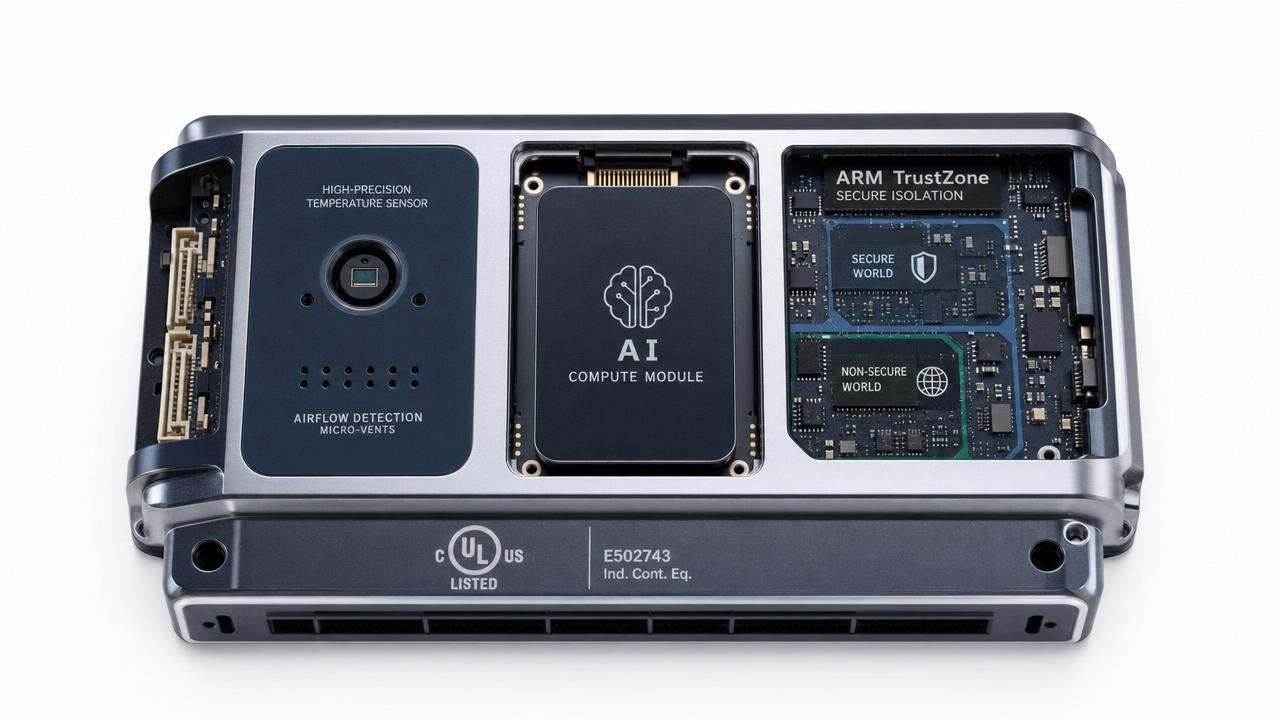
U.S. UL 60730-1:2026 enters mandatory enforcement on May 15, 2026, introducing new safety requirements for AI-integrated controllers in built-in ovens, range hoods, and smart cabinets. The update directly affects export compliance for Chinese manufacturers targeting the North American market, where UL listing remains a de facto gatekeeper for retail distribution, insurance underwriting, and code acceptance.
Event Overview
Under UL 60730-1:2026, effective May 15, 2026, all embedded controllers incorporating AI algorithms—regardless of deployment scope or inference method—must undergo two newly mandated test procedures: AI Behavior Boundary Verification and Localized Anomaly Interruption Response. These apply specifically to products classified as automatic electrical controls for household and similar use. Non-compliant devices will be excluded from the UL Online Certifications Directory, effectively barring market access in jurisdictions recognizing UL certification.
Industries Affected
Direct Export Trading Enterprises: Face immediate shipment delays and customs rejection risks if existing inventory or pending orders lack valid UL 60730-1:2026 certification. Compliance verification is now required per SKU—not per platform—meaning variant models (e.g., differing sensor suites or firmware versions) may require separate evaluations. Revenue impact is most acute for firms relying on just-in-time fulfillment to U.S. big-box retailers.
Raw Material Procurement Enterprises: Are experiencing revised vendor qualification demands, particularly for AI-accelerator ICs, secure boot MCUs, and certified real-time operating system (RTOS) licenses. Suppliers must now provide traceable evidence of functional safety alignment with UL’s AI boundary definitions—e.g., documented input constraint sets, fail-safe state mapping, and deterministic latency profiles. Procurement contracts increasingly include clauses requiring upstream audit readiness for UL follow-up assessments.
Contract Manufacturing & OEM Enterprises: Must revalidate firmware architecture, hardware abstraction layers, and over-the-air (OTA) update mechanisms against the new standard’s local interruption requirement—which mandates sub-100ms response to anomalous thermal, motion, or airflow signals without cloud dependency. This necessitates redesign of watchdog logic, revision of safety-critical interrupt priorities, and integration of hardware-enforced execution isolation (e.g., ARM TrustZone or RISC-V PMP). Certification timelines have extended by an average of 8–12 weeks per product family.
Supply Chain Service Providers: Including third-party testing labs, certification consultants, and logistics documentation specialists, are adjusting service portfolios. Notably, accredited labs now require UL-authorized AI validation engineers on staff; generic EMC or safety labs cannot perform the new behavioral boundary tests. Documentation services report rising demand for bilingual (EN/CN) technical files compliant with UL’s AI Evidence Package template—covering training data provenance, decision-tree traceability, and edge-case stress test logs.
Key Focus Areas and Recommended Actions
Verify AI Scope Thresholds Early
Not all algorithmic logic triggers the new requirements. UL clarifies that ‘AI’ here refers to adaptive inference systems using learned models (e.g., neural networks, ensemble decision trees) trained on operational data—not rule-based heuristics or fixed-parameter PID loops. Manufacturers should conduct internal scoping reviews before engaging labs, focusing on whether behavior changes post-deployment via online learning or model updates.
Prioritize Localized Interruption Architecture
The ‘local anomaly interruption’ requirement explicitly prohibits reliance on cloud connectivity or remote diagnostics for safety-critical shutdown. Firms must embed redundant, hardware-gated interrupt paths—verified through fault injection testing—and document worst-case response timing under voltage droop, temperature drift, and memory corruption scenarios.
Align Firmware Development with UL’s Evidence Framework
UL no longer accepts black-box AI validation. Developers must maintain auditable records: version-controlled training datasets (with bias and outlier annotations), formal specification of behavior boundaries (e.g., max surface temp rise per 30s under misaligned airflow), and test logs demonstrating >99.99% interruption reliability across 10,000+ randomized fault injections. DevOps pipelines now need integrated evidence-generation hooks.
Editorial Perspective / Industry Observation
Observably, UL 60730-1:2026 marks a structural shift—from treating AI as a feature enhancement to classifying it as a safety-critical subsystem requiring deterministic verification. Analysis shows this mirrors trends in ISO/IEC 42001 and EU AI Act high-risk categorization, but diverges by mandating hardware-enforced local autonomy rather than governance-by-design. From an industry perspective, the standard’s emphasis on behavioral boundaries—not just accuracy or fairness—suggests future harmonization efforts may focus on runtime constraint modeling, not static model auditing. Current more pressing concern is capacity strain: only 7 UL-authorized labs globally offer full AI behavioral testing, creating bottlenecks unlikely to ease before Q3 2026.
Conclusion
This enforcement does not merely raise compliance hurdles—it redefines the engineering contract between appliance makers and safety regulators. Success hinges less on AI capability and more on verifiable predictability. A rational conclusion is that firms treating AI integration as a software-only upgrade will face disproportionate cost and delay; those embedding safety-aware architecture from silicon selection onward are better positioned to scale across multiple regulated markets.
Source Attribution
Official text: UL 60730-1:2026 Edition dated April 2026 (published April 1, 2026); UL White Paper ‘AI Behavioral Validation Requirements for Automatic Controls’, Revision 2.1 (March 2026). Note: UL has announced plans to publish supplemental guidance on edge-case definition methodology and acceptable simulation fidelity thresholds—to be monitored closely through Q2 2026.
Industry Briefing
Get the top 5 industry headlines delivered to your inbox every morning.