
UL 60730-1:2026 for Smart Kitchen Controllers Enforced May 15, 2026
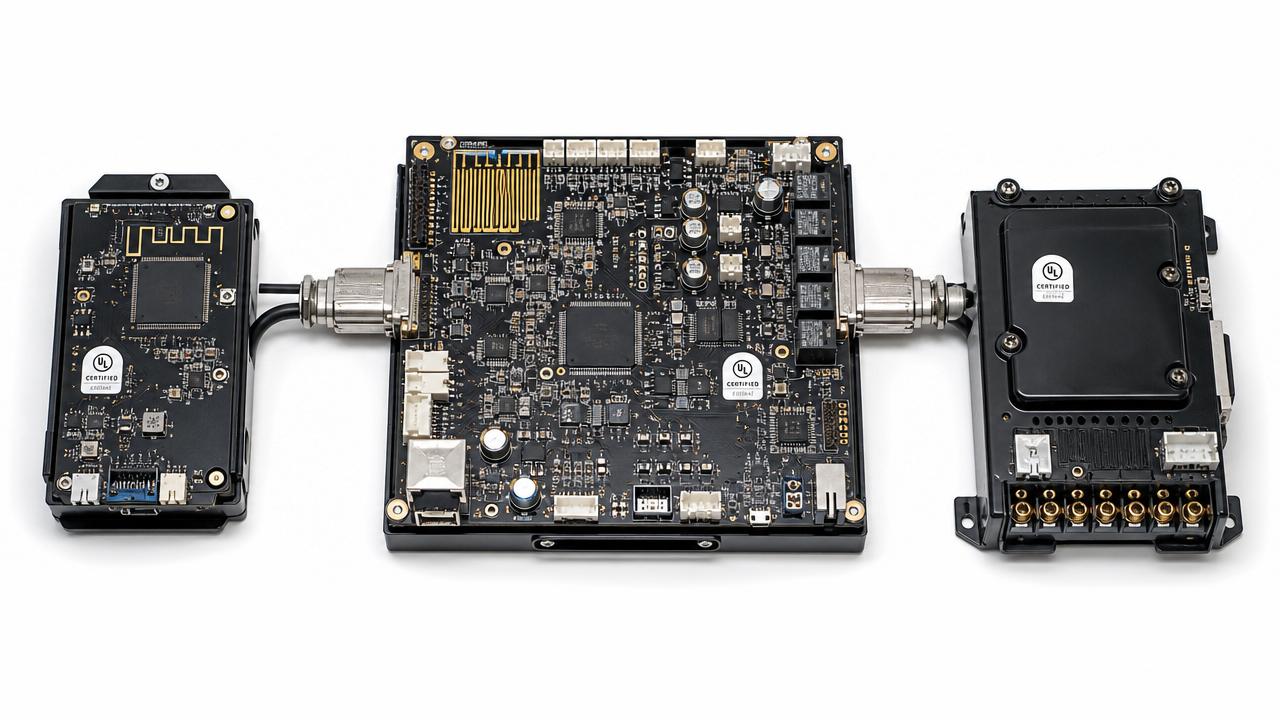
On May 15, 2026, Underwriters Laboratories (UL) fully enforced the revised UL 60730-1:2026 standard for automatic electrical controllers—specifically targeting smart kitchen appliances exported from China to the U.S. The update introduces mandatory safety and performance requirements for AI-integrated functions, firmware update integrity, and multi-device thermal coordination, directly affecting market access for key export categories.
Event Overview
UL implemented UL 60730-1:2026 as a mandatory requirement effective May 15, 2026. The revision adds three core technical provisions: (1) electromagnetic compatibility (EMC) immunity testing for AI voice interaction modules; (2) security validation of locally hosted over-the-air (OTA) firmware updates; and (3) interlocked overheating protection across coordinated devices (e.g., oven + hood + smart cabinet). Products falling under Built-in Ovens, Range Hoods, and Smart Cabinets must comply with this edition to be listed in UL’s Online Certifications Directory and accepted by U.S. retail channels and commercial project procurement programs.
Industries Affected
Direct Exporters: Companies exporting embedded ovens, range hoods, or smart cabinets to the U.S. face immediate compliance deadlines. Non-compliant units cannot receive UL Listing after May 15, 2026—rendering them ineligible for shelf placement at major retailers (e.g., Home Depot, Lowe’s) or inclusion in builder/developer specifications. Re-certification timelines may delay Q2–Q3 2026 shipments if test labs are backlogged.
Raw Material Suppliers: Firms supplying voice recognition SoCs, secure boot ICs, or thermally rated PCB laminates must now align material datasheets and traceability documentation with UL 60730-1:2026’s new clauses—particularly those covering OTA update authentication and EMC resilience thresholds. Some component-level certifications (e.g., UL 62368-1) no longer suffice as standalone evidence for controller subsystems.
Contract Manufacturers & OEMs: Facilities producing controllers or full-system assemblies must revise design verification plans (DVPs), update EMC test setups to include voice-triggered interference scenarios, and implement secure firmware signing workflows. Internal production audits now require documented evidence of interlock logic validation across device boundaries—not just within individual units.
Supply Chain Service Providers: Third-party certification consultants, test laboratories, and logistics firms offering UL support must expand their scope to cover AI module EMC testing protocols and OTA security validation checklists. Lab capacity for combined thermal–electrical stress testing (per Annex G of UL 60730-1:2026) is currently limited, leading to extended turnaround times for integrated system submissions.
Key Focus Areas and Recommended Actions
Confirm Controller-Level Certification Scope
Exporters should verify whether their existing UL Listing covers the controller subassembly—not just the end product—and whether it references UL 60730-1:2026 explicitly. Legacy listings citing UL 60730-1:2015 or earlier are invalid post–May 15, 2026, even if the appliance model remains unchanged.
Validate AI Module EMC Immunity Under Realistic Trigger Conditions
Testing must simulate actual voice command sequences (not generic noise bursts) while monitoring control signal integrity and thermal response latency. UL now requires test reports to document microphone sensitivity settings, background noise profiles, and voice input timing relative to thermal event initiation.
Implement Secure OTA Signing and Rollback Protection
Firmware update mechanisms must include cryptographic signature verification, hardware-enforced secure boot, and immutable rollback prevention—even for local (non-cloud) OTA updates. UL assesses both the update delivery path and the controller’s ability to reject tampered or downgraded images.
Document Multi-Device Interlock Logic Traceability
Manufacturers must provide UL with architecture diagrams, communication protocol specs, and failure-mode analysis showing how overheating in one device (e.g., oven cavity) triggers coordinated shutdown or derating in linked devices (e.g., hood blower, adjacent smart cabinet lighting). This applies regardless of whether devices share a common bus or communicate via Matter/Thread.
Editorial Perspective / Industry Observation
Observably, UL 60730-1:2026 marks a structural shift—from validating discrete components toward certifying adaptive, networked behavior. Analysis shows this reflects broader regulatory momentum: similar clauses appear in draft versions of IEC 60730-1 Ed. 6 and Canada’s CSA C22.2 No. 60730-1:2026. From an industry perspective, the standard’s emphasis on AI module resilience and cross-device safety logic suggests future harmonization will prioritize system-level risk assessment over isolated functional safety. Current more critical than ever is the alignment between firmware development teams, hardware engineers, and certification managers—especially where OTA and thermal management intersect.
Conclusion
This enforcement underscores that safety compliance for intelligent home appliances is evolving from static certification into continuous assurance. For Chinese exporters, UL 60730-1:2026 is less a one-time hurdle and more a signal of intensified expectations around embedded intelligence governance. A rational conclusion is that proactive integration of security-by-design and cross-system safety reasoning—rather than reactive retesting—will define competitive advantage in North American markets beyond 2026.
Source Attribution
Official text and implementation guidance published by Underwriters Laboratories (UL LLC), Bulletin UL 60730-1:2026, dated March 2026; UL’s Global Regulatory Update – Q1 2026. Note: UL has indicated that Annex G (multi-device thermal interlock) and Clause 14.2.5 (OTA update security) remain subject to interpretation clarifications; stakeholders should monitor UL’s Standards Development Portal for updates through Q3 2026.
Industry Briefing
Get the top 5 industry headlines delivered to your inbox every morning.