
EN 16794:2026 Takes Effect for Smart Cabinet EMC
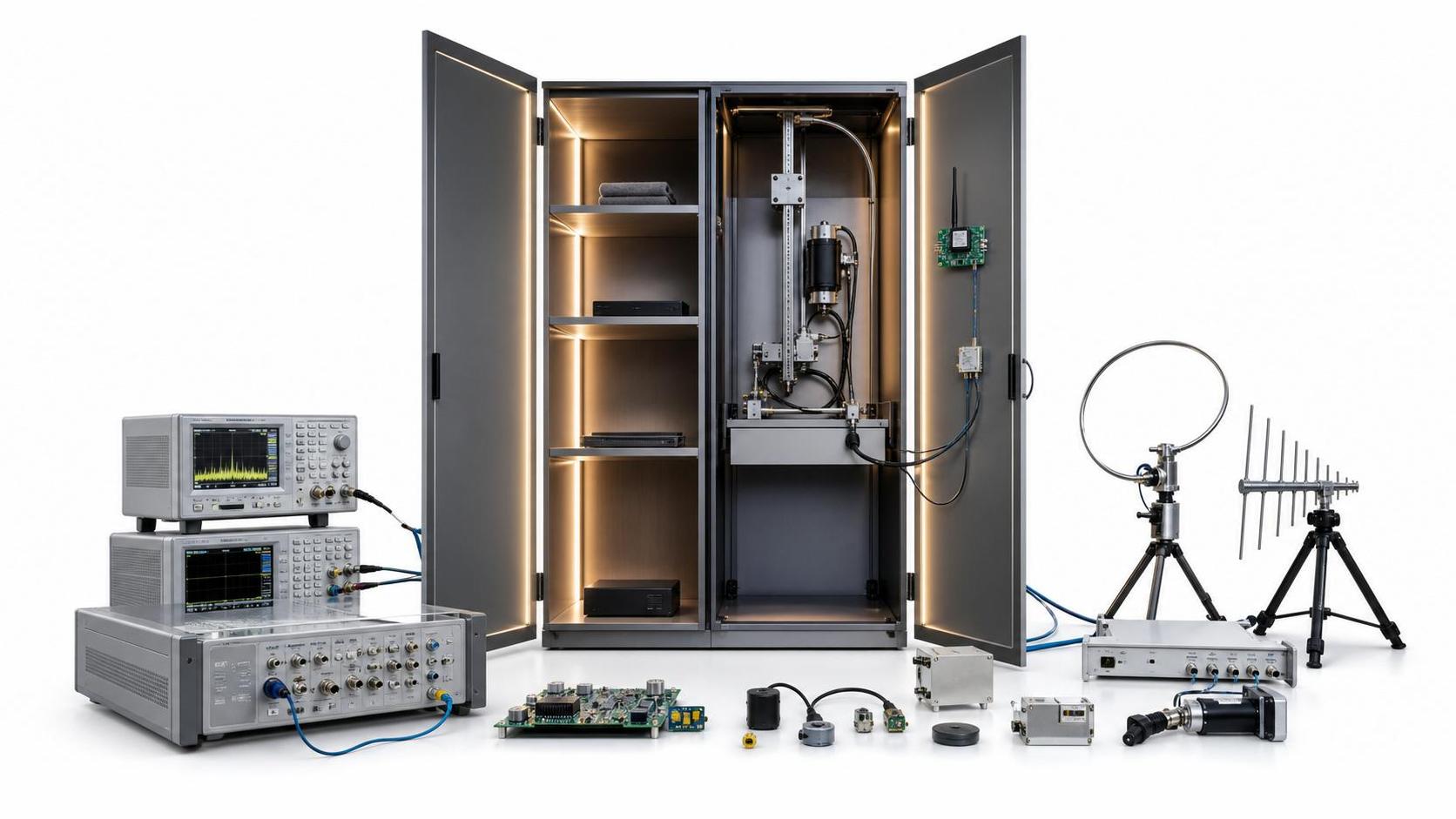
As of June 20, 2026, the European Committee for Standardization (CEN) has put EN 16794:2026 into formal effect, raising EMC compliance requirements for smart cabinets sold into the EU. The update matters not only to manufacturers of embedded smart furniture, but also to exporters, distributors, certification planning teams, and buyers involved in public building projects, because products that do not pass the new certification path cannot carry the CE mark or be sold in the EU market.
What the standard change confirms
According to the information provided, EN 16794:2026 officially came into force at 00:00 on June 20, 2026. The revised standard expands the IEC 61000-4 series immunity testing, previously applied to household appliances, to complete smart cabinet systems equipped with Wi-Fi or Bluetooth modules, motor drives, and sensing lighting.
The update also adds a new test scenario covering multi-device shared-field coupling interference. Products that fail certification under the revised standard cannot affix the CE mark, cannot be sold in the EU market, and cannot participate in public building tenders.
Feedback from leading Chinese smart cabinet exporters indicates that Germany's TÜV and the Netherlands' KEMA have already opened expedited testing channels. At the same time, the average testing cycle has extended to 22 working days, and overseas distributors are being advised to submit samples six weeks in advance.
Where the immediate pressure is likely to appear
Compliance work now shifts from component thinking to system-level review
From an industry perspective, manufacturers of smart cabinets are likely to feel the most direct impact because the testing scope described in the update is no longer limited to isolated appliance-style immunity expectations. The focus moves to the complete cabinet system when wireless modules, motor drives, and sensing lighting are integrated into one product.
Export and distribution schedules may face tighter coordination
Exporters and overseas distributors may be affected through product launch timing, sample submission planning, and shipment readiness. The reported extension of the average testing cycle to 22 working days means timing becomes a practical issue, especially where CE marking is a precondition for entering the EU market.
Public project suppliers face a clearer access threshold
Suppliers serving public building procurement in the EU should pay particular attention because the information provided states that products without certification under the revised standard cannot participate in public building tenders. For this group, compliance is not only a market access issue but also a bid eligibility issue.
Testing and certification service arrangements become more time-sensitive
Service providers involved in certification scheduling, sample handling, and cross-border coordination may also see immediate pressure. The launch of expedited channels by TÜV and KEMA suggests demand for testing capacity is already rising, while longer lead times increase the need for earlier preparation.
What companies should monitor now
Check which product configurations fall into the revised scope
What deserves closer attention is whether existing or upcoming smart cabinet models include the functions specifically mentioned in the update, including Wi-Fi or Bluetooth modules, motor drives, and sensing lighting. This matters because the regulation change is framed around full-system testing rather than a narrow single-function view.
Rebuild certification timelines around the longer testing cycle
Companies working with EU customers should closely review delivery and launch schedules against the reported 22-working-day average testing period. The recommendation for overseas distributors to submit samples six weeks in advance points to a practical planning adjustment rather than a purely procedural change.
Separate legal access requirements from commercial expectations
Analysis shows that two issues should not be mixed together: the legal requirement tied to CE marking and the commercial impact on sales or project participation. The confirmed fact is that uncertified products cannot carry the CE mark, cannot be sold in the EU, and cannot enter public building tenders. Commercial consequences beyond that will depend on each company’s order pipeline and certification readiness.
Prepare documentation and customer communication earlier
For exporters, distributors, and account teams, earlier communication with laboratories, channel partners, and project customers is likely to be important. Observably, when testing windows lengthen, questions around sample submission timing, certification status, and delivery sequencing become more sensitive in day-to-day execution.
Why this should be read as more than a routine update
Analysis shows this development is not just a technical wording revision. The change indicates that smart cabinets are being treated more explicitly as integrated electronic systems when they combine connectivity, drive functions, and lighting. The addition of a multi-device shared-field coupling interference scenario also signals a compliance focus on how products behave in more realistic electromagnetic environments.
At the same time, it is more appropriate to understand this as an already effective market-access change rather than a distant policy signal. The enforcement date is explicit, and the consequences for CE marking, EU sales, and public tender participation are already defined in the provided information. What remains worth continued observation is how testing capacity, turnaround times, and implementation consistency develop after the initial enforcement phase.
How to frame the current industry significance
The clearest takeaway is that EN 16794:2026 turns EMC compliance for smart cabinets into a more system-oriented and time-critical issue in the EU market. For businesses directly involved in product export, certification, distribution, and public project supply, the immediate question is not whether the rule matters, but how quickly internal timelines and sample planning can align with it.
From a practical standpoint, this is best understood as a confirmed regulatory change with short-term operational impact and longer-term significance for how smart embedded furniture is assessed. It does not by itself answer every commercial outcome, but it clearly raises the importance of compliance planning in this product category.
Basis of this article
This article is generated based on the user-provided news title, event date, and event summary. The facts referenced here are limited to the provided information about EN 16794:2026, its June 20, 2026 effective date, the expanded EMC testing scope, the added multi-device shared-field coupling interference scenario, the CE marking consequence, and the reported testing arrangements involving TÜV and KEMA.
For this type of industry update, relevant source categories typically include official announcements, standard organization documents, company statements, industry association updates, certification body notices, and reporting by authoritative trade media. A specific official source link was not provided in the input, so continued verification is still necessary. Follow-up attention should remain on any further official wording, implementation notices, and testing timeline developments related to the standard.
Industry Briefing
Get the top 5 industry headlines delivered to your inbox every morning.