
New Zealand Imposes New Border Fee on Low-Value Imports, Raising Costs for Wallpaper and Tech Textile Samples
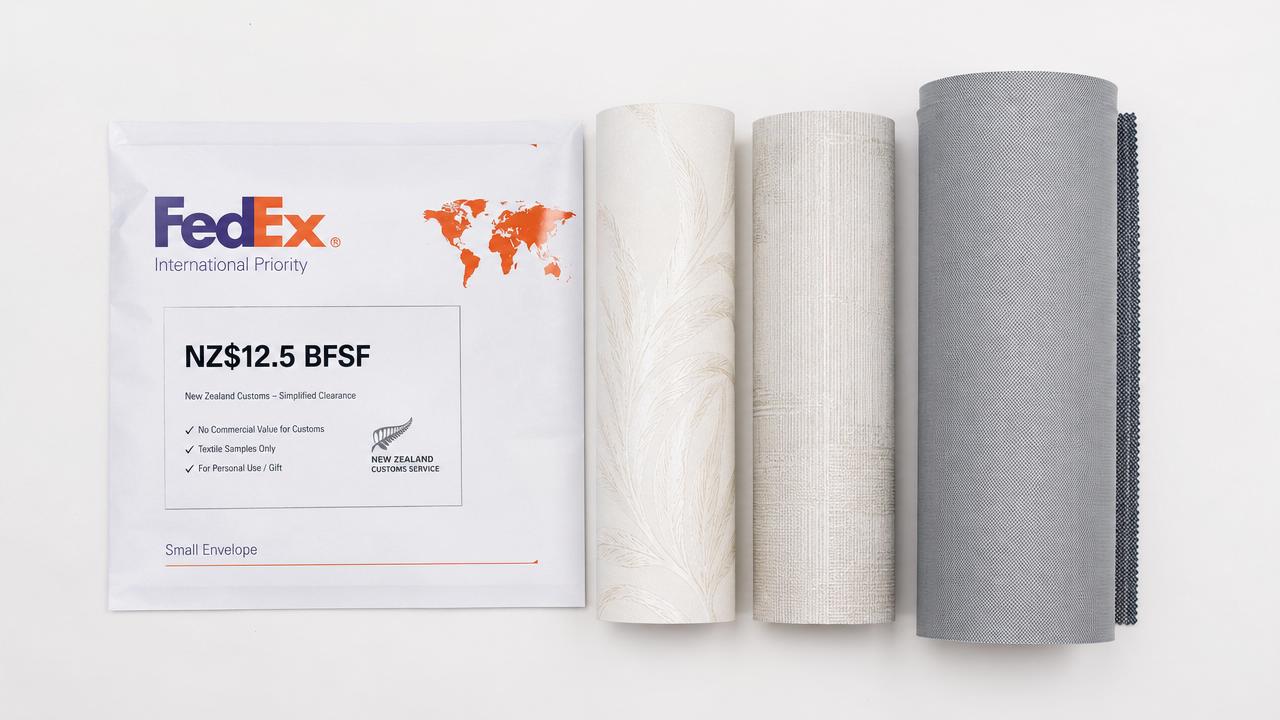
New Zealand introduced a new Border Services Fee (BFSF) effective 1 May 2026, targeting all imported parcels with a CIF value of NZ$1,000 or less—including wallcoverings and technical textiles—thereby increasing sample dispatch and small-B2B trial order costs across design-led and e-commerce distribution channels.
Key Policy Implementation Details
Effective 1 May 2026, New Zealand levies a flat-rate Border Services Fee (BFSF) of NZ$12.5 per consignment on all imported parcels valued at NZ$1,000 or less on a CIF basis. The measure applies broadly to lightweight, low-value goods, including wallcoverings and technical textiles. This fee is charged in addition to the existing Goods and Services Tax (GST), resulting in an average cost increase of over 35% for sample shipments and small-scale trial orders.
Impact Across Supply Chain Roles
Exporting manufacturers
Manufacturers exporting wallcoverings or technical textiles to New Zealand now face higher per-shipment compliance costs—even for nominal-value samples. This directly affects pre-sale engagement with designers and specifiers, where rapid, low-cost sample delivery has been a competitive differentiator.
International procurement firms
Firms sourcing materials or finished goods for New Zealand-based clients must recalculate landed cost models. The BFSF introduces a fixed per-parcel charge that disproportionately impacts high-volume, low-CIF shipments—common in textile sampling and prototyping workflows.
Contract converters and finishers
Entities handling cut-and-sew, coating, or functional finishing for export-bound tech textiles must factor in BFSF-related delays and documentation requirements when quoting lead times for New Zealand-bound trial batches.
Logistics and cross-border fulfillment providers
Third-party logistics partners must update customs declaration systems and client billing frameworks to accommodate the BFSF surcharge. Integration with GST collection mechanisms adds complexity to automated parcel clearance processes.
Strategic Priorities for Affected Businesses
Reassess sample distribution strategy
Given the NZ$12.5 per-ticket charge, consolidating multiple samples into single parcels—where technically and logistically feasible—may reduce frequency of BFSF application. However, this requires coordination with end users on acceptable lead times and packaging constraints.
Update landed cost calculators and quotation templates
Businesses must embed the BFSF as a non-negotiable line item in pro forma invoices and commercial quotations for New Zealand customers. Failure to do so risks margin erosion on small-batch orders where the fee represents a significant percentage of total landed cost.
Evaluate digital sample alternatives
To offset rising physical sample costs, companies should accelerate adoption of high-fidelity digital swatches, AR-based material visualization, and certified colour-matching reports—tools increasingly accepted by interior designers and architectural specification teams.
Industry Perspective: Beyond Compliance Cost
Analysis shows this policy shift reflects a broader regulatory trend: moving from value-based to transaction-based border cost allocation. From an industry perspective, it signals growing emphasis on administrative efficiency—and associated cost recovery—for low-value e-commerce and B2B micro-shipments. What deserves closer attention is how this may accelerate consolidation among smaller exporters unable to absorb or pass through the fee, potentially narrowing channel diversity for niche wallcovering and functional textile categories in the New Zealand market.
Outlook and Operational Implications
This measure does not alter tariff classifications or safety standards—but reshapes economic incentives around trial-order volume, shipment frequency, and pre-sale support infrastructure. For wallcovering and tech textile suppliers, the BFSF reinforces the strategic importance of digitized customer engagement and localized sampling partnerships, rather than relying solely on direct international parcel dispatch.
Source Information and Verification Notes
This article was generated based solely on the user-provided title, event date (2026-05-01), and summary description. Specific official source links were not provided in the input and should be verified continuously. Stakeholders are advised to monitor updates from New Zealand Customs Service and Inland Revenue Department regarding BFSF implementation guidelines, GST remittance protocols, and potential exemptions for certain trade facilitation schemes.
Industry Briefing
Get the top 5 industry headlines delivered to your inbox every morning.