
Hydraulic Design Innovations That Reduce Failure Risks in Shower Systems
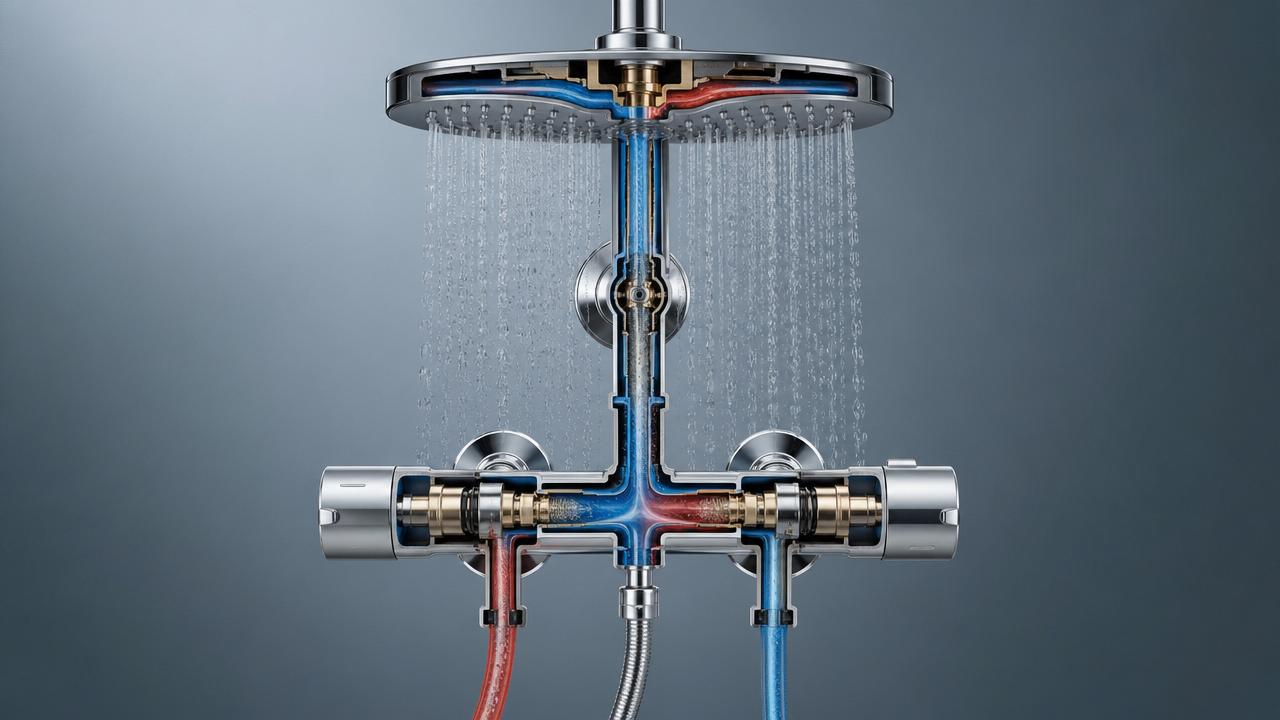
In shower systems, small hydraulic flaws can trigger costly leaks, pressure instability, and long-term safety risks. For quality control and safety management teams, understanding hydraulic design innovations is essential to preventing failures before they escalate. This article explores how smarter flow balancing, pressure regulation, and material integration can improve system reliability, compliance, and operational safety in both residential and commercial environments.
Understanding hydraulic design innovations in modern shower systems
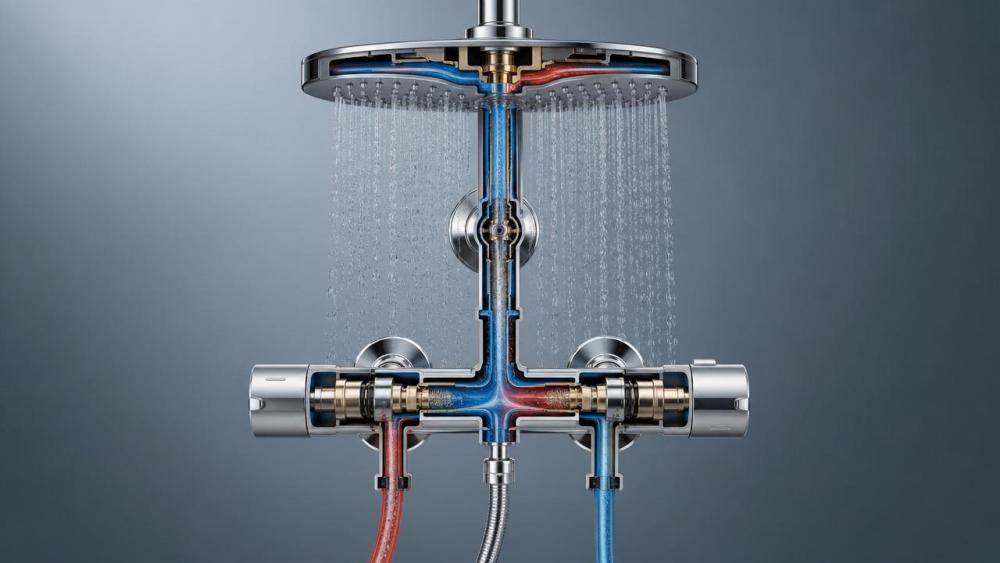
Hydraulic design innovations refer to the engineering improvements that control how water moves, stabilizes, mixes, and exits within a shower system. In practical terms, this includes pressure-balancing cartridges, thermostatic mixing assemblies, anti-hammer features, optimized pipe routing, low-turbulence valves, and sealing interfaces designed to reduce stress over service periods that often range from 5 to 15 years. For quality control personnel, these innovations are not abstract design upgrades; they are measurable risk-control tools.
The reason the topic matters across the building materials and sanitary space sectors is simple: shower failures rarely begin as dramatic events. More often, they start with pressure spikes above typical operating bands, flow imbalance between hot and cold lines, micro-leakage at joints, or material fatigue caused by repeated thermal cycling. A variation of only a few seconds in temperature response time or a small mismatch in supply pressure can create user discomfort, scalding concerns, or hidden moisture damage behind walls.
For safety managers in residential towers, hotels, hospitals, student housing, and commercial washroom environments, hydraulic design innovations create a more predictable system behavior under variable demand. Morning peak demand, for example, can increase simultaneous water use by 40% to 70% compared with off-peak periods. Systems designed with better balancing logic and pressure management are more likely to maintain stable outlet performance under those conditions.
What these innovations usually address
- Pressure fluctuation that causes sudden temperature swings during simultaneous fixture use.
- Flow path turbulence that accelerates wear on cartridges, seals, and mixing components.
- Water hammer events that create repeated shock loads on joints and concealed connections.
- Stagnation zones that can increase hygiene concerns in low-use or intermittently occupied buildings.
- Overheating or delayed thermal response in systems without accurate mixing control.
From a GIAM perspective, hydraulic design innovations also connect directly to the wider evolution of residential civilization and commercial space intelligence. Water-saving expectations, anti-bacterial material trends, and tighter building performance targets are pushing shower systems to deliver more with less: lower water use, fewer maintenance interventions, and safer end-user experiences.
Why failure risks remain a major industry concern
Shower systems sit at the intersection of plumbing, waterproofing, user safety, and long-term building durability. That makes failure analysis more complex than simply checking whether water comes out of the showerhead. A hidden pressure imbalance can damage valve internals over 12 to 24 months. A poor transition between metal and polymer components can introduce differential expansion stress. A misjudged flow rate can reduce user satisfaction while masking performance problems during commissioning.
In quality control programs, the most expensive failures are often secondary failures. A worn seal may be inexpensive, but if it causes concealed leakage behind tiled walls, the repair can involve demolition, mold remediation, waterproofing replacement, and service downtime. In hospitality or healthcare sites, even a 1-day to 3-day room outage can carry operational and reputational costs beyond the plumbing repair itself.
Safety teams also monitor thermal hazards. If one user opens another fixture on the same branch line and the shower outlet temperature changes too quickly, there is a real risk of scalding or slip incidents caused by abrupt user reaction. Hydraulic design innovations reduce this exposure by narrowing acceptable pressure deviation and improving hot-cold compensation speed within the valve body.
Common failure drivers seen across sectors
Although the physical layout differs between apartments, hotels, gyms, and institutional facilities, several hydraulic risk patterns are common. The table below summarizes the most relevant issues for control teams evaluating shower system reliability.
This overview shows why hydraulic design innovations should be treated as preventive controls rather than optional product features. They affect not only fixture performance, but also inspection frequency, defect closure speed, maintenance planning, and compliance confidence across the asset life cycle.
Industry context behind the growing focus
Across global projects, shower systems are being asked to meet multiple targets at once: water efficiency, user comfort, hygiene management, and predictable maintenance. As building owners push for lower operating costs and greener material strategies, even modest reductions in flow rates, such as moving from higher legacy profiles toward more efficient ranges, must be balanced carefully so that performance does not become unstable or unsafe.
This is where GIAM’s market intelligence approach becomes useful. Hydraulic design innovations are no longer isolated engineering choices; they sit within broader trends in smart living standards, building decarbonization, and premium sanitary space expectations. For manufacturers and specifiers, reliability now has to coexist with efficiency and aesthetic integration.
Core hydraulic design innovations that reduce failure risks
Not every improvement delivers the same risk reduction. For quality and safety teams, the most useful hydraulic design innovations are those that reduce variability under real operating conditions rather than only under ideal lab settings. The strongest designs usually combine flow control, pressure stability, thermal management, and durable material interfaces in one coordinated system.
Pressure balancing and thermostatic control
Pressure-balancing valves respond to changes in hot or cold supply pressure, helping maintain a more stable mixed-water output when nearby fixtures open or close. Thermostatic controls go further by targeting outlet temperature directly. In many installations, response behavior within a narrow range can significantly reduce user shock events, especially where simultaneous use peaks occur for 30 to 90 minutes each day.
For safety managers, the advantage is straightforward: when the hydraulic core of the shower can compensate for variable supply conditions, the risk of abrupt thermal change decreases. This is particularly important in healthcare, eldercare, and family housing where vulnerable users may be less able to react quickly.
Flow path optimization and low-turbulence internal geometry
Flow path optimization reduces sharp internal turns, sudden cross-section changes, and high-shear zones inside the valve and connector body. By lowering turbulence, designers can reduce noise, minimize localized erosion, and support more consistent flow delivery. Over thousands of on-off cycles per year, this can slow wear on cartridges and seals.
Integrated surge protection and water hammer mitigation
Water hammer is often underestimated in shower branches because the visible symptom may be only a knocking sound. In reality, repeated transient loads can damage concealed joints and weaken threaded or compression interfaces. Hydraulic design innovations that include surge damping, controlled shutoff behavior, or better branch sizing can lower mechanical shock transmission and extend system stability.
Material and sealing integration
A hydraulically sound design must also account for material movement under heat, pressure, and chemical exposure. Differences between brass, stainless steel, engineered polymers, elastomeric seals, and plated surfaces can become failure points if expansion rates and compatibility are not managed. In wet-room conditions, long-term reliability depends as much on interface design as on nominal valve performance.
The table below groups key hydraulic design innovations by their primary reliability contribution, helping teams align product review criteria with actual operational risks.
For review teams, the value of this classification is that it turns hydraulic design innovations into auditable categories. Instead of approving systems based on appearance or catalog claims, teams can verify whether each innovation addresses a specific failure mode relevant to the site.
Application value for quality control and safety management teams
For QC teams, hydraulic design innovations improve the quality of acceptance testing. A shower assembly with stable balancing and controlled thermal output produces more repeatable readings during commissioning, reducing disputes between contractors, suppliers, and facility operators. Repeatability matters because borderline systems often pass one test but fail under real occupancy load.
For safety managers, the benefit is broader than preventing leaks. Better hydraulic control supports safer user interaction, fewer emergency maintenance events, and clearer preventive maintenance intervals. In practical operations, this can mean shifting from reactive service calls to planned inspections every 6 or 12 months, depending on occupancy intensity and local water conditions.
For manufacturers and project stakeholders following GIAM’s intelligence-driven view of spatial evolution, the business value is also strategic. Products that integrate hydraulic design innovations are often better positioned for premium project specifications because they align with current expectations around durability, water efficiency, hygiene, and long-term lifecycle value.
Where the value appears in daily control work
- Incoming inspection becomes more focused on critical interfaces such as cartridge seating, seal quality, and pressure-response consistency.
- Commissioning protocols can include measurable thresholds for pressure variation, thermal stabilization time, and leak observation periods.
- Maintenance logs become more meaningful because recurring issues can be tied to identifiable hydraulic causes instead of generic fixture failure.
- Risk prioritization improves in mixed portfolios where residential, hospitality, and institutional uses demand different safety margins.
Typical site categories and focus points
Different sites value hydraulic design innovations differently. The table below helps align review priorities with common project types and expected operational stresses.
This classification helps quality and safety teams avoid one-size-fits-all judgments. A solution suitable for a low-rise apartment may not be appropriate for a hospital wing or a high-turnover hotel block, even if the visible shower trim appears similar.
Practical evaluation and implementation guidance
Selecting or approving shower systems with stronger hydraulic design innovations should begin with failure-mode thinking. Instead of starting from product appearance or nominal flow rating alone, teams should ask which failure scenarios matter most on the project: concealed leakage, temperature instability, pressure noise, user injury exposure, or maintenance access limitations. That sequence produces more defensible quality decisions.
A sound review process usually covers at least four checkpoints: design suitability, material compatibility, installation accuracy, and performance verification after commissioning. In many projects, the difference between a reliable system and a problem system is not one dramatic defect but the accumulation of smaller weaknesses across these stages over a 30-day, 90-day, and 12-month operating horizon.
Teams should also align hydraulic evaluation with common standards language where relevant, such as scald prevention, plumbing safety, and water efficiency requirements used in the target market. The exact standard set varies by region, but the principle is consistent: hydraulic design innovations should support compliance, not create uncertainty during inspection or handover.
A practical review checklist
- Confirm operating pressure range and verify whether the shower valve remains stable across expected site fluctuations.
- Check whether thermal response is controlled and whether a safe maximum temperature limit can be set or maintained.
- Review internal material combinations for compatibility with local water chemistry, temperature cycling, and cleaning agents.
- Assess service access for cartridges, filters, and seals so that maintenance does not require unnecessary wall disruption.
- Verify branch layout and connection quality to reduce water hammer, trapped stress, and concealed leak paths.
- Set a post-installation observation period and document any drift in pressure, noise, leakage, or outlet consistency.
Common implementation mistakes to avoid
One common mistake is assuming that a high-quality valve can compensate for poor upstream design. If pipe sizing, balancing, or branch routing is weak, even advanced hydraulic design innovations may not achieve their intended performance. Another issue is overlooking commissioning under realistic simultaneous-use conditions. Testing one fixture at a time may miss the very instability that later drives complaints and safety incidents.
A second mistake is treating material upgrades as purely cosmetic. Surface finish is visible, but hidden interface design determines whether expansion, vibration, and water chemistry will degrade seals or joints over time. Quality review must therefore connect visible product quality to hidden hydraulic behavior.
Why informed project teams are using intelligence-led decisions
As shower systems become more integrated with smart building expectations, the value of hydraulic design innovations increases. Teams are no longer selecting fittings in isolation; they are making decisions that affect user safety, maintenance budgets, sustainability targets, and brand reputation. The better the design intelligence at the front end, the lower the chance that hidden hydraulic weaknesses will surface after occupancy.
GIAM supports this decision environment by connecting technical observation with market and material insight. For professionals responsible for quality and safety, that means seeing hydraulic design innovations not only as component upgrades, but as part of a wider strategy linking building performance, sanitary space standards, and long-term operational confidence.
When evaluating shower systems for upcoming projects or product programs, a more informed review can save substantial time and risk later. Even a short pre-specification review cycle of 1 to 2 weeks can reveal whether a product is aligned with expected pressure conditions, user protection goals, installation constraints, and maintenance capability.
Why choose us
GIAM brings together building material intelligence, hydraulic design understanding, and commercial insight for professionals who need more than surface-level product information. Our perspective is built for decision-makers in sanitary spaces, smart kitchen and bath systems, and core construction materials who must balance safety, reliability, compliance, and project competitiveness.
If your team is assessing hydraulic design innovations for shower systems, you can contact us for support on parameter confirmation, product selection logic, delivery cycle considerations, custom solution direction, certification-related review points, sample evaluation strategy, and quotation communication preparation. This is especially useful when comparing options for residential, hospitality, healthcare, or commercial wet-space applications.
Contact us to discuss operating pressure ranges, flow and temperature control priorities, material compatibility concerns, installation risk points, and project-specific compliance expectations. With clearer intelligence at the specification stage, quality control and safety teams can reduce failure risks before they become costly site issues.
Industry Briefing
Get the top 5 industry headlines delivered to your inbox every morning.