
2026 World Intelligent Industry Expo (Tianjin) Launches First 'Smart Bathroom Aerial Installation System'
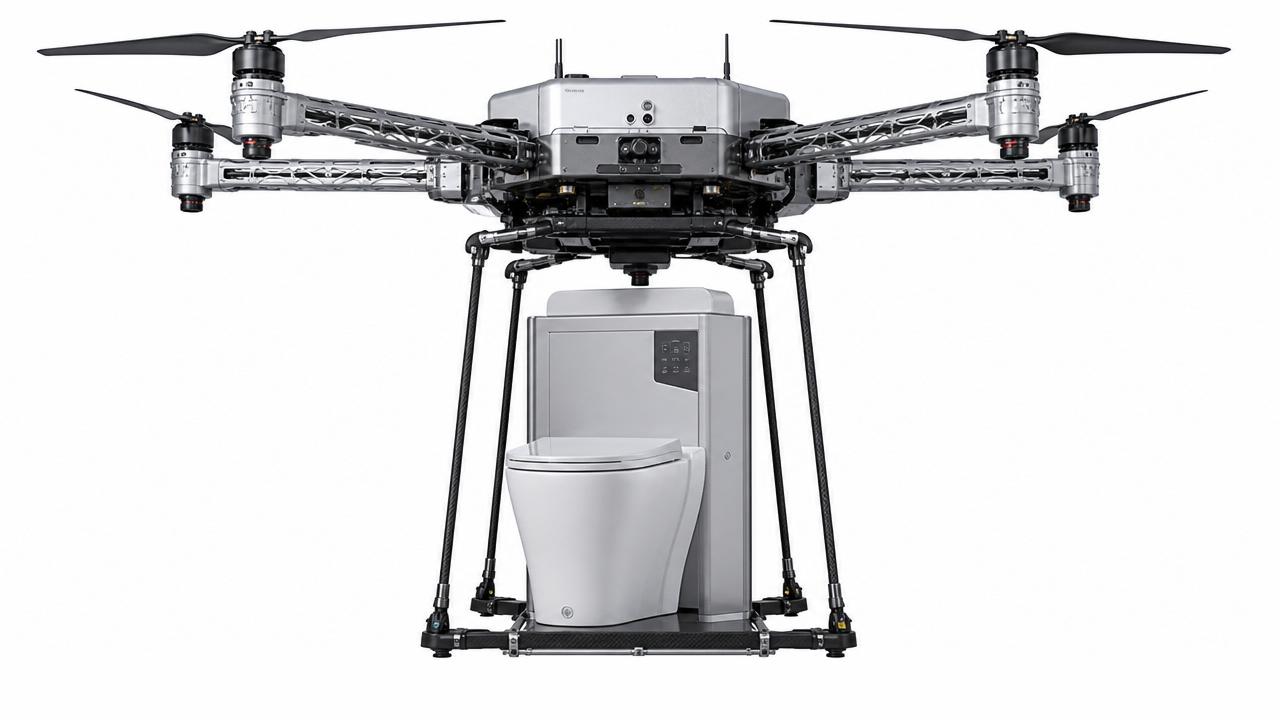
On May 28–31, 2026, the World Intelligent Industry Expo (WIIE) will open in Tianjin, approved by China’s Ministry of Commerce. For the first time, the Low-Altitude Economy thematic zone will feature a live demonstration of the globally debuted ‘Drone-Lifted Smart Bathroom Modular System’ — a 300 kg-capacity aerial installation solution for fully assembled smart toilets and bathtubs. With verified deployment in three guaranteed-housing projects in Xiong’an New Area, the system supports standardized interfaces from leading domestic smart bathroom brands and offers technical licensing and joint construction collaboration opportunities for overseas engineering contractors. This development signals emerging convergence across intelligent manufacturing, construction technology, and low-altitude logistics — sectors that industry stakeholders in smart home integration, modular construction, and cross-border infrastructure services should monitor closely.
Event Overview
The 2026 World Intelligent Industry Expo is scheduled to take place in Tianjin from May 28 to 31, 2026, under official approval from China’s Ministry of Commerce. The Low-Altitude Economy exhibition zone will debut the ‘Drone-Lifted Smart Bathroom Modular System’, enabling precise aerial positioning and installation of complete smart toilets and bathtubs weighing up to 300 kg. The system has undergone field testing and delivery in three guaranteed-housing projects in Xiong’an New Area. It is compatible with standard interfaces of major Chinese smart bathroom brands. Overseas engineering contractors may engage on-site for technical licensing and joint construction cooperation.
Industries Affected by This Development
Smart Bathroom Manufacturers
Manufacturers producing integrated smart toilets or bathtubs face new interface standardization requirements. Compatibility with the drone-lift system implies potential adjustments to product mounting geometry, weight distribution, and communication protocols for alignment verification during aerial installation.
Modular Construction & Prefab Housing Contractors
Contractors involved in government-backed housing initiatives — especially those active in new urban development zones like Xiong’an — may encounter revised tender specifications requiring aerial-installation readiness. Early adoption could influence bidding competitiveness and project scheduling efficiency in high-density or logistically constrained sites.
Drone-Based Industrial Service Providers
Firms offering heavy-lift drone solutions for construction or infrastructure support now have a validated use case in interior fit-out — a segment previously dominated by manual labor or crane-assisted methods. Integration with certified bathroom modules represents a tangible entry point into building interior systems deployment.
Overseas Engineering & EPC Contractors
International contractors engaged in infrastructure projects in China — or planning to replicate similar housing models abroad — may assess the system for local adaptation. Technical licensing discussions at the expo indicate an early-stage commercial pathway, though export compliance, certification reciprocity, and site-specific air traffic coordination remain unconfirmed variables.
What Relevant Enterprises or Practitioners Should Monitor and Do Now
Track official technical specifications and interface documentation post-expo
The system’s compatibility claims are currently stated at a brand-level interface level; detailed mechanical, electrical, and communication standards (e.g., mounting flange dimensions, real-time position feedback protocols) have not been publicly released. Stakeholders should prioritize follow-up through official WIIE channels or designated consortium contacts after May 31.
Assess applicability against current or upcoming public housing procurement frameworks
Given the Xiong’an deployments were in guaranteed-housing projects, relevant contractors and suppliers should review recent and planned tender documents from provincial housing authorities for references to ‘aerial installation capability’, ‘modular bathroom integration’, or ‘low-altitude logistics-enabled construction’. These terms may signal evolving evaluation criteria.
Distinguish between policy endorsement and operational readiness
While the Ministry of Commerce’s approval confirms institutional recognition of the expo’s scope, no national or provincial regulation mandating or incentivizing aerial bathroom installation has been announced. The system remains a demonstration-grade application — not a codified requirement. Business decisions should reflect this distinction between signaling and enforceable practice.
Prepare internal alignment on weight, dimensional, and interface constraints
For manufacturers and prefab integrators, preliminary internal reviews of existing product lines against a 300 kg aerial lift envelope — including dynamic load tolerance, lifting-point reinforcement, and compact packaging for transport — can inform near-term R&D or production planning without awaiting full technical disclosure.
Editorial Perspective / Industry Observation
Observably, this initiative functions primarily as a sectoral signal rather than an immediate market inflection point. Its presence at WIIE — a nationally sanctioned platform — elevates visibility for low-altitude applications beyond transportation and inspection, into precision interior construction. Analysis shows the emphasis lies in demonstrating feasibility and interoperability within China’s domestic smart home and new urban development ecosystems. It does not yet indicate scalable deployment, regulatory harmonization, or international certification pathways. From an industry perspective, the value lies less in near-term revenue impact and more in identifying where construction digitization, product modularity, and airspace-enabled logistics begin to intersect — a convergence likely to shape tender requirements and supply chain partnerships over the next 2–3 years.
This announcement marks an early-stage institutional validation of aerial methods for interior building systems installation — not a wholesale shift in construction practice. It reflects a targeted effort to extend low-altitude economy applications into high-value residential infrastructure segments. Stakeholders are advised to treat it as a strategic indicator: one worth monitoring for standard-setting activity and pilot expansion, but not yet a trigger for operational overhaul or capital re-allocation.
Source: Official announcement of the 2026 World Intelligent Industry Expo, confirmed by China’s Ministry of Commerce; statements issued by the WIIE Organizing Committee regarding the Low-Altitude Economy Zone and the ‘Drone-Lifted Smart Bathroom Modular System’. Note: Technical specifications, licensing terms, and scalability data beyond the Xiong’an pilot deployments remain pending official release and are subject to ongoing observation.
Industry Briefing
Get the top 5 industry headlines delivered to your inbox every morning.