
CPSC Adds Condensate Contact Surfaces to Smart Toilet Seat Lead Testing
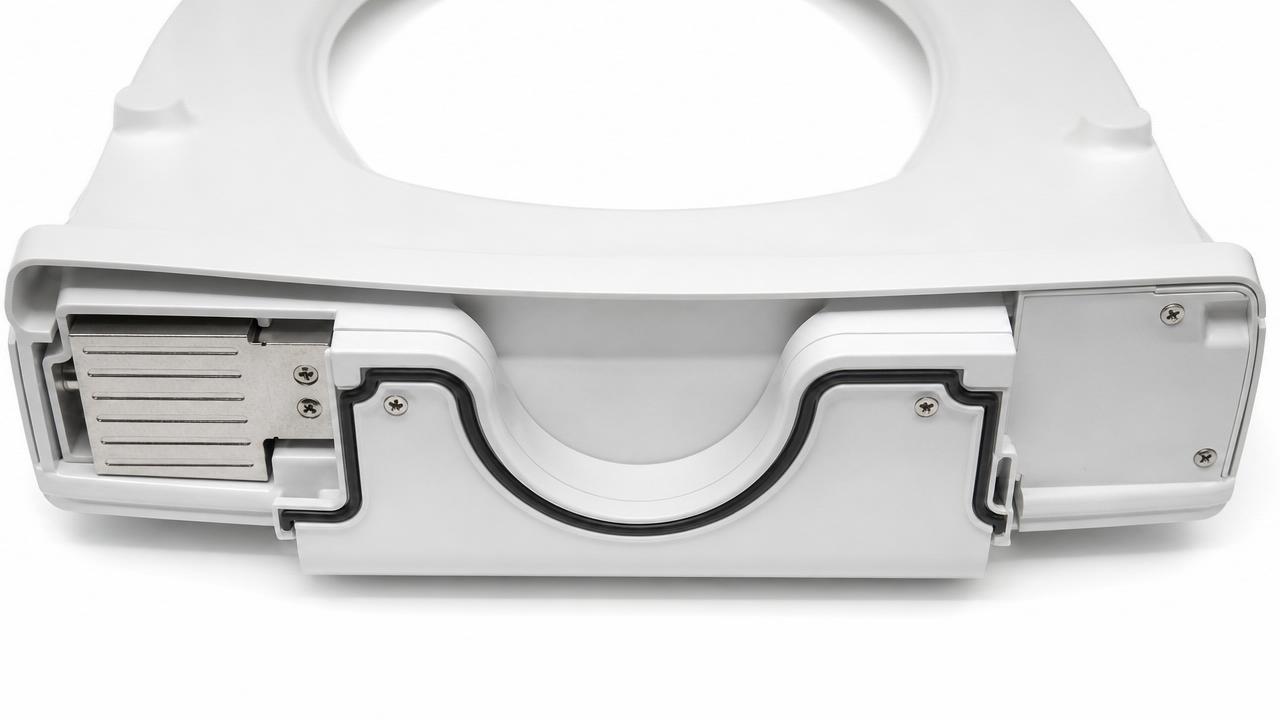
On May 8, 2026, the U.S. Consumer Product Safety Commission (CPSC) issued Smart Toilet Seat Lead Compliance Guidance v2.1, mandating lead migration testing on condensate-contact surfaces of smart toilet seats — including underside arc grooves and heating module sealing edges. This update directly affects manufacturers and exporters of smart bathroom fixtures, particularly those supplying the U.S. market, as it introduces a new compliance requirement with immediate effect and measurable operational implications.
Event Overview
The U.S. Consumer Product Safety Commission (CPSC) published Smart Toilet Seat Lead Compliance Guidance v2.1 on May 8, 2026. The guidance adds mandatory sampling for lead migration from condensate-contact surfaces — specifically defined as areas where moisture accumulates, such as the underside arc-shaped recesses of the seat and sealing edges around heating modules. The revision takes effect immediately. CPSC-recognized third-party laboratories in Shenzhen and Ningbo are authorized to issue expedited test reports within 48 hours.
Industries Affected by Segment
Direct Exporters to the U.S.
Exporters of smart toilet seats to the U.S. are directly subject to the updated sampling requirement. Because the new condensate-contact surfaces were not previously included in mandatory testing, existing CPSC certifications may no longer cover full structural compliance. Exporters must now resubmit comprehensive sampling plans covering all newly specified surfaces — potentially triggering retesting, documentation updates, and shipment delays.
Contract Manufacturers & OEMs
OEMs and contract manufacturers producing smart toilet seats for global brands face revised design validation obligations. The addition of condensate-contact zones means that material selection, surface finishing, and sealing integrity — especially around heated components — now carry direct regulatory weight. Manufacturing process controls and internal QA protocols must explicitly address these newly regulated contact points.
Supply Chain Service Providers (Testing & Certification)
Third-party testing labs and certification consultants supporting U.S.-bound smart toilet seat exports must adapt their sampling protocols and reporting templates to reflect the updated guidance. While CPSC-recognized labs in Shenzhen and Ningbo can issue 48-hour reports, capacity constraints and regional concentration may affect turnaround times for non-recognized or overseas labs. Service providers need to verify whether their current scope of accreditation includes the newly defined condensate-contact surfaces.
Key Focus Areas and Immediate Actions for Stakeholders
Review and update full-structure sampling plans without delay
Companies must revise existing CPSC submission packages to include representative samples from all condensate-contact surfaces — notably underside arc grooves and heating module sealing edges. Retesting is required even if prior certifications covered other surfaces; omission of these newly mandated zones constitutes incomplete compliance.
Confirm laboratory accreditation scope before scheduling tests
Not all CPSC-recognized labs automatically cover the new condensate-contact sampling requirement. Exporters should explicitly verify with labs — especially those outside Shenzhen and Ningbo — whether their accreditation includes this specific sampling category. Relying on outdated scope statements may result in non-accepted reports.
Assess design and material specifications for condensate-prone zones
Manufacturers should audit current product designs to identify all locations where condensation may accumulate during normal operation — beyond just the two examples cited (arc grooves, sealing edges). Internal risk assessments should evaluate whether lead-containing materials (e.g., certain alloys, plating layers, or adhesives) are present in those zones, and whether surface treatments mitigate migration under humid conditions.
Monitor for potential follow-up clarifications from CPSC
While the guidance is effective immediately, CPSC has not yet published technical implementation FAQs or detailed sampling methodology for condensate-contact surfaces. Stakeholders should track CPSC’s official communications for any supplemental documents — particularly regarding test duration, temperature/humidity conditioning, and acceptable sampling tools — which may influence lab selection and timeline planning.
Editorial Observation / Industry Perspective
Observably, this update signals a shift toward performance-based exposure assessment in CPSC’s chemical compliance framework — moving beyond static surface testing to include functional-use conditions (e.g., moisture accumulation during operation). Analysis shows the 37% projected increase in failure rates reflects heightened scrutiny of real-world contact scenarios, not merely stricter thresholds. From an industry perspective, this is less a one-time adjustment and more an early indicator of how CPSC may approach future updates for other connected bathroom products — especially those involving heating, humidity, or water contact. It is better understood as a procedural signal than a finalized regulatory endpoint, given the absence of accompanying test method standardization or transition timelines.
This development underscores that CPSC’s enforcement posture on heavy metals in consumer electronics-integrated home fixtures continues to evolve with product functionality. Continued attention is warranted — not only for smart toilet seats but also for analogous categories like smart bidet attachments or heated toilet seats without full smart features, where similar condensate dynamics may apply.
Current understanding favors interpreting this guidance as an operational calibration point: it confirms CPSC’s focus on use-condition realism in compliance evaluation, but does not yet represent a broader statutory revision or expanded product scope. Its immediate impact lies in execution — not policy transformation.
Conclusion
The CPSC’s May 8, 2026 update to smart toilet seat lead compliance introduces a targeted, functionally grounded expansion of required sampling — focused exclusively on condensate-contact surfaces. Its significance lies not in sweeping regulatory change, but in its practical implications for export readiness, product validation, and supply chain coordination. For affected stakeholders, the priority is procedural accuracy: aligning sampling, documentation, and lab engagement with the newly defined surfaces — rather than anticipating further scope creep or legislative overhaul at this stage.
Information Source: U.S. Consumer Product Safety Commission (CPSC), Smart Toilet Seat Lead Compliance Guidance v2.1, issued May 8, 2026. Note: CPSC has not yet released supplementary technical implementation documents; ongoing monitoring is advised.
Industry Briefing
Get the top 5 industry headlines delivered to your inbox every morning.