
CPSC Rule Adds Dual Checks for Smart Toilet Imports
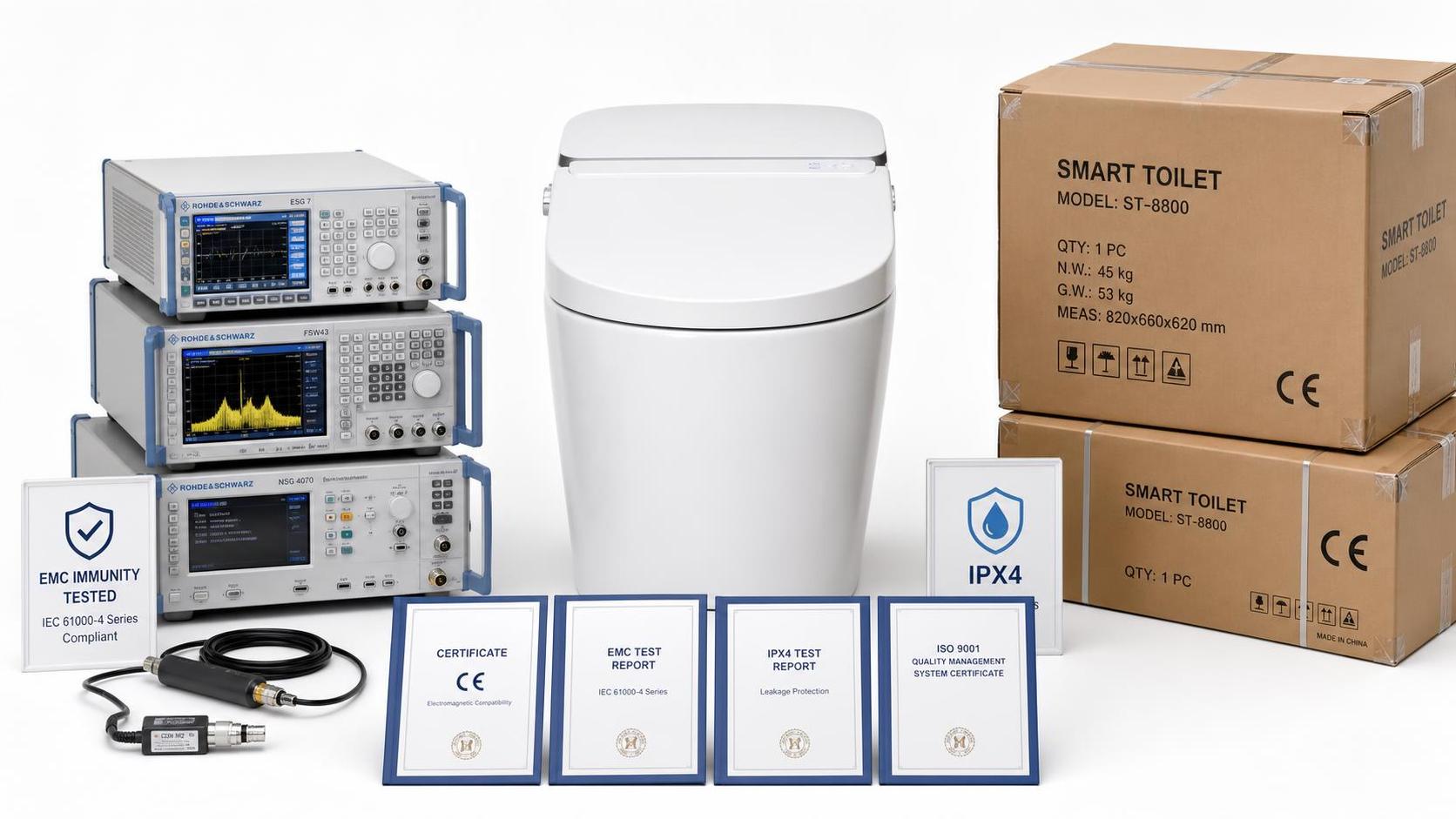
On August 1, 2026, the U.S. Consumer Product Safety Commission (CPSC) put into effect a new compliance requirement for imported smart toilets under the Smart Sanitary Appliances Safety Amendment. The change introduces two additional access conditions: EMC immunity testing and IEC 60335-1 Annex BB leakage protection verification. Because products without the required certification may be detained at the port, the update is not just a technical revision; it directly affects export compliance routes, delivery scheduling, distributor access lists, and factory audit arrangements across the smart sanitary appliance supply chain.
What the Rule Change Confirms
The confirmed facts are limited but commercially significant. As of August 1, 2026, the CPSC formally implemented the Smart Sanitary Appliances Safety Amendment. Under this requirement, all imported smart toilets must pass newly added EMC immunity testing and leakage protection verification under IEC 60335-1 Annex BB. Products that do not obtain the required certification may be held at the port of entry. The requirement directly affects the compliance path and delivery cycle of Chinese exporters, and overseas distributors need to update market access lists and conduct factory re-audits.
Where the Pressure Will Appear First
Export shipments now face a narrower compliance gateway
From an industry perspective, exporters are likely to feel the most immediate impact because the new requirement is tied to import access. The practical pressure point is no longer limited to product shipment readiness; it also extends to whether certification materials, test coverage, and product qualification status are aligned before dispatch. What deserves closer attention is the risk that delivery timing may be affected if compliance review is not completed early enough in the order cycle.
Distributors need to reassess which products remain saleable
Overseas distributors are specifically referenced in the event summary as needing to update access lists and repeat factory audits. Analysis shows this is not only a purchasing adjustment but also a channel control issue. If a listed product or approved factory has not been checked against the new dual-certification condition, distributors may need to revisit onboarding files, supplier approval records, and import readiness documentation.
Testing and certification workflows become a scheduling variable
Observably, the addition of EMC immunity testing and IEC 60335-1 Annex BB leakage protection verification may affect the rhythm of certification preparation and document collection. For manufacturers, trading companies, and service providers involved in export support, the issue is not merely whether testing exists in principle, but whether the required reports and verification records are available in time for shipment, customs handling, and buyer acceptance.
Factory audit arrangements may move up the supply chain agenda
The event summary states that overseas distributors need to conduct factory re-audits. That means supplier qualification may become linked more tightly to ongoing compliance evidence. For factories and supply chain service partners, the impact may appear in audit preparation, technical file organization, quality traceability records, and the ability to show that the relevant certification path has been incorporated into export execution.
What Companies Should Review Now
Check whether current smart toilet models match the new certification path
Analysis shows companies involved in exporting or sourcing smart toilets should first verify whether existing product models have already been assessed against the newly required EMC immunity and IEC 60335-1 Annex BB leakage protection conditions. This should be treated as a product-level and shipment-level review rather than a general compliance assumption.
Re-examine document packages tied to customs and buyer approval
What deserves closer attention is whether current technical documents, testing reports, certification files, and supplier qualification materials are sufficient under the new rule. The input does not provide a detailed execution checklist, so it is more appropriate to understand this as a prompt for document gap review rather than proof that one fixed filing format has already been imposed across all transactions.
Rebuild delivery planning around compliance timing
Observably, the rule has implications for delivery cycles because non-certified products may be detained at the port. Companies with active orders, rolling procurement schedules, or time-sensitive export commitments should pay close attention to whether testing, verification, distributor approval, and shipment release can still fit within existing delivery commitments. This remains an operational risk signal rather than a confirmed uniform outcome for every shipment.
Watch for changes in audit language and market access terms
From an industry perspective, distributors and buyers may revise supplier entry requirements, factory audit points, or bid and procurement documents in response to the new CPSC requirement. Since the input does not include detailed downstream implementation language, companies should monitor these commercial documents closely rather than assume all counterparties will apply the rule in the same way.
Why This Looks Like an Execution Signal
Analysis shows this development is better understood as an implemented compliance change rather than a distant policy discussion, because the effective date is explicit and the summary states that uncertified products may be detained at the port. At the same time, it would be premature to treat every operational consequence as already uniform across the market. What still requires observation is how certification expectations, audit practices, and commercial documentation will be applied in day-to-day transactions.
How the Market Should Read This Update
It is more appropriate to understand this event as a concrete tightening of import access conditions for smart toilets entering the U.S. market. The core significance lies in the shift from general product readiness to rule-specific certification readiness. For exporters, distributors, and related compliance service participants, the immediate issue is not broad market judgment but whether products, factories, and shipment files can meet the new dual-check requirement without disrupting delivery and channel access.
Basis of This Article and What Still Needs Verification
This article is based on the user-provided news title, event date, and event summary. For events of this type, relevant source categories typically include official regulatory notices, publications from supervisory authorities, customs or trade administration updates, industry association releases, standards organization documents, and reporting by authoritative trade media. A specific official source link was not provided in the input, so the underlying official text and any later interpretive materials still need ongoing verification. Continued attention should be paid to policy detail, certification enforcement approaches, changes in procurement or bid documents, industry feedback, and how companies are implementing the requirement in practice.
Industry Briefing
Get the top 5 industry headlines delivered to your inbox every morning.