
Changsha Expo Opens With Export Focus on Smart Bath and Digital Locks
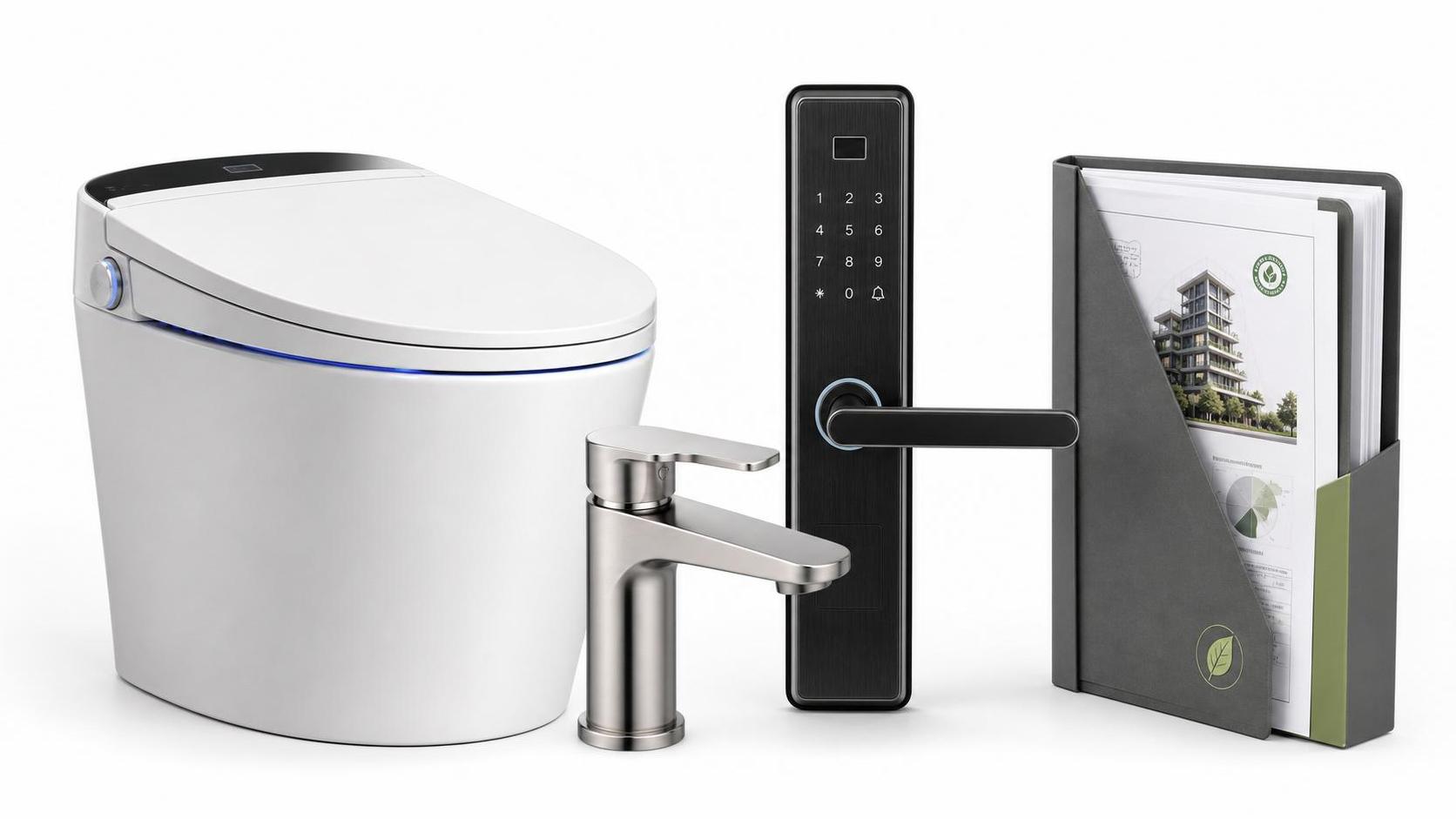
On June 25, 2026, the 19th Changsha International Building Decoration Expo opened with a new export-oriented focus on smart bathroom products and digital locks. For manufacturers, exporters, overseas buyers, compliance teams, and supply chain service providers, the more notable development is not only the exhibition display itself, but the way product access, durability, backflow prevention, and carbon-footprint requirements are being presented together as a market-entry framework for cross-border business.
A New Export-Oriented Zone Sets the Immediate Agenda
The expo, held from June 25 to 27, announced the establishment of the Global Smart Bath & Door Solutions Zone. According to the provided event summary, the zone was jointly planned by the Hunan Provincial Department of Commerce, Germany's VDI, and NSF of the United States.
The featured exhibits focus on Chinese manufacturing solutions that meet three referenced standards: EN 17171 for anti-backflow requirements related to smart toilets, ANSI/BHMA A156.13 for digital lock durability, and ISO 21931 for the carbon-footprint dimension of green building materials.
During the exhibition, the 2026 China Smart Bathroom Export Compliance White Paper is also scheduled for release. It will be available free of charge to overseas buyers and will include an access list covering 23 countries as well as a fast-track factory audit channel.
Why Different Market Participants Are Likely to Pay Attention
Export manufacturers may face a more integrated compliance discussion
From an industry perspective, producers of smart toilets, smart bathroom systems, digital locks, and related building products may be affected because the event places technical compliance, durability, and green-material considerations into one export conversation. The potential impact is most visible in product design validation, certification preparation, factory audit readiness, and overseas customer communications.
What deserves closer attention is whether buyers begin to ask for more complete proof packages rather than single-issue compliance claims. Even without any new rule announced in the provided information, the framing of the zone suggests that product access discussions are becoming more documentation-driven.
Overseas buyers may use the event as a screening reference
For procurement teams and import-side buyers, the release of a white paper with a 23-country access list and a fast-track audit channel may influence how suppliers are shortlisted. The likely impact is concentrated in early-stage sourcing, qualification comparison, and audit planning.
Analysis shows that buyers may pay closer attention to whether suppliers can explain standard alignment clearly and provide supporting documents efficiently. In this context, the exhibition serves not only as a display venue but also as a signal about what information may matter during supplier evaluation.
Compliance and supply chain service providers may see demand shift toward execution support
Testing, certification, audit, documentation, and export service providers may also be affected because the event places market-entry standards and factory verification in the same discussion. The business impact would likely appear in pre-shipment document preparation, standards interpretation, audit coordination, and communication between factories and overseas customers.
Observably, the emphasis here is practical rather than purely promotional: access lists and fast-track audit language point to execution issues inside export operations, not only to product visibility at a trade show.
What Companies Should Watch After the Announcement
Track the exact wording around standards and scope
Companies should pay close attention to how EN 17171, ANSI/BHMA A156.13, and ISO 21931 are described in official event materials and related follow-up documents. The practical issue is whether customers interpret these references as baseline screening items, enhanced qualification indicators, or part of broader project requirements.
Prepare product and factory documentation for buyer review
Because the white paper is positioned for overseas buyers and includes a fast-track factory audit channel, exporters should focus on the completeness and consistency of technical files, test records, factory qualification materials, and communication templates used during buyer review. This is especially relevant for teams handling quotation support and pre-order due diligence.
Separate exhibition signals from binding market requirements
Analysis shows that companies should distinguish between an exhibition-led market signal and a formally confirmed regulatory change. The provided information confirms the launch of a themed zone and the release of a compliance white paper, but it does not by itself establish new mandatory rules across all markets. That difference matters for sales commitments, product claims, and delivery planning.
Use the country-access framing carefully in sales and sourcing decisions
The mention of a 23-country access list deserves attention, but companies should treat it as a reference tool pending ongoing verification of market-specific requirements. For exporters and buyers alike, the key operational issue is whether the list aligns with actual order destinations, product categories, and customer documentation expectations.
How This Development Is Best Interpreted for Now
Observably, this news is more appropriately understood as a structured export signal than as a finished market outcome. It indicates that smart bathroom products and digital locks are being discussed through a combined lens of technical access, durability, and environmental disclosure, and that this framing is being presented to international buyers in a formal exhibition setting.
Analysis shows that the immediate significance lies in coordination across standards, procurement communication, and factory readiness. Whether this develops into a broader purchasing benchmark or remains an event-specific sourcing tool still requires continued observation.
A Short-Term Event With Longer-Term Implications to Watch
At this stage, the most rational reading is that the Changsha expo is highlighting a more systematized way to present export-ready solutions for smart sanitary products and digital locks. The event does not confirm final market outcomes, but it does show where industry attention may be moving: toward clearer compliance packaging, more explicit buyer-facing access tools, and tighter alignment between product claims and audit readiness.
For the industry, this is less a conclusion than an indicator worth following through subsequent documents, buyer adoption, and any later clarification tied to standards interpretation and export practice.
Basis of This Article and Follow-Up Verification
This article is based on the user-provided news title, event date, and event summary. The analysis above relies only on the confirmed information that the 19th Changsha International Building Decoration Expo opened on June 25, 2026, established the Global Smart Bath & Door Solutions Zone, referenced EN 17171, ANSI/BHMA A156.13, and ISO 21931, and planned to release the 2026 China Smart Bathroom Export Compliance White Paper with a 23-country access list and a fast-track factory audit channel.
For this type of industry update, commonly relevant source categories may include official exhibition announcements, government department notices, industry association releases, authoritative media reports, and documents from standards organizations. A specific official source link was not provided in the input, so continued verification is still necessary. Follow-up attention should focus on the final wording of the white paper, the scope of the 23-country access list, and any subsequent clarification on how the referenced standards are applied in actual export business.
Industry Briefing
Get the top 5 industry headlines delivered to your inbox every morning.