
EU CE Rule Takes Effect for AI Checks on Smart Toilets and Digital Locks
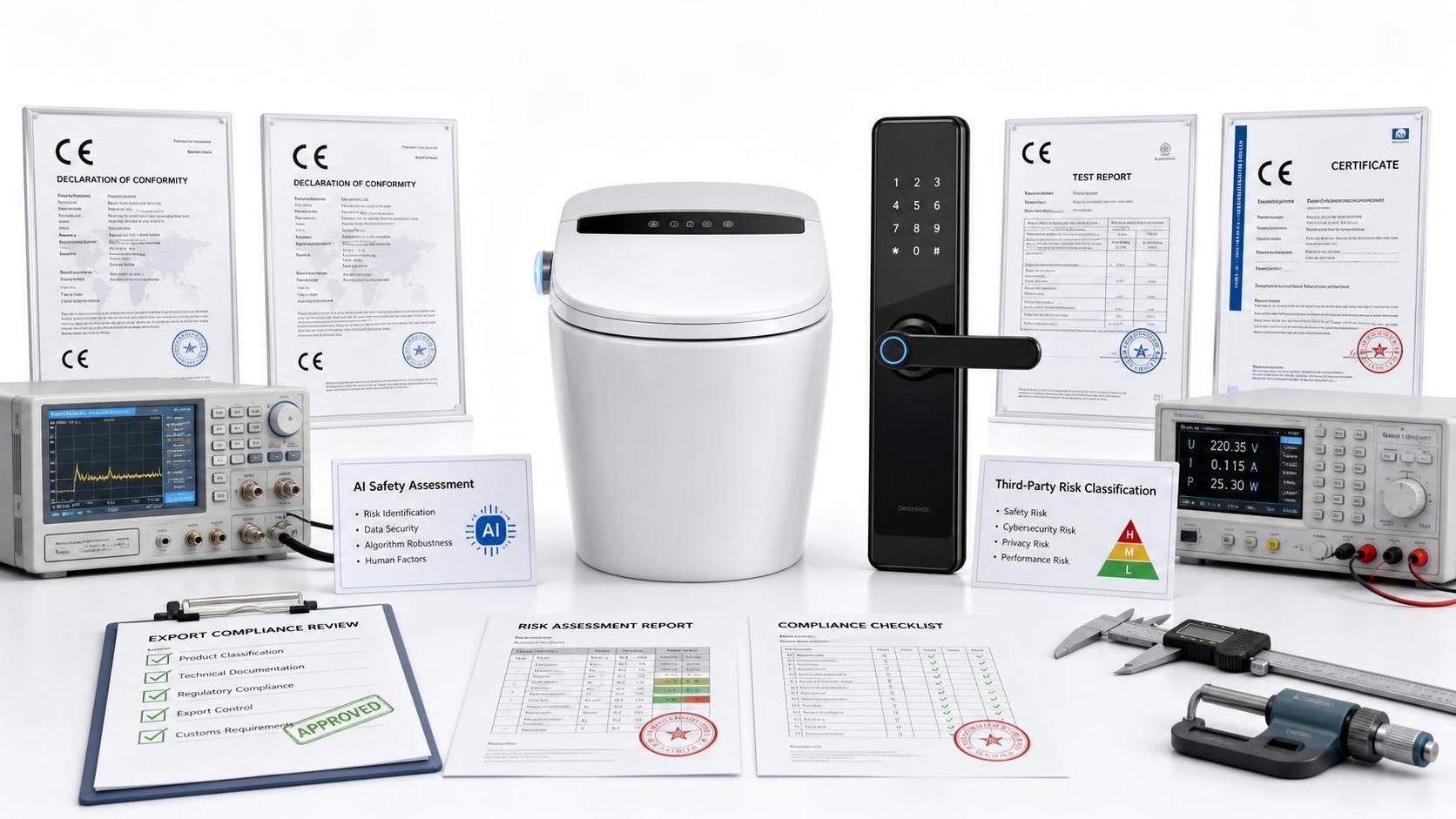
From July 22, 2026, a new compliance step tied to the EU Artificial Intelligence Act implementation guidance has taken effect for Smart Toilets and Digital Locks shipped to the EU. The change matters because it turns AI-related safety assessment and third-party risk classification into an export access issue, while also affecting certification timing, procurement specifications, and contract handling across manufacturing, importing, testing, and delivery workflows.
What the new requirement now covers
According to the information provided, the implementation guidance accompanying the EU Artificial Intelligence Act formally requires all Smart Toilets and Digital Locks exported to the EU to complete an AI-driven functional safety assessment based on EN 301 489-35 and ETSI TR 103 645 from July 22, 2026. The same requirement also calls for submission of a third-party AI risk classification report.
The information provided further states that this mandatory requirement directly affects export market access for Chinese suppliers, extends certification lead times by 6 to 8 weeks, and changes technical clauses in B2B purchasing contracts. Importers are also required to update inspection checklists and compliance agreements immediately.
Where the pressure will show up first in the supply chain
Export access will become more document-driven for suppliers
For exporters of Smart Toilets and Digital Locks, the immediate impact is tied to whether products can satisfy the added AI compliance layer before shipment or customer approval. From an operational perspective, what deserves closer attention is the shift from conventional product certification planning to a broader documentation package that now includes AI-related assessment and third-party classification materials.
Importers and buyers will need to revise procurement controls
For importers and B2B buyers, the change affects incoming inspection, supplier qualification, and contract language. Observably, the update is not limited to technical review at the product level; it also reaches purchasing documents, acceptance criteria, and compliance commitments that support cross-border transactions.
Testing and certification workflows may face scheduling pressure
For certification-related service providers and internal compliance teams, the stated 6 to 8 week extension means product launch sequencing and shipment readiness may need to be reassessed. Analysis shows that even where product design is unchanged, approval timing can still shift if the required AI safety evaluation and third-party reporting are not built into the project schedule early enough.
Delivery and after-sales planning may also need adjustment
For supply chain coordinators and after-sales teams, any delay in certification readiness can affect delivery commitments, handover timing, and traceability preparation. From an industry perspective, this is relevant not because the provided information confirms downstream disruption, but because the rule change reaches the documents and checkpoints that usually sit upstream of delivery acceptance.
What companies should review immediately
Recheck whether current CE preparation already covers AI-related assessment
Analysis shows that companies shipping the affected products should first verify whether existing CE compliance files already include the AI-driven functional safety review required under the new guidance. If not, the compliance file may no longer match customer or importer expectations for EU entry.
Update technical documents and third-party report planning
What deserves closer attention is the preparation of supporting materials linked to EN 301 489-35, ETSI TR 103 645, and the required third-party AI risk classification report. The provided information does not define the full execution method, so companies should treat documentation readiness as an active review area rather than assume that current test records will be sufficient.
Adjust contract timing and delivery commitments
Because the provided information states that certification cycles may be extended by 6 to 8 weeks, exporters, buyers, and importers should review whether contract milestones, shipment windows, and acceptance clauses still reflect the new compliance timeline. This is particularly relevant where delivery obligations depend on certification completion before dispatch or installation.
Refresh inspection checklists and supplier qualification terms
The information provided explicitly notes that importers need to update inspection checklists and compliance agreements. Observably, that makes procurement-side document control a near-term issue, especially for companies relying on established supplier templates that were drafted before this implementation guidance took effect.
Why this looks more like an execution signal than a distant policy theme
Analysis shows that this development is more appropriate to understand as a rule now entering practical execution rather than a general policy discussion. The reason is that the provided information points to concrete compliance consequences: affected product categories are identified, the required assessment basis is named, third-party reporting is required, certification timing is expected to lengthen, and procurement documents must be revised.
At the same time, it remains necessary to separate confirmed facts from what still needs observation. The input does not provide the detailed enforcement pathway, review practice, or market response. For that reason, companies should read this as a live compliance signal with immediate operational relevance, while continuing to watch for clearer execution interpretations.
How this development is best understood now
In practical terms, this update signals that AI-related compliance for certain connected products is moving into the export entry and transaction management process. For affected companies, the issue is not only whether a product can be sold, but whether certification planning, procurement terms, inspection controls, and delivery schedules are aligned with the new requirement.
From an industry perspective, it is more appropriate to understand this as a landed compliance change with direct workflow implications, while still recognizing that the detailed enforcement approach and market-level implementation effects require continued observation.
Basis of this article and points that still need verification
This article is based on the user-provided news title, event date, and event summary. For developments of this type, relevant source categories commonly include official notices, regulator releases, customs or trade authority information, industry association updates, standards organization documents, and reporting by authoritative media.
No specific official source link was provided in the input, so the underlying official publication path still needs ongoing verification. Further observation is also needed on detailed implementation language, certification review practice, tender and contract wording changes, market feedback, and how affected companies execute the requirement in actual export and procurement workflows.
Industry Briefing
Get the top 5 industry headlines delivered to your inbox every morning.