
EU EcoDesign Rule Sets New Water Standard for Smart Toilets
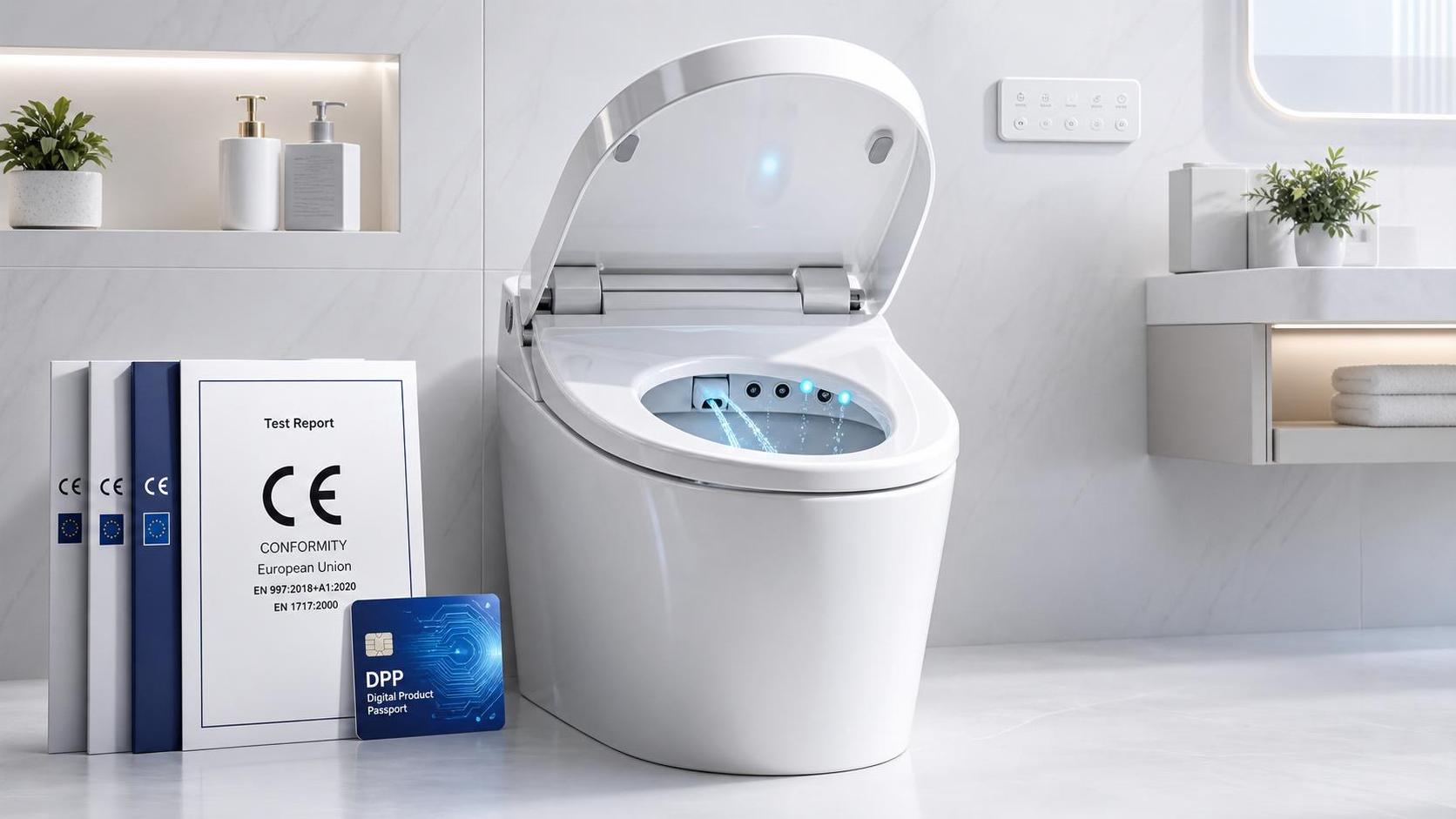
On July 8, 2026, the European Commission formally published Implementing Regulation (EU) 2026/1127, introducing a concrete compliance change for smart toilets sold in the EU market. From October 1, 2026, these products must meet the revised EcoDesign water-efficiency grading standard, including a new Class A++ threshold of no more than 3.2L per flush, while a Digital Product Passport (DPP) data upload requirement will apply in parallel. For manufacturers, exporters, certification-related service providers, buyers, and supply-chain teams, this matters because it links product performance, technical documentation, and market access timing more closely than before.
What the new requirement now makes explicit
The confirmed facts are limited but commercially significant. The European Commission published Implementing Regulation (EU) 2026/1127 on July 8, 2026. The regulation requires all smart toilets sold in the EU market to comply with the revised EcoDesign water-efficiency grading standard from October 1, 2026. The revision adds a new Class A++ limit of no more than 3.2L per flush. At the same time, a DPP data upload requirement is activated. The information provided also indicates that this rule directly affects the compliance certification path for Chinese exporting companies and the update cycle for CE marking.
Where pressure is likely to appear across the business chain
Export-oriented manufacturers will face a tighter link between design and market entry
From an industry perspective, manufacturers selling into the EU may be affected first because the rule connects a measurable water-efficiency threshold with a formal market-access requirement. The likely impact sits in product specification review, testing preparation, technical file updates, and the scheduling of CE-related compliance work. What deserves closer attention is whether current product configurations and supporting documentation can still align with the revised grade and the parallel DPP upload requirement within existing shipment plans.
Certification and testing workflows may become more time-sensitive
Analysis shows that certification-related companies and testing service providers may see pressure in document handling and review sequencing rather than only in laboratory work. Because the provided information explicitly mentions an effect on compliance certification paths and CE marking update cycles, the practical concern is not only whether a product can meet the new threshold, but also whether supporting reports, declarations, and related technical records are prepared in a form that matches the new requirement.
Buyers, distributors, and project procurement teams may need to recheck acceptance conditions
Observably, downstream buyers and channel participants may be affected through procurement specifications, delivery acceptance, and product selection criteria. If a product is intended for the EU market after October 1, 2026, purchasing teams may need to pay closer attention to whether supplier submissions reflect the revised water-efficiency grade and DPP-related data readiness. The issue is less about a general policy update and more about whether procurement and delivery documents remain aligned with the market’s current compliance condition.
Supply-chain and after-sales functions may need stronger traceability discipline
Analysis shows that supply-chain service providers and after-sales teams may also be drawn into the adjustment, especially where shipment timing, product version control, and documentation consistency matter. The DPP data upload requirement points to a stronger documentation and traceability expectation. Based on the information provided, it would be prudent for relevant teams to watch how product data, compliance files, and delivery records are coordinated, even though detailed implementation mechanics have not been provided here.
Practical points companies should review now
Recheck whether current models still fit the revised compliance path
What deserves closer attention is whether smart toilet models intended for the EU market after October 1, 2026 still match the revised EcoDesign grading requirement, especially the new Class A++ limit of no more than 3.2L per flush. This is not yet a conclusion about any specific product outcome; it is a practical review point arising directly from the rule change described in the provided information.
Prepare for documentation updates tied to CE marking
Observably, the mention of an effect on CE marking update cycles means companies should review the timing and completeness of their technical documentation. This may include checking whether existing compliance files, declarations, and supporting records will need revision, replacement, or reorganization. Since no detailed execution procedure is provided in the input, this should be treated as a monitoring and preparation issue rather than as a confirmed administrative result.
Do not treat DPP upload as a separate IT task
From an industry perspective, the DPP data upload requirement should be watched as part of the compliance workflow, not as a standalone data-entry matter. The immediate practical question is whether product data, technical records, and internal document ownership are organized well enough to support the new requirement. The input does not provide the detailed data fields or submission format, so companies should focus on readiness and verification rather than assume a settled implementation model.
Review delivery schedules and supplier submissions for the transition date
Analysis shows that the October 1, 2026 effective date can influence shipment planning, bid documentation, procurement reviews, and supplier qualification checks. For exporters and procurement-facing teams, the key issue is whether products expected to enter the EU market around that date are supported by documentation and compliance positioning consistent with the revised rule. This is especially relevant where order cycles and certification updates may overlap.
Why this should be read as an execution signal, not just a headline
Observably, this development is more appropriate to understand as a rule implementation signal rather than a distant policy discussion. The regulation has been formally published, and a clear compliance date is identified in the provided information. At the same time, the market still lacks detail here on specific enforcement practice, certification interpretation, and document review standards. That means the event reflects a real and confirmed regulatory change, while some of its operational consequences still need to be watched through follow-up implementation and market response.
What this update means for the market right now
In practical terms, the update matters because it combines a stricter water-efficiency threshold with a DPP documentation requirement and ties both to EU market access for smart toilets. For affected companies, the immediate significance lies in compliance timing, technical file readiness, and coordination across product, certification, and delivery functions. It is more appropriate to understand this as a confirmed change that has already moved into the execution stage, while the finer points of application still warrant continued attention.
Basis of this article and what still needs verification
This article is generated based on the user-provided news title, event date, and event summary. For developments of this type, commonly relevant source categories may include official announcements, publications from regulatory authorities, customs or trade administration information, industry association notices, standards documentation, and reporting by authoritative media. No specific official source link was provided in the input, so the exact official link still requires follow-up verification. Further observation is also needed regarding detailed implementation guidance, certification interpretation, tender-document changes, industry feedback, and how affected companies carry out compliance adjustments in practice.
Industry Briefing
Get the top 5 industry headlines delivered to your inbox every morning.